RAG Development course in Amritsar
RAG Development course in Amritsar
4.7/5
Student rating
8
Structured modules
3+
Portfolio projects
Yes
Placement support
Course overview
Course overviewRAG looks trivial in a demo and gets hard in production, where retrieval quality, not the model, decides whether the answer is right.
The rag development programme at TechCadd Amritsar is built the way the work is actually done: you handle the data, train and break the models, then ship something that runs. Tools such as LangChain, LlamaIndex, Pinecone are installed on your own machine in week one, not shown on a slide in week ten.
It runs across 6 weeks – 3 months with morning, evening and weekend batches, and every module closes in a reviewable artefact. By the end you hold a certificate, a portfolio, and the ability to talk through your own decisions in an interview for a rag engineer role.
- Duration
- 6 weeks – 3 months
- Level
- Intermediate to advanced
- Mode
- Classroom & live online
- Batches
- Morning, evening & weekend
Industry-ready training in RAG Development
Industry-ready training in RAG DevelopmentA syllabus reviewed every intake against what employers are actually hiring for — not a curriculum frozen three years ago.
- 1Full arc from fundamentals to deployment: Retrieval Fundamentals, Document Processing, Vector Databases and beyond
- 2Every concept implemented in the lab before it is examined
- 3Mentors who ship this work professionally, not career trainers
- 4Project reviews line by line, with written notes you keep
- 5Doubt sessions and lab access outside your batch hours
Who can do this course
Who can do this courseNo entrance test and no prior coding requirement — the track opens at fundamentals. What it does need is consistency across the full programme.
- Start early01
Students & final-year candidates
Finish your degree with a rag development portfolio already built, instead of starting from zero after graduation.
- Job-focused02
Graduates chasing a first role
A degree proves you can learn; a reviewed project proves you can build. This gives you the second one, plus interview prep aimed at rag engineer roles.
- Weekend batches03
Working professionals upskilling
Layer rag development on top of the domain knowledge you already have — that combination is rarer, and better paid, than either alone.
- No coding needed04
Career switchers from other fields
The track opens at intermediate level, so a non-technical background is a starting point rather than a disqualification.
- Apply it at work05
Business owners & managers
Understand what rag development can and cannot do for your operation before you commission it, and brief a vendor without being sold to.
- Raise your rate06
Freelancers & consultants
Add an AI service line to what you already sell, with a portfolio piece behind each offer rather than a claim on a profile page.
- Refresh your stack07
Faculty & corporate trainers
Rebuild your teaching material against current tooling — Chroma and Weaviate rather than the syllabus you inherited.
Why this programme is worth your year
Why this programme is worth your yearMost rag development training in this region stops at the tutorial: you follow along, the notebook runs, nothing is retained. This programme is built the other way round — every module hands you an unfinished problem and a deadline, and a mentor reviews what you did with it.
That is slower and harder than watching lectures. It is also the only version that survives an interview, because the questions there are about the decisions you made, not the code you copied.
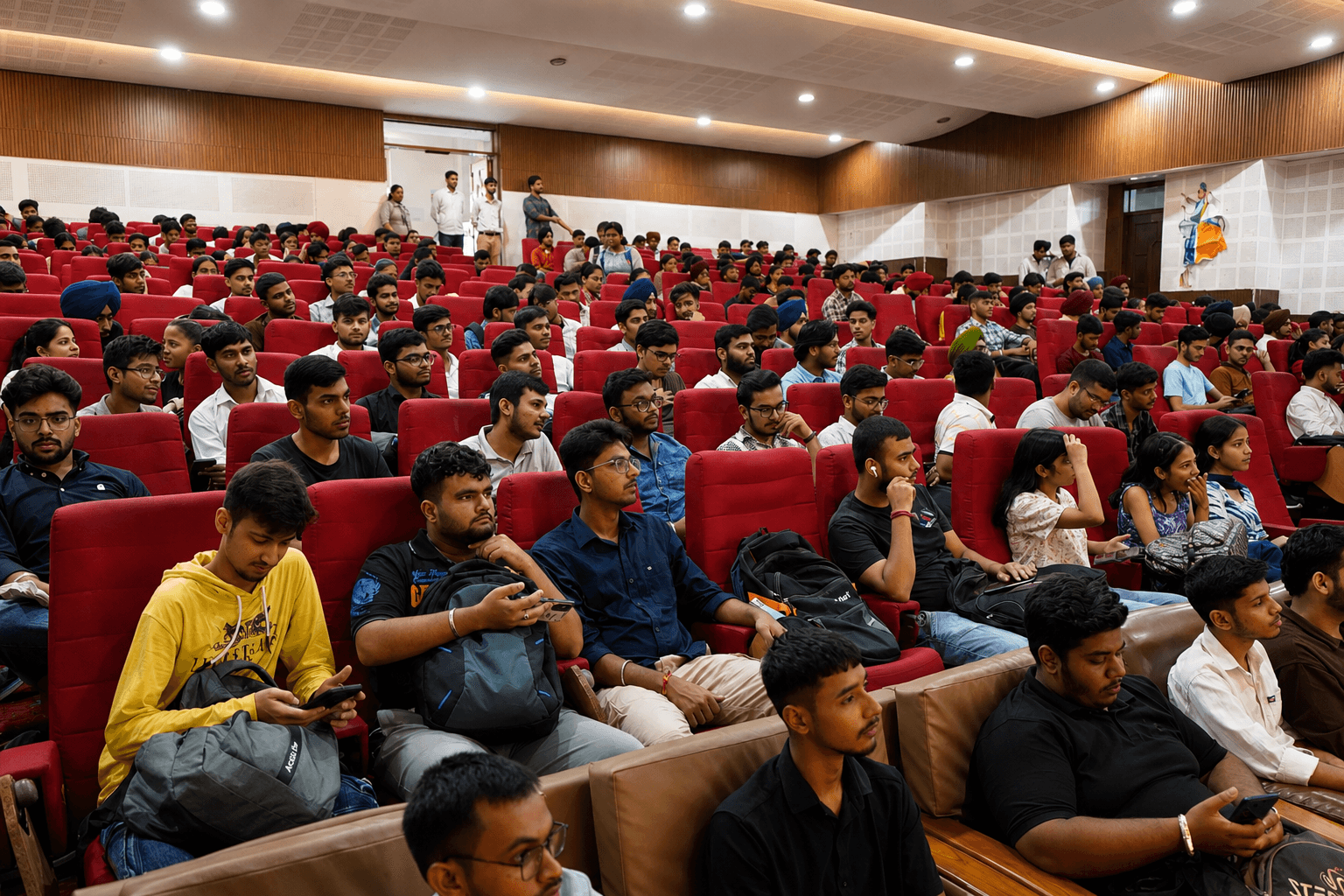
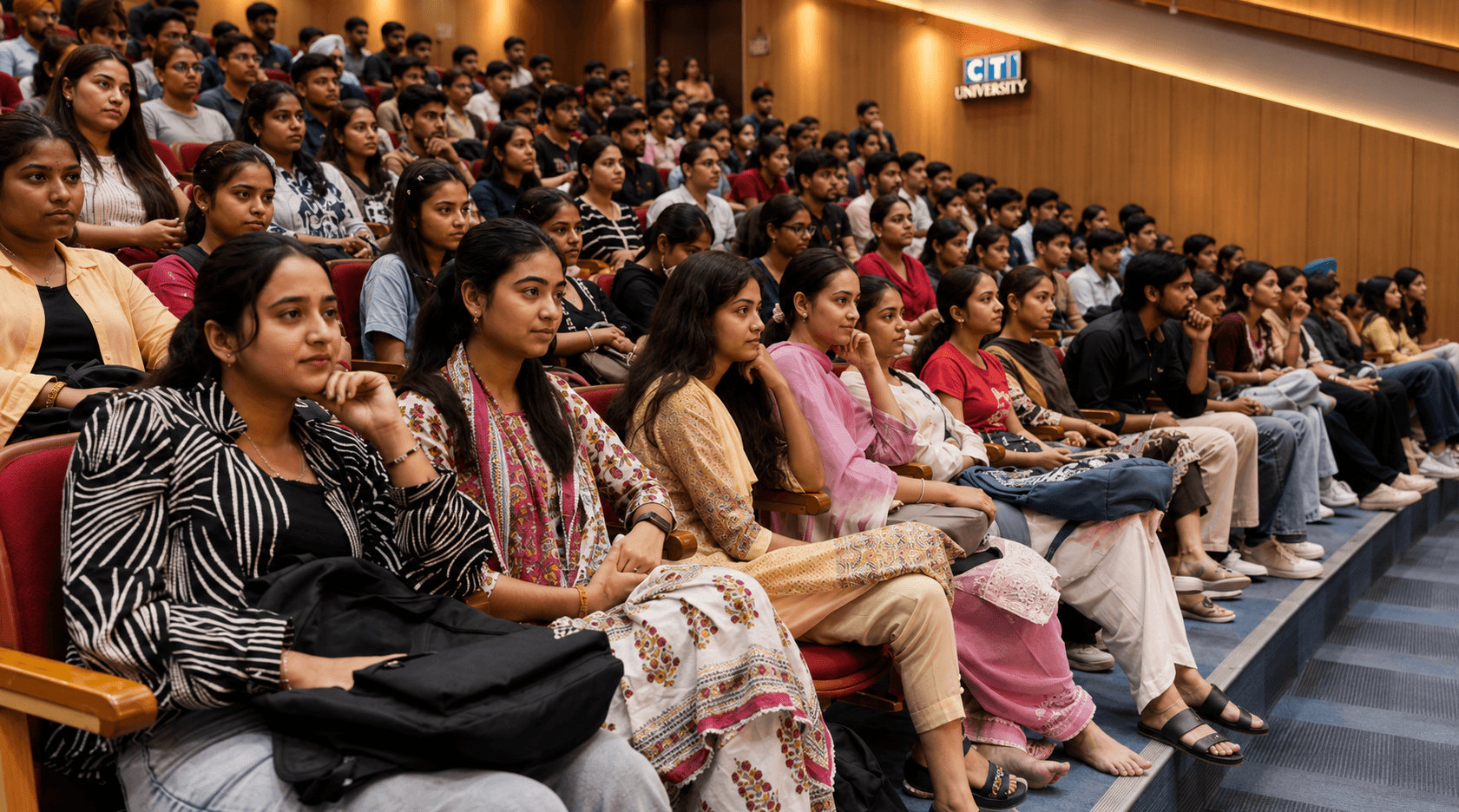
Project review week at the Amritsar campus
Mentors mark up work line by line
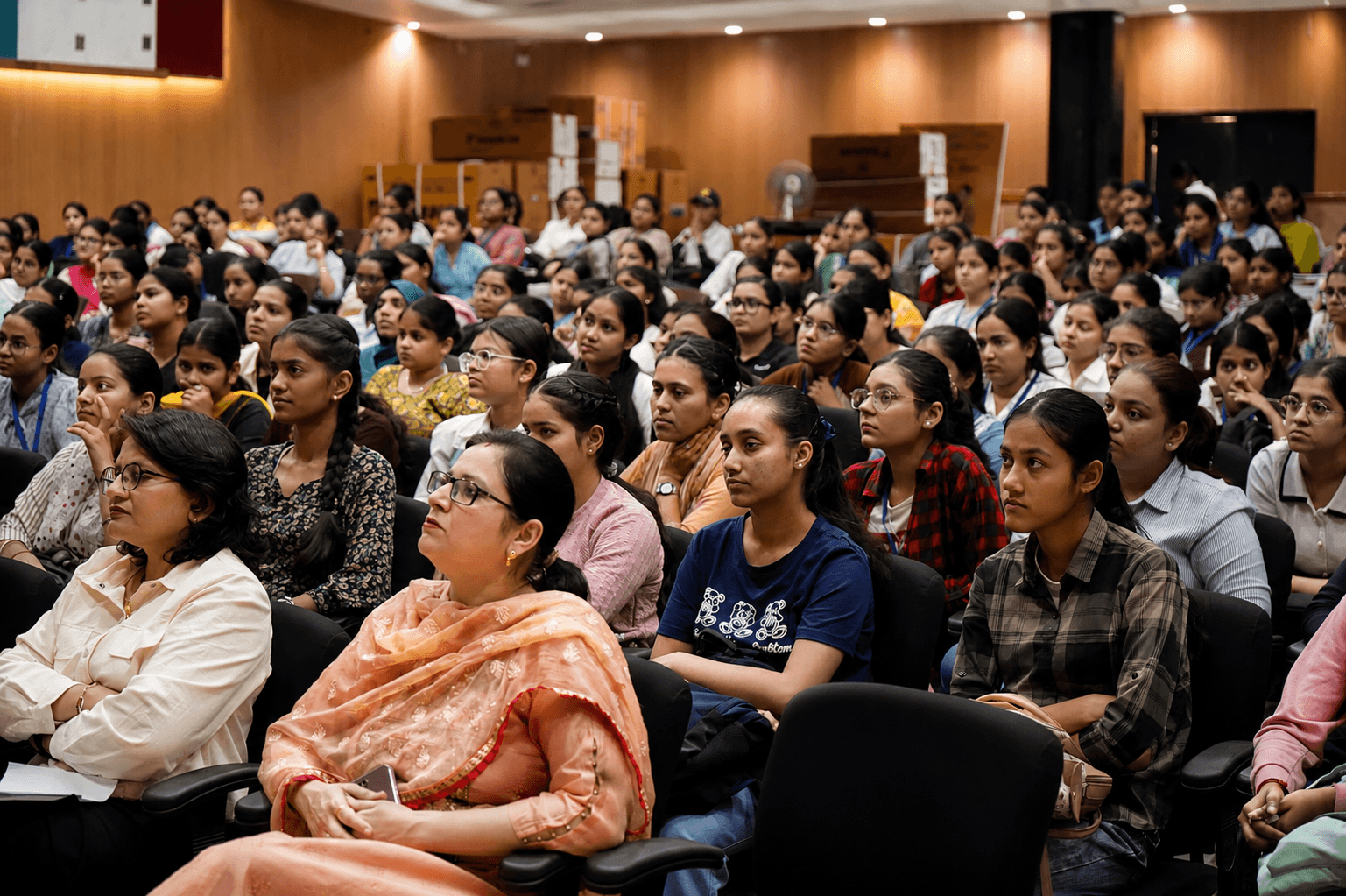
Hiring drive & mock interview day
Practitioners run the panel, not HR
Build AI skills employers can verify
Build AI skills employers can verifyAnyone can list LangChain on a résumé. What gets you hired is a repository a reviewer can open, a decision you can defend, and a certificate issued against work that was actually assessed.
- 3+ portfolio projects with written review notes
- A public repository per project, documented for a reader
- Mock interviews with people who do the job daily
- TechCadd industry certificate issued against assessed work
What you will actually build
What you will actually build8 modules, each closing in something reviewable that goes straight into your portfolio.
Retrieval Fundamentals
Retrieval Fundamentals is where the RAG Development track gets its footing. You work the concepts in the lab first, then carry them straight into the running project rather than leaving them as isolated exercises.
Skills you build
- Lexical vs semantic search
- Embeddings
- Relevance intuition
Tools in this module
A reviewed piece of work demonstrating lexical vs semantic search and embeddings.
One course. A mesh of real tools.
One course. A mesh of real tools.All 10 are installed, configured and used by you during the programme — none of them are demonstrated on a slide. You leave able to set the environment up from scratch on your own machine.
- LALangChain
- LLLlamaIndex
- PIPinecone
- CHChroma
- WEWeaviate
- OEOpenAI Embeddings
- ELElasticsearch
- PYPython
- FAFastAPI
- RARagas
- Core
LangChain · LlamaIndex · Pinecone · Chroma
- Working set
Weaviate · OpenAI Embeddings · Elasticsearch · Python
- Shipping
FastAPI · Ragas
Get certified in RAG Development
Get certified in RAG DevelopmentIssued on completion against the modules you finished and the projects you submitted — plus an internship letter where the industrial training track applies. Shareable to LinkedIn, and verifiable by an employer who calls the Amritsar desk.
- Module-wise assessment, not attendance-based
- Project submissions logged against your certificate
- Internship letter on the industrial training track
- Verifiable directly with the campus office
Where this course takes you
Where this course takes youSalary bands below are indicative of what our placement desk sees quoted for candidates who arrive with a reviewed portfolio. They are an observation, not a promise.
RAG Engineer
- Entry level
- ₹4.5 – 6.5 LPA
- 3 – 5 years in
- ₹12 – 16 LPA
7,678+ open roles in India
RAG Engineer
₹4.5 – 6.5 LPA
The most direct destination from this track — the projects you build map onto the day-one expectations of the role.
LLM Application Developer
₹5 – 7.2 LPA
A realistic adjacent path once the core rag development skill set is in place and evidenced by your portfolio.
Search Engineer
₹3.6 – 5.4 LPA
A realistic adjacent path once the core rag development skill set is in place and evidenced by your portfolio.
AI Engineer
₹4.2 – 6 LPA
A realistic adjacent path once the core rag development skill set is in place and evidenced by your portfolio.
Knowledge Systems Consultant
₹4.5 – 6.5 LPA
A realistic adjacent path once the core rag development skill set is in place and evidenced by your portfolio.
Hands-on projects you will ship
Hands-on projects you will shipEvery one of these is built by you, reviewed line by line, and documented so a hiring manager can read it without you in the room.
- Foundation build01
Enterprise Policy Assistant
A permissioned assistant over internal policy documents with source citations.
- Pinecone
- Chroma
- Weaviate
- Core build02
Technical Documentation Search
Hybrid retrieval with reranking, benchmarked against a golden question set.
- Weaviate
- OpenAI Embeddings
- Elasticsearch
- Core build03
Multi-Source Research Tool
A multi-hop pipeline that synthesises across several document collections.
- Elasticsearch
- Python
- FastAPI
- Applied build04
Evaluation Build
A working artefact from the evaluation block — reviewed piece of work demonstrating retrieval recall and answer faithfulness, reviewed against the same checklist we use on the capstone.
- LangChain
- LlamaIndex
- Pinecone
- Applied build05
Advanced Patterns Build
A working artefact from the advanced patterns block — reviewed piece of work demonstrating multi-hop retrieval and graph rag, reviewed against the same checklist we use on the capstone.
- Pinecone
- Chroma
- Weaviate
- Capstone06
Production Concerns Build
A working artefact from the production concerns block — reviewed piece of work demonstrating incremental indexing and access control, reviewed against the same checklist we use on the capstone.
- Weaviate
- OpenAI Embeddings
- Elasticsearch
Learn it. Build it. Make it yours.
The certificate is the receipt. What you actually leave with is a portfolio you built, notes from people who reviewed it, and the habit of finishing what you start.
Book a free demo classWhy students choose techcadd
Why students choose techcaddTwo decades of training in Amritsar, in a format that has not changed since: small batches, real projects, mentors who still practise.
- 01
Practitioner-led teaching
Your mentor writes rag development for a living. The war stories in class are theirs, and so are the shortcuts.
- 02
Small, fixed batches
Batch sizes are capped so a raised hand is answered in the session it was raised in, not in a ticket queue.
- 03
Reviewed, not marked
Every submission comes back annotated. The notes are the point — they are what you carry into the interview.
- 04
Current tooling
We teach LangChain, LlamaIndex, Pinecone and refresh the list each intake, because a stale stack is worse than no stack.
- 05
Flexible batches
Morning, evening and weekend tracks, classroom or live online, with recordings either way for revision.
- 06
Support that continues
Résumé and portfolio review, mock interviews and hiring-drive access — and it does not stop the day the course ends.
How techcadd compares
How techcadd comparesAn honest side-by-side against the typical rag development institute in the region. Ask any centre you are considering these same seven questions.
| What you should ask | TechCadd Amritsar | Typical institute |
|---|---|---|
| Who teaches the batch | Working practitioners | Full-time trainers only |
| Project work | 3+ reviewed builds | One demo project, unmarked |
| Feedback on submissions | Line-by-line written review | Pass / fail mark |
| Syllabus refresh | Reviewed every intake | Static for years |
| Lab access | Outside batch hours too | Batch hours only |
| Placement support | Continues after completion | Ends with the course |
| Certificate basis | Assessed modules & projects | Attendance |
“Typical institute” describes the common pattern we hear about from students who transfer in — not any single named centre.
What our students in Amritsar say
What our students in Amritsar say164 verified reviews from the rag development batches, averaging 4.7 out of 5.
4.7/5
164 verified reviews
- 5 star80%
- 4 star12%
- 3 star5%
- 2 star2%
- 1 star1%
I joined the RAG Development batch with almost no background, and what made the difference was that retrieval fundamentals was taught by building rather than by slides. By the third week I was debugging my own code instead of copying someone else's.
Gurpreet SinghRAG Engineer, Bengaluru · Evening batch · 2025The project reviews are the real value. My technical documentation search was picked apart line by line, and those notes are exactly what I ended up talking through in the interview that got me a llm application developer offer.
Karanveer BrarLLM Application Developer, Mohali · Weekend batch · 2026Weekend batches meant I kept my job through the whole 6 weeks – 3 months. Anything I missed got re-explained without fuss, and lab access outside batch hours was never a problem.
Jasleen GrewalSearch Engineer, Hyderabad · Morning batch · 2025Python and the rest of the stack were set up on day one, so no week went into environment issues. Batches are small enough that a doubt gets answered the same day instead of piling up.
Harman SidhuAI Engineer, Jalandhar · Evening batch · 2026I had tried learning rag development on my own twice and stalled both times. A fixed batch in Amritsar, a mentor who checks your work and a deadline on every module is the only reason I finished.
Neha BansalKnowledge Systems Consultant, Amritsar · Weekend batch · 2025Placement support was not just a line on the brochure — resume and portfolio review, two mock interviews with people who do the job, and a referral into one of the hiring drives.
Tanvir DhillonRAG Engineer, Noida · Morning batch · 2026The syllabus is current. We worked in Weaviate rather than the older tooling most rag development syllabi around here still teach, and that came up directly in my first interview.
Ritika ChopraLLM Application Developer, Amritsar · Evening batch · 2025The balance of theory to lab time is about right: enough to understand why something works, then straight into building. I left with 3 projects I can demo, not just a certificate.
Mohit KhannaSearch Engineer, Batala · Weekend batch · 2026
Questions we get asked at the admissions desk
Frequently asked questionsIf something here is not covered, the Amritsar desk will answer it directly — no call-back queue.
No. The programme opens at intermediate level and assumes no background beyond comfort with a computer. Students who already have some exposure move through the early modules faster and spend the saved time on project work.
Keep exploring
Browse all courses- AI & Data
Artificial Intelligence
AI fundamentals, machine learning concepts, generative AI, intelligent automation and data-driven decision-making — taught through practical activities and projects.
3 – 6 months - AI & Data
Machine Learning
Learn the algorithms, then learn what they get wrong — modelling, evaluation and deployment on real, messy data.
4 – 6 months - AI & Data
Deep Learning
Neural networks, computer vision, NLP and Transformers — built, trained and deployed on real datasets with TensorFlow, PyTorch and Keras.
4 – 6 months
Start the RAG Development programme this intake.
Enquire about the RAG Development courseSend your question and a counsellor will call you back about batch timings, fees, EMI options, placement record, or whether this course fits your background.
- Free career counselling
- No registration fee
- Placement support included
Request a call back
About the RAG Development course · 6 weeks – 3 months