Flagship project
Guided Live Brief
Your first real requirement, scoped with the trainer and built against a client-facing deadline.
- MySQL
- MongoDB
- Postman

4 months
Duration
8
Structured blocks
4
Live projects
Included
Internship letter
TechCadd's 4 Months Training in Amritsar is aimed at students, graduates and working professionals — whatever they have or have not done before. The early modules cover Foundations & Environment, Core Discipline Skills and Working to Industry Standards, so nothing later assumes knowledge you were never given. From there you take on First Live Brief and Second Live Brief. The second half is where it turns practical: you work in VS Code, Git, MySQL, MongoDB, Postman and Figma the way a team actually does, against briefs that carry a real deadline. Each module ends in something you have built and a trainer has reviewed, so you finish with a portfolio, a CV built around it and interview practice for Junior Developer, Analyst and Executive roles.
Four months is the first duration where you stop rehearsing and start working. One brief teaches you the process; the second is where you are expected to run it yourself, with the trainer reviewing rather than steering. It is built to bridge college theory and what employers actually expect, which is a different thing from a signed certificate.
You work on live projects in web development, Python, data science, digital marketing and more, guided by trainers who know the Punjab job market — what firms in Amritsar, Ludhiana and Jalandhar are hiring for now, rather than what a national syllabus says they should be. Whether you are pursuing B.Tech, BCA, MCA or any technical degree, the structure is the same: fundamentals to a consistent baseline first, then applied project work.
TechCadd is an ISO 9001-certified training company with centres across Amritsar, Jalandhar, Hoshiarpur, Ludhiana and Mohali, so the certificate you finish with carries formal institutional backing rather than being a self-printed completion letter — which matters when the same training is also being submitted against a mandatory college requirement.
Reviewed by mentors · built for interviews
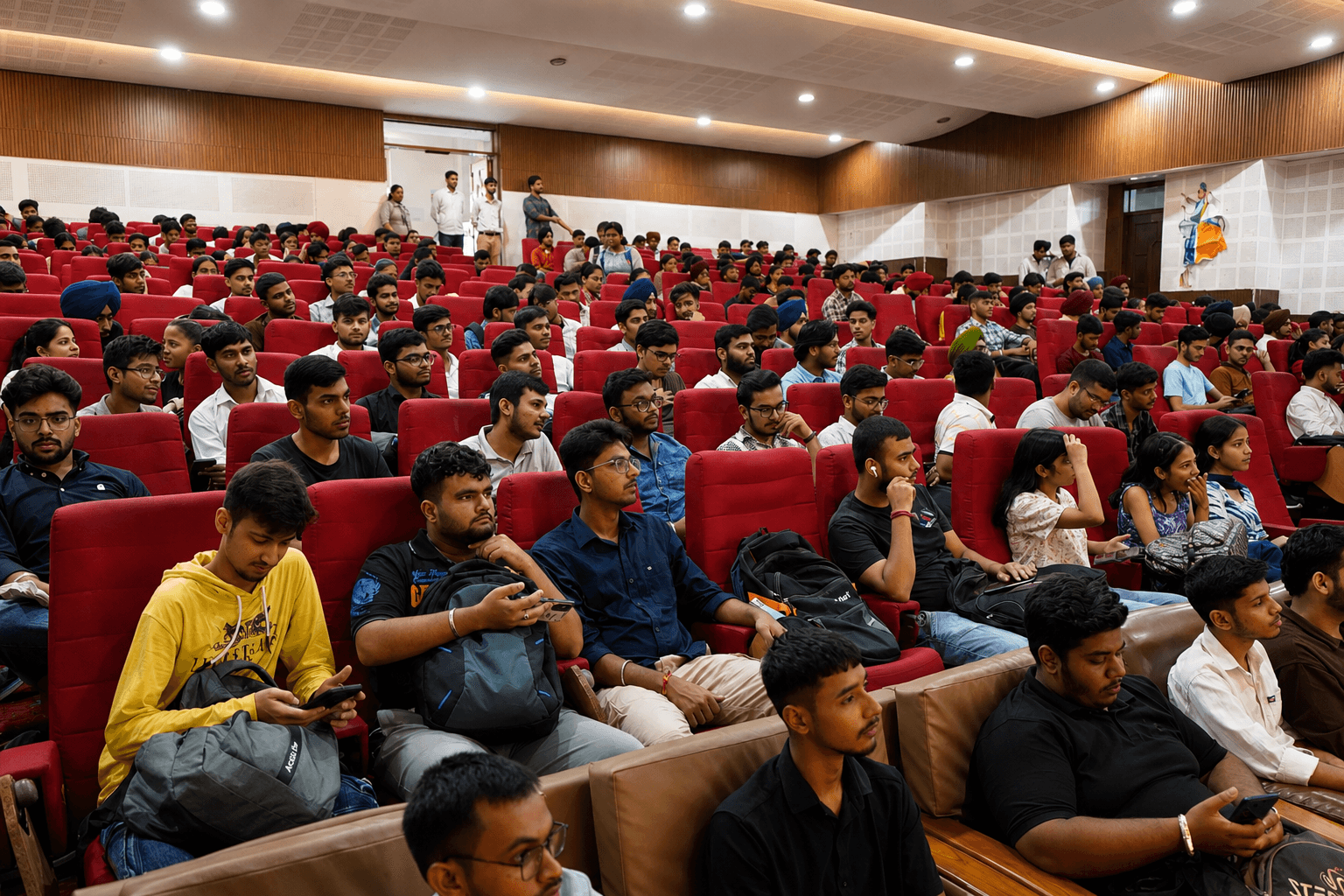
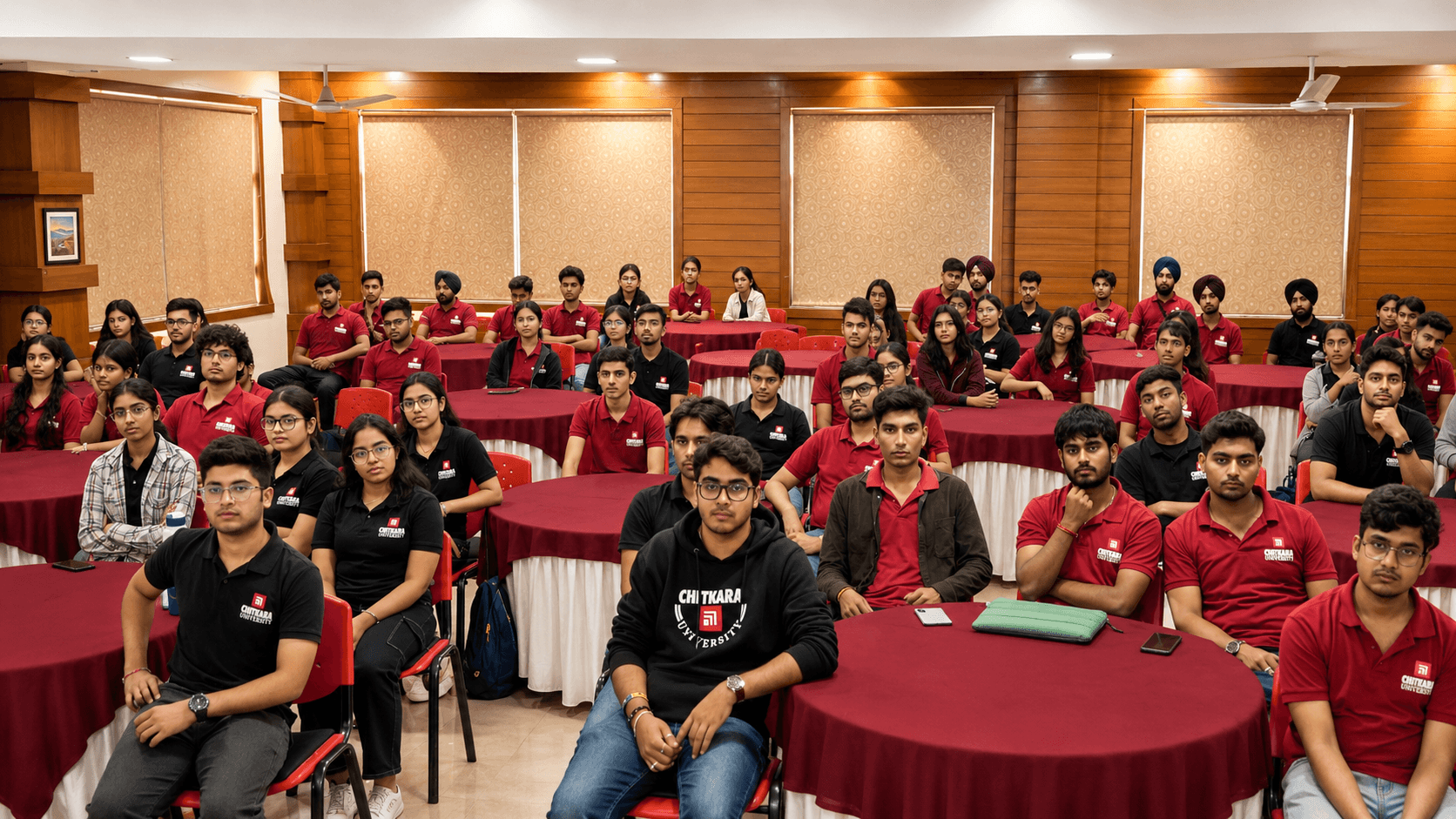
Live client work from week one, at the Amritsar lab.
Most 4 months training training in this region stops at the tutorial: you follow along, the notebook runs, nothing is retained. This programme is built the other way round — every module hands you an unfinished problem and a deadline, and a mentor reviews what you did with it.
That is slower and harder than watching lectures. It is also the only version that survives an interview, because the questions there are about the decisions you made, not the code you copied.
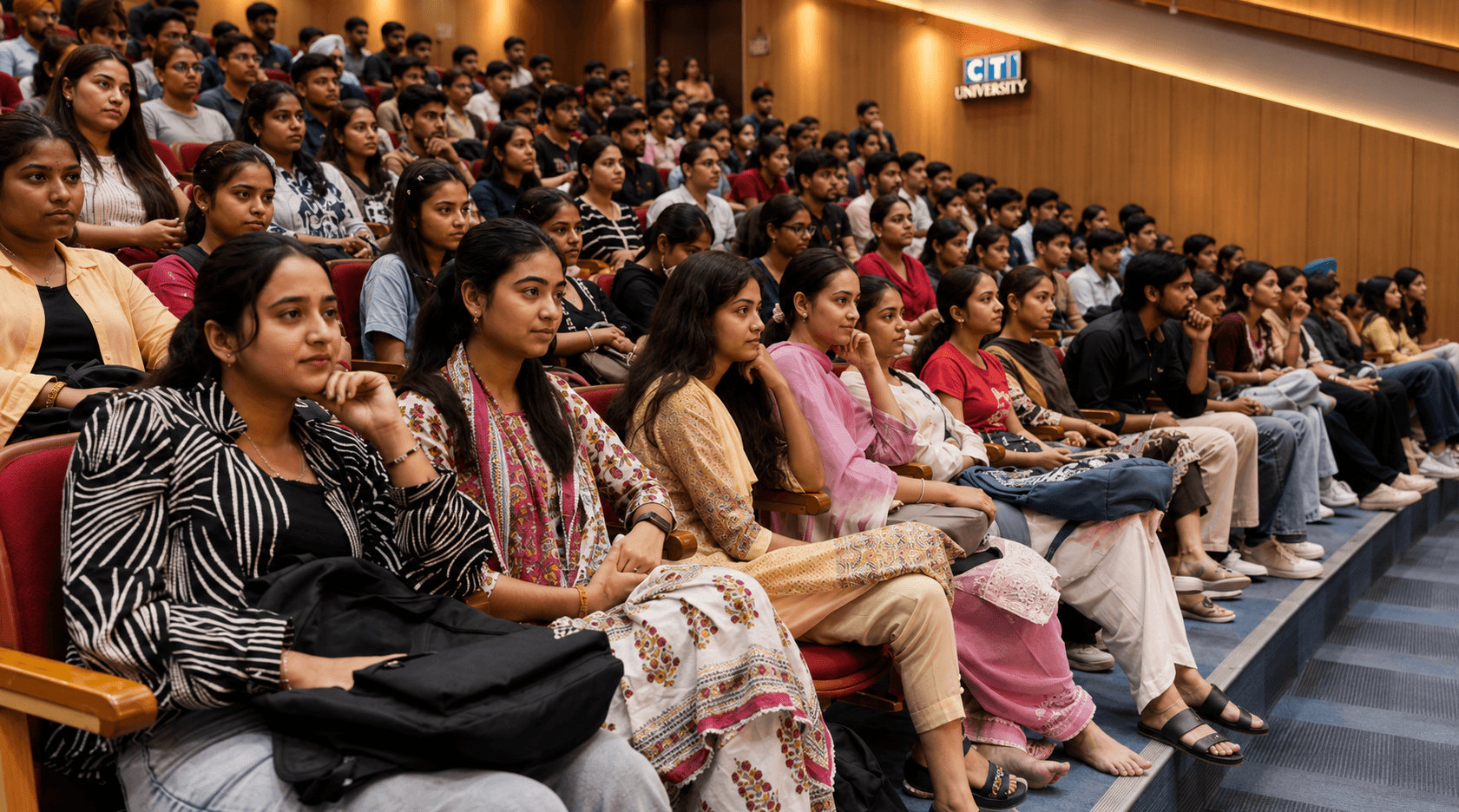
Project review week at the Amritsar campus
Mentors mark up work line by line
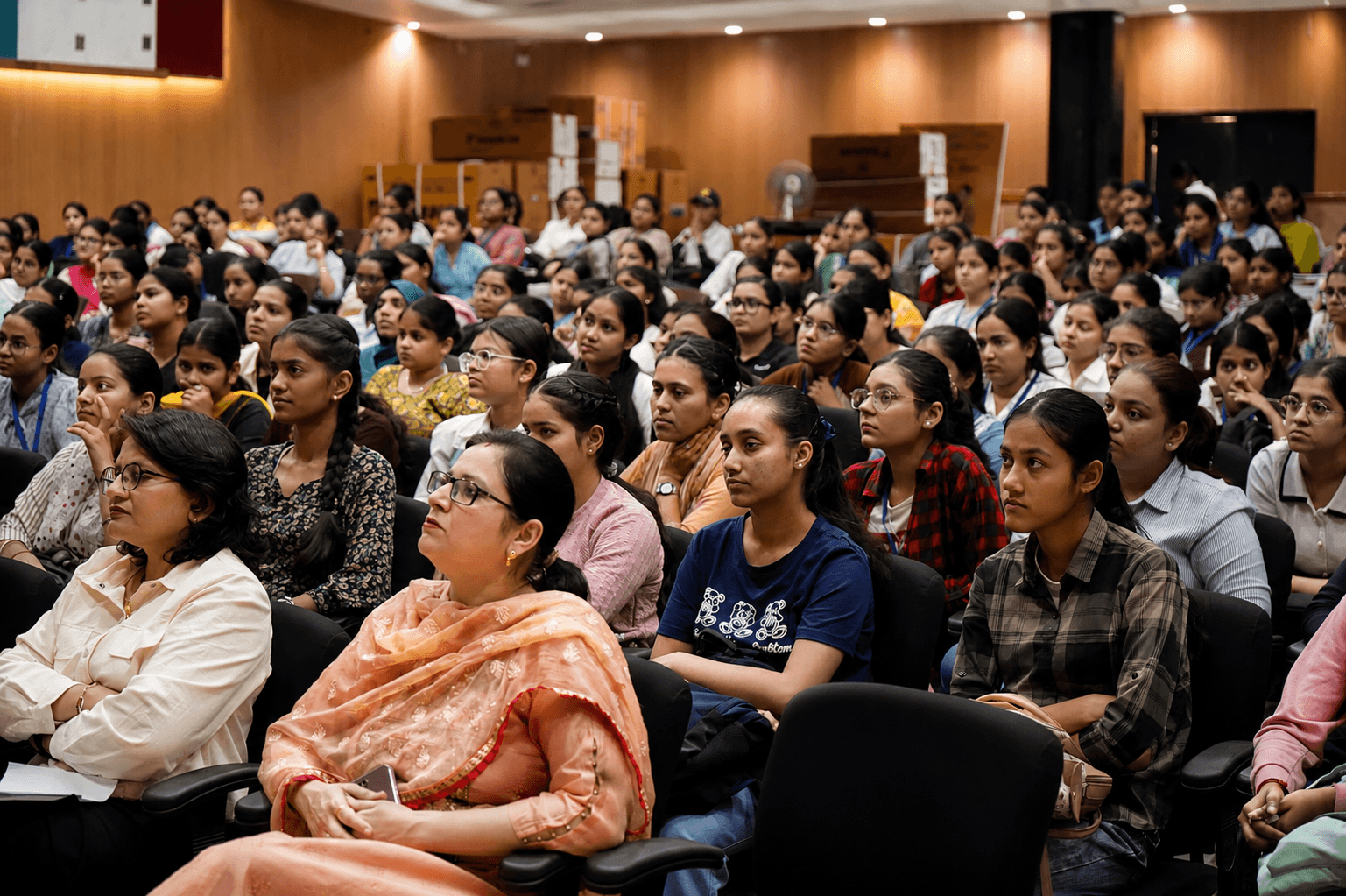
Hiring drive & mock interview day
Practitioners run the panel, not HR
No block is padding and none of it is a lecture series. Each span below ends in something a trainer has signed off on.
The toolchain from scratch and the fundamentals in depth — including the common failure modes, so you can review your own work before anyone else does.
A real requirement scoped with your trainer and delivered against a client-facing deadline, with a debrief on what you would do differently.
The same again, except you own the scope and the schedule. The trainer reviews rather than steers, which is the actual difference between training and working.
Your own specification taken to deployment and documented, then CV and portfolio review, mock interviews and realistic role and salary expectations.
Foundations & Environment is where the 4 Months Training track gets its footing. You work the concepts in the lab first, then carry them straight into the running project rather than leaving them as isolated exercises.
A reviewed piece of work demonstrating toolchain from scratch and version control properly.
4 Months Training sets the length, the review loop and the paperwork. What you build inside it is a decision you make at counselling — any track below runs in this format.
Each course page lists its full module breakdown, its real toolchain and the roles it leads to, so you can compare before you commit to one.
Browse the full catalogueThere is no entrance test and no prerequisite degree. What the programme does assume is that you will show up for the full 4 months and do the project work.
For CSE, IT and ECE students, industrial training is no longer optional — it is expected. This satisfies the academic requirement while giving you real coding, development and project experience, so you leave with a portfolio rather than paperwork. Students from GNDU, Khalsa College and affiliated institutes across the Majha region make up much of each intake.
BCA and MCA syllabi teach programming concepts without enough hands-on application. Four months of mentor-led work in real coding environments, on live projects with industry tools, is exactly the practical experience recruiters screen for when they are hiring freshers into developer or analyst roles.
If you hold a diploma in computer science or IT and want to strengthen your technical foundation before entering the job market — or before a B.Tech lateral entry — this closes the distance between diploma-level theory and what industry actually expects on day one.
A resume carrying only a degree is rarely enough now; employers want proof of applied skill. Four focused months adds in-demand technical skills, real project work and a completion certificate that means something to the person reading your CV.
Not everyone arrives from a technical background, and that is fine. If you are in a non-tech role and want to move into IT, web development or data, the track is approachable for a beginner while still rigorous enough to build genuine competency rather than familiarity.
The centre is in Amritsar, but a steady share of every batch travels from Ludhiana, Jalandhar and Hoshiarpur for the curriculum, the mentorship and the placement support. Flexible batch timings and a live online option make the trip manageable alongside a college schedule.
Job titles vary by company, but the underlying expectations do not. Each destination below maps to work you will have already done during the programme.
Complete the programme with a portfolio of live projects and receive an industry-recognised certificate, plus a documented internship letter accepted by Punjab universities.
Industry Certificate
Recognised by employers across Punjab and beyond
Internship Letter
Based on real client work, not a simulation
Portfolio of Projects
Live work you can show in any interview
Placement Support
CV review, mock interviews and hiring drives — support, not a guarantee
Two documents on completion — the course certificate, and a separate internship letter describing the live work you did.
A certificate answers what you can do today. This is the honest answer to what 4 months training looks like three to five years out, and why the fundamentals this course spends real time on are what carry you there.
The 4 months programme is built around the part that is genuinely in your hands — and you leave holding all of it.
A reviewed portfolio, an industry-recognised certificate and a fundamentals-first foundation you can keep building on. Markets move, as they always have; that foundation is exactly what lets you move with them as internship and training work around you keeps shifting.
Your first real requirement, scoped with the trainer and built against a client-facing deadline.
The second brief, where you own the scope and the schedule and the trainer only reviews.
A change request on work someone else wrote — the task every junior actually gets in month one.
A specification of your own, taken to deployment and documented well enough to walk an interviewer through.
Every project moves through the same loop: understand the brief, build it with guidance, then explain the decisions behind your work. The certificate is the receipt — the portfolio is the point.
Break a real requirement into a plan, the constraints it has to live inside, and the right tool for each part of it.
Guided Live Brief
Work hands-on with trainer feedback arriving while the decisions are still cheap to change.
Self-Run Live Brief
Turn the finished work into a portfolio story you can defend line by line in an interview.
Inherited Codebase Task
Where you complete your industrial training should not be a checkbox decision. It shapes your resume, your confidence in an interview and often your first offer — so it is worth knowing what actually differs between one centre and the next.
Most college curricula are heavy on theory and light on application. This inverts that ratio: live, real-world briefs rather than simulated exercises, so you finish with deliverables to show rather than a grade on a transcript.
The curriculum is shaped by current demand — the tools, languages and frameworks companies in Amritsar, Ludhiana and Chandigarh are actively hiring for. Your four months go into skills that translate into employability, not outdated syllabus content.
If your college requires a training certificate you have a choice: treat it as a formality, or use it as genuine skill-building. This is built for the second — it satisfies the requirement and strengthens your technical profile at the same time.
Learning to code alone from videos and PDFs is slow and frustrating. Here you get real-time doubt resolution, code reviews and structured feedback — the support that shortens the learning curve rather than leaving you to find your own way.
TechCadd is an ISO 9001-certified training company approved by the Ministry of Corporate Affairs. To an employer or an academic evaluator, that is recognised institutional backing rather than another self-printed completion letter.
Training centres in Amritsar, Jalandhar, Hoshiarpur, Ludhiana and Mohali mean the curriculum is shaped by demand across several job markets rather than one narrow local economy — and employers across the region know the name.
Not a generic national curriculum taught at a distance. Your trainers know what recruiters in Amritsar, Ludhiana and Jalandhar are hiring for right now, so the skills you build map onto openings you can actually apply to.
Batch timings are set so students commuting from Ludhiana, Jalandhar or Hoshiarpur can realistically attend without disrupting a college schedule, and every batch runs live online in parallel.
Recruiters hiring freshers consistently favour candidates who can speak confidently about real project work. Four months of it gives you concrete talking points instead of a vague answer about what you covered in college.
Collected from students who completed the 4 months training programme at the Amritsar campus, across morning, evening and weekend batches. Hover a card to slow the row right down and read it.
4.7
out of 5
10 verified reviews from Amritsar students
I did my industrial training at TechCadd right after my 5th semester, and honestly it was the best decision. My college wanted a proper certificate for mandatory training, but I also wanted to actually learn something. The web development track gave me real project experience — I built a full working website by the end, not just some sample code.
I was travelling from Ludhiana every week for the batches, and it was worth it. The trainers actually explain things instead of rushing through slides. My Python and Data Science sessions helped me understand things my college professors never made clear.
Good structured programme. I did the 4 months industrial training batch and it fit well around my semester schedule. Only thing I would say is the batch size could be slightly smaller for more one-on-one doubt clearing, but overall the content quality was solid.
I searched a lot for industrial training options near Ludhiana before choosing the Amritsar centre. Glad I made the trip. The live project work is what really stood out — most other places just give you recorded videos.
As a diploma student I always felt behind compared to B.Tech students when it came to practical skills. This training completely changed that. I now feel confident talking about actual projects in interviews instead of just my diploma marks.
Solid training overall. I came from an ECE background so web development was new territory for me, but the trainers were patient and broke things down well. The certificate is recognised too, which mattered for my college submission.
I travelled from Chandigarh for the weekend sessions and it was manageable. What I liked most was that the curriculum felt current — not outdated content copied from five years ago. My final project actually impressed my placement interviewers.
I had already graduated and was struggling to get interview calls with just my degree. Did the 4 months programme here and added real project work to my resume. Started getting responses within weeks of updating my profile.
Good mentorship throughout. The PMKVY-linked certification gave the training extra credibility when I mentioned it during interviews. Would recommend for anyone serious about actually learning, not just getting a certificate.
Compared other options in Ludhiana before deciding, but the reputation and multi-city presence gave me more confidence. The Git and GitHub training alone was worth it — my college never taught version control properly.
If something here is not covered, the Amritsar desk will answer it directly — no call-back queue.
Four months, structured as one month of foundations, two live briefs across months two and three, and a capstone with placement preparation in month four. If your college mandates six months instead, the 6 Months Training format runs the same way over a longer calendar.
One call with a counsellor is usually enough to find out. Book a free demo class and see the Amritsar lab before you decide.
The full route: a discipline learned properly, three live briefs, and the last six weeks spent inside a delivery team rather than a classroom.
6 monthsForty-five days that turn a degree into a job-ready skillset — live projects, mentors who still do the work, and a portfolio recruiters actually stop on.
45 days · 6 weeksThe six-week slot most Punjab colleges mandate, run as a real project cycle rather than a certificate you collect at the end.
6 weeksSend your question and a counsellor will call you back about batch timings, fees, EMI options, placement record, or whether this course fits your background.
Book a free demo class and see the lab before you decide.