Flagship project
Toolchain Warm-Up
A small end-to-end build in week two that proves the environment, the workflow and the review loop all work.
- Python 3
- Java 21
- pandas

6 weeks
Duration
5
Structured blocks
3
Live projects
Included
Internship letter
TechCadd's 6 Weeks Training in Amritsar is aimed at students, graduates and working professionals — whatever they have or have not done before. The early modules cover Orientation & Toolchain, Fundamentals at Speed and Standards & Real Files, so nothing later assumes knowledge you were never given. From there you take on Project Build and Submission & Documentation. The second half is where it turns practical: you work in VS Code, Git, Python 3, Java 21, pandas and Power BI the way a team actually does, against briefs that carry a real deadline. Each module ends in something you have built and a trainer has reviewed, so you finish with a portfolio, a CV built around it and interview practice for Trainee Engineer, Junior Developer and Trainee Analyst roles.
Most colleges write six weeks into the syllabus and leave students to find something to do with it. This is that slot used properly: a fortnight of tooling, then a brief with a deadline and a reviewer. Career-focused and mentor-led rather than theory-heavy, so you finish with a portfolio you can actually show an employer.
The programme is built for B.Tech, BCA, MCA and diploma students who have to complete mandatory industrial training and would rather come out of it with something. Instead of theory-heavy sessions, the six weeks run hands-on across web development, Python, Java, data science, machine learning, digital marketing, cloud computing and cyber security — you pick the track at counselling.
What you get is a structured, mentor-led curriculum, project-based assignments and a recognised certificate that adds real weight to a resume rather than filling a line on it. For most students it is the foundation the first internship or placement conversation is built on.
Reviewed by mentors · built for interviews
Live client work from week one, at the Amritsar lab.
Most 6 weeks training training in this region stops at the tutorial: you follow along, the notebook runs, nothing is retained. This programme is built the other way round — every module hands you an unfinished problem and a deadline, and a mentor reviews what you did with it.
That is slower and harder than watching lectures. It is also the only version that survives an interview, because the questions there are about the decisions you made, not the code you copied.
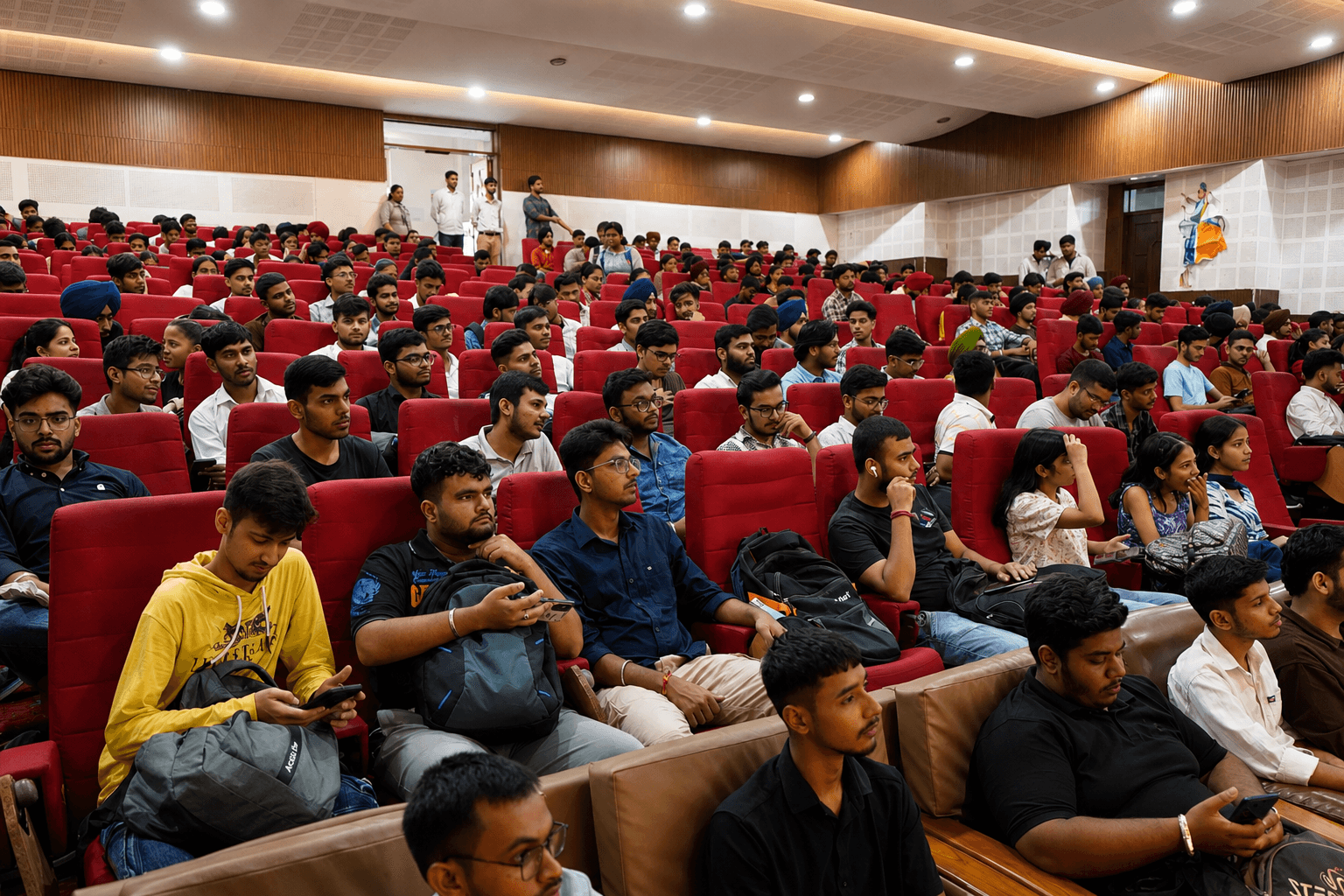
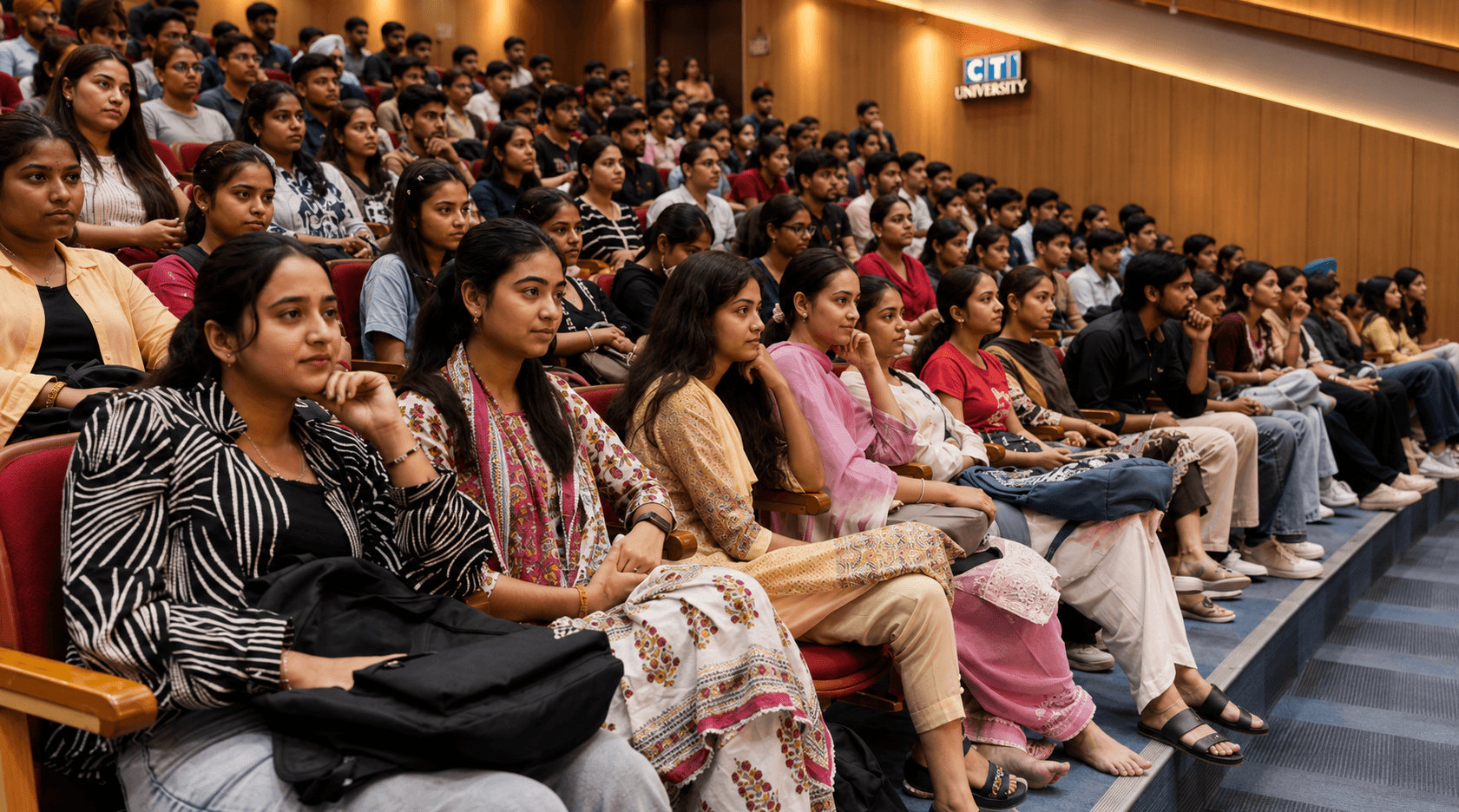
Project review week at the Amritsar campus
Mentors mark up work line by line
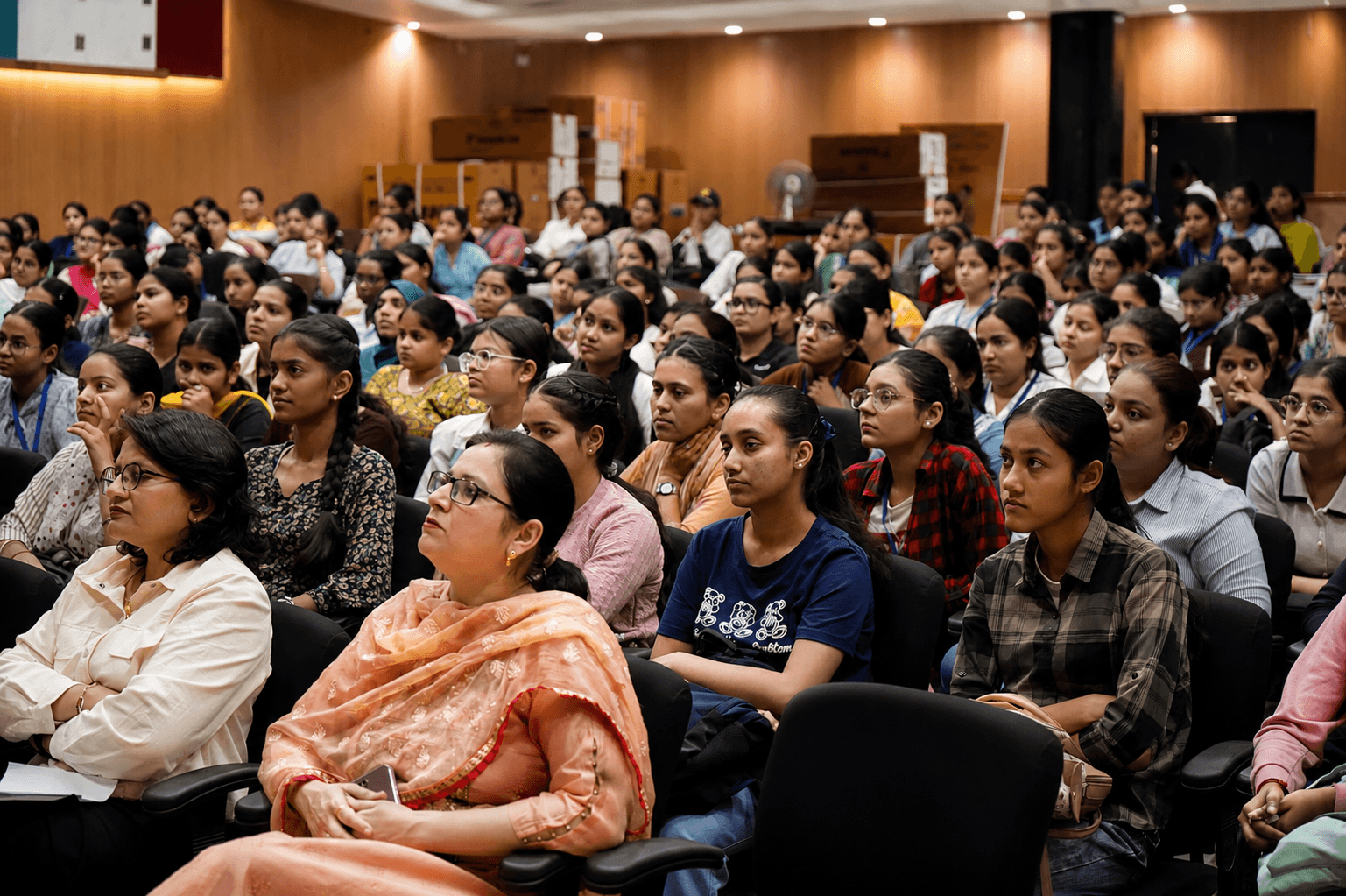
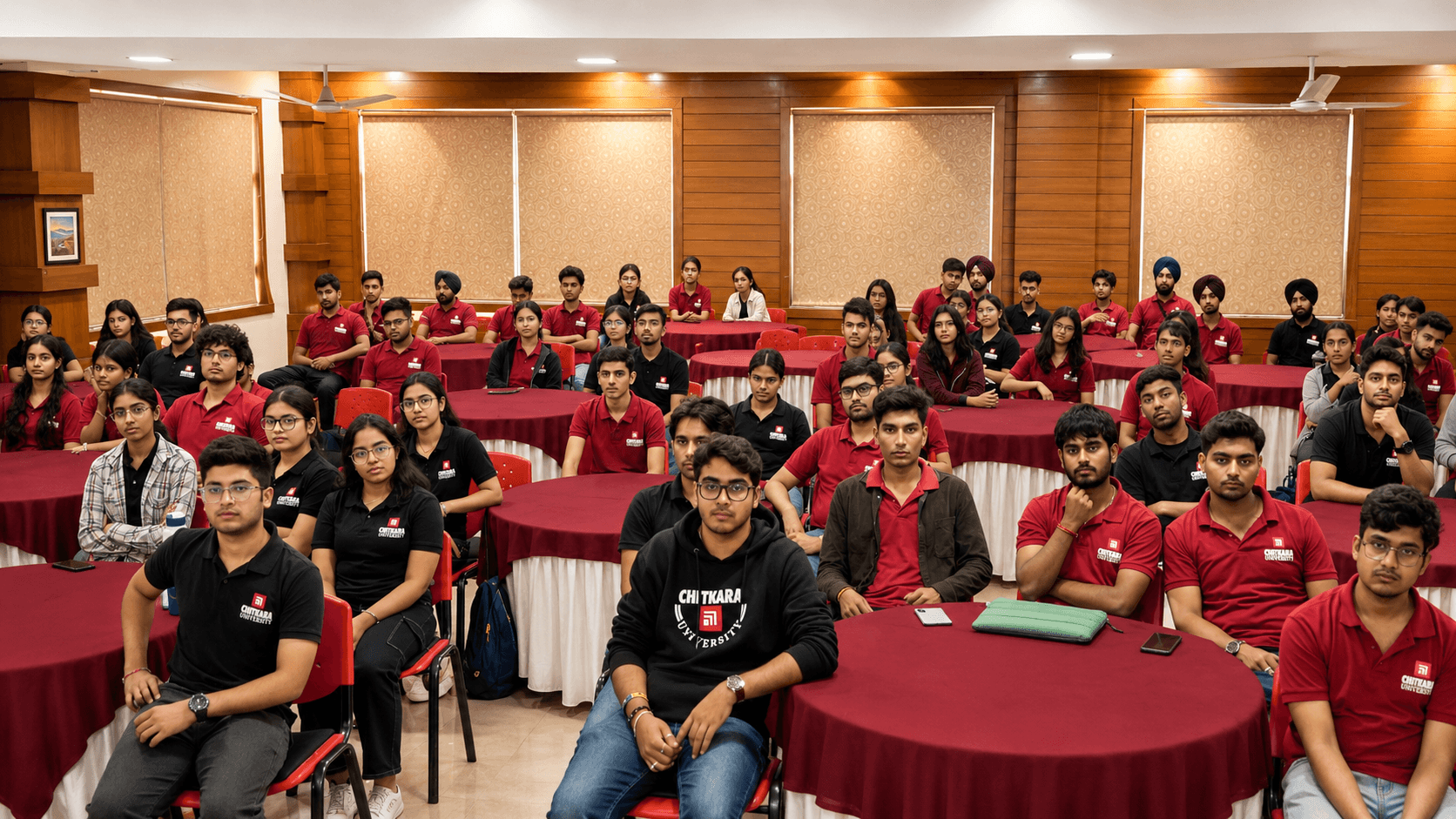
Hiring drive & mock interview day
Practitioners run the panel, not HR
No block is padding and none of it is a lecture series. Each span below ends in something a trainer has signed off on.
Toolchain, Git and the review loop, then the core concepts compressed into a fortnight of worked examples and your first reviewed artefact.
A brief handed over as a written spec, built against a daily trainer sign-off using the file and version conventions the job would expect.
Testing before handover, then the report written in your department's format alongside a portfolio entry you can actually show a recruiter.
Orientation & Toolchain is where the 6 Weeks Training track gets its footing. You work the concepts in the lab first, then carry them straight into the running project rather than leaving them as isolated exercises.
A reviewed piece of work demonstrating editor and environment and git and branching basics.
6 Weeks Training sets the length, the review loop and the paperwork. What you build inside it is a decision you make at counselling — any track below runs in this format.
Each course page lists its full module breakdown, its real toolchain and the roles it leads to, so you can compare before you commit to one.
Browse the full catalogueThere is no entrance test and no prerequisite degree. What the programme does assume is that you will show up for the full 6 weeks and do the project work.
Most engineering curricula require a mandatory six-week industrial or summer training between semesters. This satisfies that while giving you resume-worthy skills in web development, Python, Java, data science or cloud — the subjects that stay purely theoretical in a college classroom. CSE, IT, ECE and allied branches all fit.
BCA students need industrial exposure to strengthen their foundation before an MCA or the job market. Six weeks here bridges classroom concepts and real coding practice — programming languages, front-end and back-end work, and a live project you take from scope to handover.
With placements getting more competitive, MCA students use this for the specialised modules a standard postgraduate curriculum does not reach — full-stack development, data analytics or AI and machine learning, worked as projects rather than as chapters.
If you hold a diploma in computer science, IT or a related engineering field, this six-week window builds practical, job-relevant skill that makes you competitive for entry-level roles — or for lateral entry into a degree programme.
Not enrolled in a technical degree yet? That is fine. A lot of 12th pass students join to get a head start, test whether IT, digital marketing or web development actually interests them, and build a foundation before committing to a specialised degree or diploma.
If your degree is finished and the job hunt is not going anywhere, a short focused programme moves the needle. Recruiters value candidates who can demonstrate real project experience, and six weeks is enough to have some.
Whether you are in Amritsar itself or coming in from Batala, Tarn Taran or further, this is a locally accessible option — you do not have to move to Chandigarh or another metro for training of this standard.
Job titles vary by company, but the underlying expectations do not. Each destination below maps to work you will have already done during the programme.
Complete the programme with a portfolio of live projects and receive an industry-recognised certificate, plus a documented internship letter accepted by Punjab universities.
Industry Certificate
Recognised by employers across Punjab and beyond
Internship Letter
Based on real client work, not a simulation
Portfolio of Projects
Live work you can show in any interview
Placement Support
CV review, mock interviews and hiring drives — support, not a guarantee
Two documents on completion — the course certificate, and a separate internship letter describing the live work you did.
A certificate answers what you can do today. This is the honest answer to what 6 weeks training looks like three to five years out, and why the fundamentals this course spends real time on are what carry you there.
The 6 weeks programme is built around the part that is genuinely in your hands — and you leave holding all of it.
A reviewed portfolio, an industry-recognised certificate and a fundamentals-first foundation you can keep building on. Markets move, as they always have; that foundation is exactly what lets you move with them as internship and training work around you keeps shifting.
A small end-to-end build in week two that proves the environment, the workflow and the review loop all work.
A brief handed to you as a written spec, built in daily increments against a trainer sign-off.
The project documented to the standard a Punjab university department accepts for industrial training credit.
Every project moves through the same loop: understand the brief, build it with guidance, then explain the decisions behind your work. The certificate is the receipt — the portfolio is the point.
Break a real requirement into a plan, the constraints it has to live inside, and the right tool for each part of it.
Toolchain Warm-Up
Work hands-on with trainer feedback arriving while the decisions are still cheap to change.
Specified Project Build
Turn the finished work into a portfolio story you can defend line by line in an interview.
College Submission Pack
Choosing the right six-week programme genuinely shapes the next stage of your career, because this is usually the first thing on your CV that is not a marksheet. Here is what actually differs between one centre and the next.
Most curricula are heavy on theory and leave you underprepared for what industry expects. This closes that gap with the same tools, technologies and workflows real IT companies use today.
Instead of passive lectures you build: a website, a Python application, a dataset analysis, a marketing campaign. You leave with tangible work to show in an interview rather than notes and slides.
For B.Tech, BCA and MCA students most universities require a formal industrial training certificate. This meets that requirement and makes sure you learn something real in the process instead of just collecting it.
Course content is updated to match actual demand — full stack, Python, data science, digital marketing, cloud and cyber security. Your six weeks go into skills employers are hiring for now, not a syllabus frozen years ago.
Learning from people who have done the work rather than taught from a textbook changes what you get: practical insight, real problem-solving approaches, and honest career guidance rather than encouragement.
You come out with talking points, a portfolio of real work, and the ability to explain what you built and why. In the Amritsar and Ludhiana job markets, that increasingly counts for more than an academic score.
Established centres in Amritsar, Jalandhar, Mohali, Hoshiarpur and Ludhiana mean we know the academic requirements, the university expectations and the hiring realities that Punjab students are actually dealing with.
Students often assume quality IT training means moving to Chandigarh or Mohali. Getting the same structure closer to home saves the travel, the hostel and the time — none of which improve the training.
Six weeks is short, but it is long enough to understand how real projects work and to find out which specialisation actually interests you. Most students use it as the step before an internship, freelance work or campus placement.
Collected from students who completed the 6 weeks training programme at the Amritsar campus, across morning, evening and weekend batches. Hover a card to slow the row right down and read it.
4.7
out of 5
11 verified reviews from Amritsar students
I did my 6 weeks training in web development and honestly it was way more practical than I expected. We actually built a working website instead of just watching slides. My trainer explained everything step by step, even the doubts I had from college.
My college required 6 weeks industrial training, so I joined for Python. Best decision honestly. The projects we worked on actually matched what I later saw in my placement interview questions.
Good training overall, especially the data science module. The trainer had real industry experience which made a big difference. Only thing is the batch size could be slightly smaller for more one-on-one time.
I travel from Ludhiana for this training and it is totally worth it. The digital marketing sessions on Google Ads and SEO were really practical — I even started freelancing a little after completing it.
I was looking for 6 weeks training near Ludhiana and found the Amritsar centre through a friend's recommendation. The Java classes were clear and the trainer made sure everyone was following along before moving ahead.
Solid programme for anyone needing their mandatory 6 weeks industrial training. Learned React and got to build a mini project from scratch. Would have liked a few more sessions on deployment though.
The AI/ML track really opened my eyes to how much is possible with Python. The trainer broke down complex topics in a very simple way — it did not feel overwhelming at all, even as a beginner.
I was not sure which tech field to pick, so I joined the general web development track. Now I actually know what coding involves, and I have decided to pursue BCA next year because of this training.
Commuted from Ludhiana a few times a week and it was manageable. Cyber security basics were taught well with real tools like Wireshark, which I had not touched before. Good hands-on exposure.
After finishing my degree I felt I lacked practical skills. This six-week programme helped me build a proper portfolio in digital marketing, and I landed a junior role within two months of completing it.
The trainers actually answer your doubts patiently, even the basic ones. My full stack project from this training is still on my resume and interviewers always ask about it.
If something here is not covered, the Amritsar desk will answer it directly — no call-back queue.
Exactly six weeks: a fortnight on the toolchain and fundamentals, then a specified project build, then testing and documentation. It is shaped to fit inside a typical college semester break.
One call with a counsellor is usually enough to find out. Book a free demo class and see the Amritsar lab before you decide.
Forty-five days that turn a degree into a job-ready skillset — live projects, mentors who still do the work, and a portfolio recruiters actually stop on.
45 days · 6 weeksIndustry-driven, hands-on training for engineering and IT students who want real skill — two live briefs, a capstone, and the toolchain habits that survive a real job.
4 monthsThe full route: a discipline learned properly, three live briefs, and the last six weeks spent inside a delivery team rather than a classroom.
6 monthsSend your question and a counsellor will call you back about batch timings, fees, EMI options, placement record, or whether this course fits your background.
Book a free demo class and see the lab before you decide.