
Flagship project
First Scoped Task
A small, real change on live work — enough to learn the review standard without being able to break anything.
- MySQL
- Postman
- Figma

45 days – 6 months
Duration
6
Structured blocks
3
Live projects
Included
Internship letter
TechCadd's Internship Program in Amritsar is aimed at students, graduates and working professionals — whatever they have or have not done before. The early modules cover Onboarding & Standards, First Assigned Task and Owning a Feature, so nothing later assumes knowledge you were never given. From there you take on Working With Stakeholders and Delivery & Handover. The second half is where it turns practical: you work in VS Code, Git, MySQL, Postman, Figma and AWS the way a team actually does, against briefs that carry a real deadline. Each module ends in something you have built and a trainer has reviewed, so you finish with a portfolio, a CV built around it and interview practice for Intern, Junior Developer and Junior Analyst roles.
Most internship letters say nothing, because most internships involve nothing. This one puts you on work that ships, which is the only reason the letter is worth reading. Every module is mapped to what companies expect from a fresher — practical ability, tool familiarity, project experience, and the confidence to explain your own work in an interview.
Whether you are a BCA, MCA, B.Tech or diploma student — from GNDU, Khalsa College, Amritsar Group of Colleges or any other institute in the city — the programme is built to close the distance between what you study and what the IT industry actually expects. You work on live projects, get hands-on lab practice, and are mentored by people who know real workplace demands rather than a textbook syllabus.
Duration runs from 45 days to six months depending on whether you need it for a short industrial training requirement or a fuller internship, and the documentation is produced in the format GNDU and IKG PTU affiliated colleges accept. What you leave with is more than a summer break spent usefully: project work you can demonstrate, tools you can actually operate, and a certificate that means something to a recruiter.
Reviewed by mentors · built for interviews
Live client work from week one, at the Amritsar lab.
Most internship program training in this region stops at the tutorial: you follow along, the notebook runs, nothing is retained. This programme is built the other way round — every module hands you an unfinished problem and a deadline, and a mentor reviews what you did with it.
That is slower and harder than watching lectures. It is also the only version that survives an interview, because the questions there are about the decisions you made, not the code you copied.
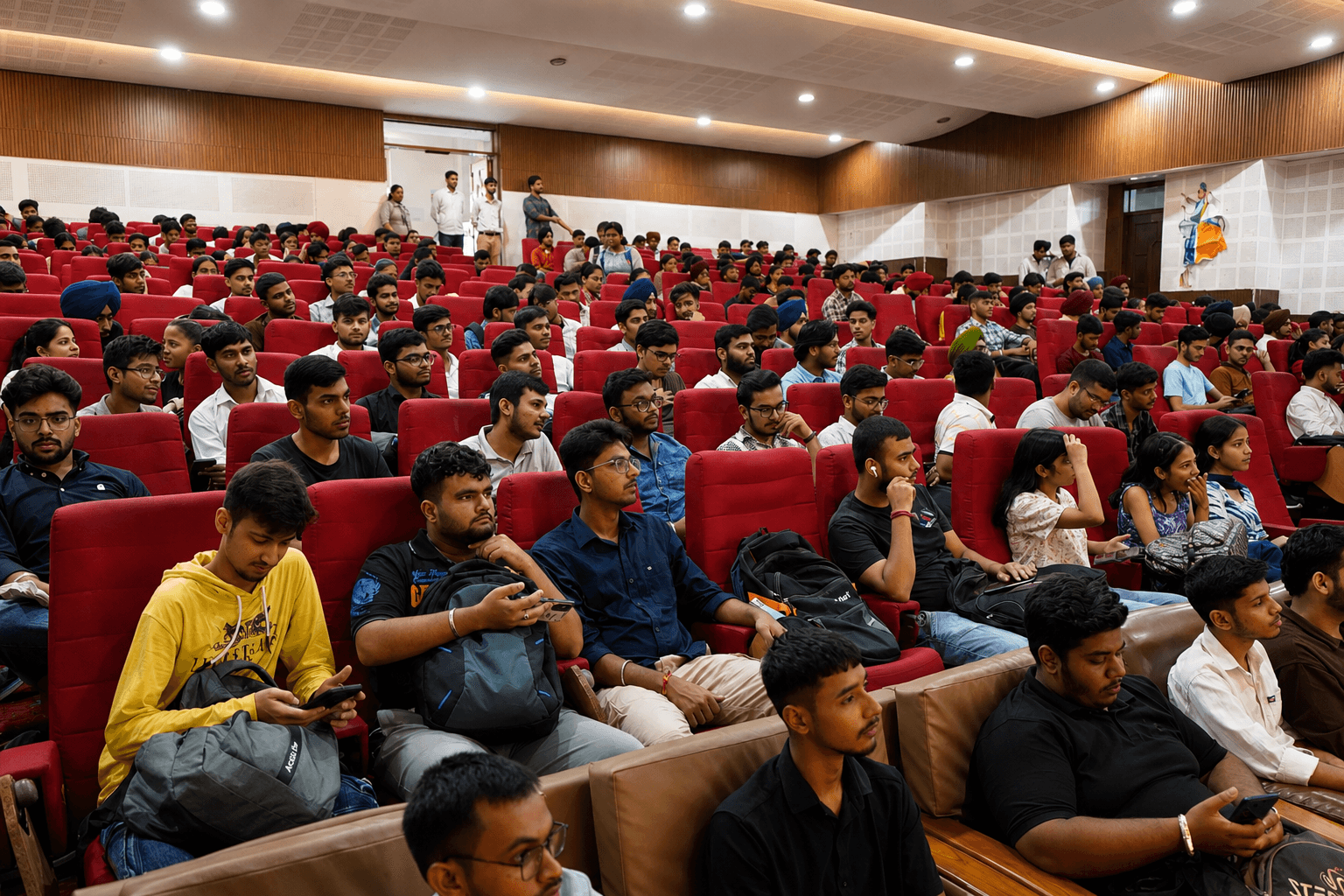
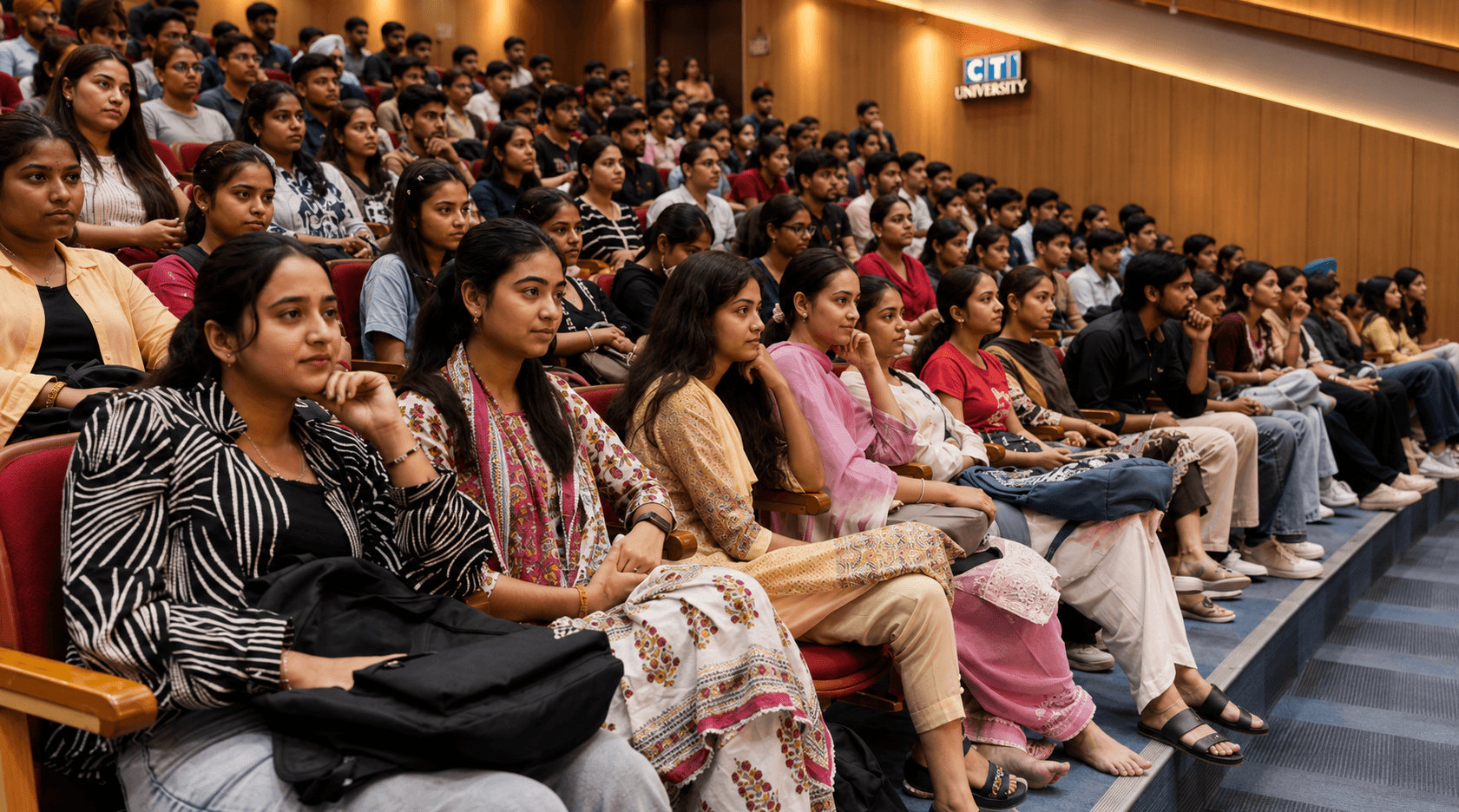
Project review week at the Amritsar campus
Mentors mark up work line by line
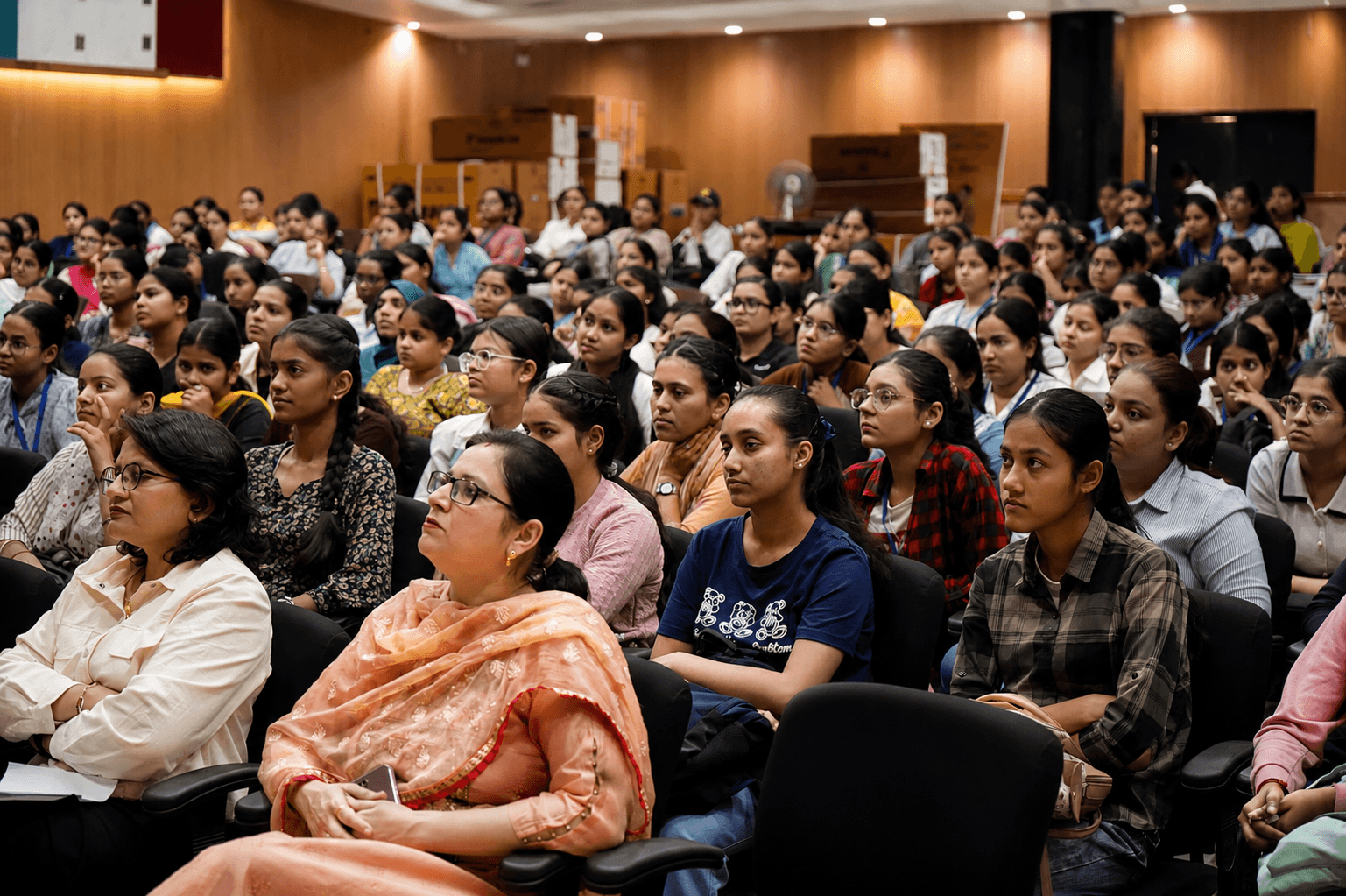
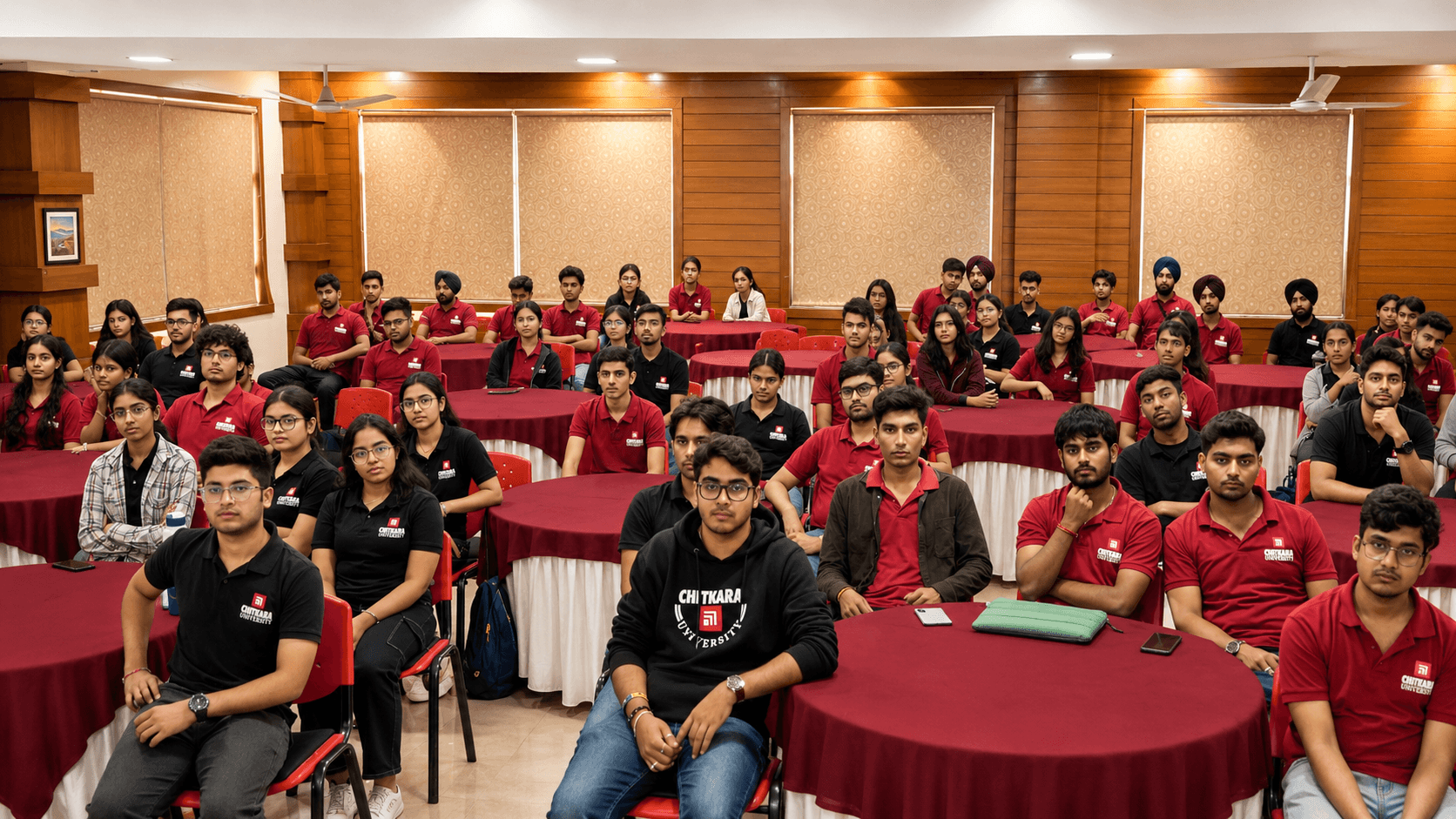
Hiring drive & mock interview day
Practitioners run the panel, not HR
No block is padding and none of it is a lecture series. Each span below ends in something a trainer has signed off on.
How the team works, the review standard, and a small scoped change on live work — enough to learn the bar without being able to break anything.
You scope a feature, build it against the team's actual deadline and defend it in review, talking to the person whose requirement it is.
Test your own work, write the handover that lets someone else pick it up, then a reviewer debrief — which is what the letter is drafted from.
Onboarding & Standards is where the Internship Program track gets its footing. You work the concepts in the lab first, then carry them straight into the running project rather than leaving them as isolated exercises.
A reviewed piece of work demonstrating how the team tracks progress and version control and review.
Internship Program sets the length, the review loop and the paperwork. What you build inside it is a decision you make at counselling — any track below runs in this format.
Each course page lists its full module breakdown, its real toolchain and the roles it leads to, so you can compare before you commit to one.
Browse the full catalogueThere is no entrance test and no prerequisite degree. What the programme does assume is that you will show up for the full 45 days – 6 months and do the project work.
Just finished 12th and unsure whether to go straight into a degree? This gives you a practical preview of what the industry actually looks like. Rather than guessing between web development, data analytics, digital marketing or cyber security, you get hands-on exposure before committing years to a specific degree.
Most curricula — GNDU-affiliated colleges and IKG PTU institutes included — require industrial training or an internship as part of the degree, whether that is 45 days, six weeks or six months. This is designed around that academic requirement while making sure the certificate and the skills are genuinely useful at a placement drive.
If you are job hunting, this fills the gap employers name most often: no practical, real-project experience. Recruiters across Amritsar's IT and service sector — and firms in Chandigarh, Mohali and Jalandhar that hire from Punjab's talent pool — consistently prefer candidates who have worked on live projects.
Not everyone arrives from a pure computer science background. Commerce graduates, science students and anyone who has been learning informally get a clear, guided route with a mentor attached — instead of scattered tutorials and no way to tell whether you are actually improving.
Already employed but want to add an in-demand skill without relocating to Chandigarh or Mohali for it? Batch timings are set to fit around existing commitments, and the delivery work you are placed on is scheduled around the batch you pick.
Job titles vary by company, but the underlying expectations do not. Each destination below maps to work you will have already done during the programme.
Complete the programme with a portfolio of live projects and receive an industry-recognised certificate, plus a documented internship letter accepted by Punjab universities.
Industry Certificate
Recognised by employers across Punjab and beyond
Internship Letter
Based on real client work, not a simulation
Portfolio of Projects
Live work you can show in any interview
Placement Support
CV review, mock interviews and hiring drives — support, not a guarantee
Two documents on completion — the course certificate, and a separate internship letter describing the live work you did.
A certificate answers what you can do today. This is the honest answer to what internship program looks like three to five years out, and why the fundamentals this course spends real time on are what carry you there.
The 45 days – 6 months programme is built around the part that is genuinely in your hands — and you leave holding all of it.
A reviewed portfolio, an industry-recognised certificate and a fundamentals-first foundation you can keep building on. Markets move, as they always have; that foundation is exactly what lets you move with them as internship and training work around you keeps shifting.
A small, real change on live work — enough to learn the review standard without being able to break anything.
A feature you scope, build and defend in review, delivered against the team's actual deadline.
The written handover and debrief that let someone else pick your work up — and that your letter is drafted from.
Every project moves through the same loop: understand the brief, build it with guidance, then explain the decisions behind your work. The certificate is the receipt — the portfolio is the point.
Break a real requirement into a plan, the constraints it has to live inside, and the right tool for each part of it.
First Scoped Task
Work hands-on with trainer feedback arriving while the decisions are still cheap to change.
Owned Feature
Turn the finished work into a portfolio story you can defend line by line in an interview.
Handover Pack
Why choose this over a generic coaching centre or a purely online course? The honest answer is what happens to the work you produce — whether it ends up as a certificate in a folder, or as something a recruiter asks you to walk them through.
Plenty of programmes exist only to satisfy a college requirement — a certificate handed over after passive lectures. Every module here is mapped to what companies expect from a fresher: practical ability, tool familiarity, project experience, and being able to explain your own work.
Not long theory sessions followed by a rushed project at the end. You are on live and mini-projects continuously, so by completion you have actual deliverables to show rather than notes to recall.
The most common complaint about generic institutes is being left to work it out alone after a lecture. Mentors here stay involved — reviewing your project work, clearing doubts one to one, and pushing you to understand why something works rather than how to copy it.
Whether your department mandates 45 days, six weeks or six months, the documentation, project reports and certification are produced in the format your college expects — with real skill-building underneath rather than paperwork alone.
The syllabus is not designed in isolation from the job market. It follows the tools, technologies and workflows companies across Amritsar, Chandigarh and Mohali are actively hiring for, so what you learn is relevant the day you walk into an interview.
Serious training in Punjab has tended to concentrate in Mohali, Chandigarh and Jalandhar, leaving Amritsar students to either commute or settle. Getting the same structured, mentor-led, project-based approach locally removes that trade-off entirely.
TechCadd is an ISO 9001 certified training company and an approved PMKVY training partner. The certificate satisfies a university's documented-training requirement, and the project experience behind it stands up when a recruiter asks you to explain your work.
Thousands of students have been through these programmes in Jalandhar, Hoshiarpur, Ludhiana and Mohali. What runs in Amritsar is a system that has been refined across the region rather than a first attempt at one.
The measure of an internship is not whether you finished it — it is whether you are more employable afterwards. Live projects you can talk about, practical tool experience, and the confidence to apply it in a real workplace are the actual deliverables.
Collected from students who completed the internship program programme at the Amritsar campus, across morning, evening and weekend batches. Hover a card to slow the row right down and read it.
4.7
out of 5
11 verified reviews from Amritsar students
I needed industrial training for my BCA degree and honestly was not expecting much, but this completely changed that. The mentors actually sit with you and explain things until you get it. I built my first real web project here and used it in my placement interview last month.
Coming from Ranjit Avenue, I did not want to travel to Mohali every day for training. This gave me the same quality without the commute. The trainers pushed me to actually understand the logic instead of just copying code.
Good structured programme. I was worried MCA-level training would be too basic, but they adjusted the pace once they saw where I was at. Would have liked a slightly longer project phase, but overall a very solid experience.
I am from a small institute near Batala Road and always felt behind compared to bigger city students. This internship training gave me real confidence — I finally have a project I am proud to show in interviews.
My college needed a proper internship certificate with documentation, and that was handled professionally while actually teaching me something useful. My mentor was patient even when I asked the same doubt three times.
Compared to a friend's experience at a generic local institute, this felt like actual industry training. We worked on live projects from week one, not just at the end. I recommend it to anyone doing industrial training in Amritsar.
Solid programme with genuinely helpful trainers. I came in knowing almost nothing about web development and left with a working project. Batch timings were flexible enough to work around my college schedule.
I had already done a basic course elsewhere but wanted something more practical before my job search. This filled that gap well — proper tools, real project work, and mentors who have clearly worked in the industry themselves.
What stood out was how approachable the mentors were. I never felt embarrassed asking basic questions. By the end I had a portfolio project I actually built myself, not something copy-pasted from tutorials.
I compared a few options in Amritsar and Chandigarh before choosing TechCadd, and it was worth it. The certificate satisfied my university's industrial training requirement and the skills held up when I actually needed them in interviews.
Overall a great experience. The hands-on approach is what I appreciated most — far better than sitting through lectures. My only suggestion would be more sessions on advanced tools, but the fundamentals were taught really well.
If something here is not covered, the Amritsar desk will answer it directly — no call-back queue.
Anywhere from 45 days to six months, depending on whether you need it for a short industrial training requirement or a fuller internship experience. The duration is agreed at counselling against your college's requirement.
One call with a counsellor is usually enough to find out. Book a free demo class and see the Amritsar lab before you decide.
The industrial training your university requires, run as actual industry work — with the paperwork done in the format your department accepts.
6 weeks – 6 monthsForty-five days that turn a degree into a job-ready skillset — live projects, mentors who still do the work, and a portfolio recruiters actually stop on.
45 days · 6 weeksThe six-week slot most Punjab colleges mandate, run as a real project cycle rather than a certificate you collect at the end.
6 weeksSend your question and a counsellor will call you back about batch timings, fees, EMI options, placement record, or whether this course fits your background.
Book a free demo class and see the lab before you decide.