




The Biggest GCP Mistake Beginners Make (And How to Avoid It)
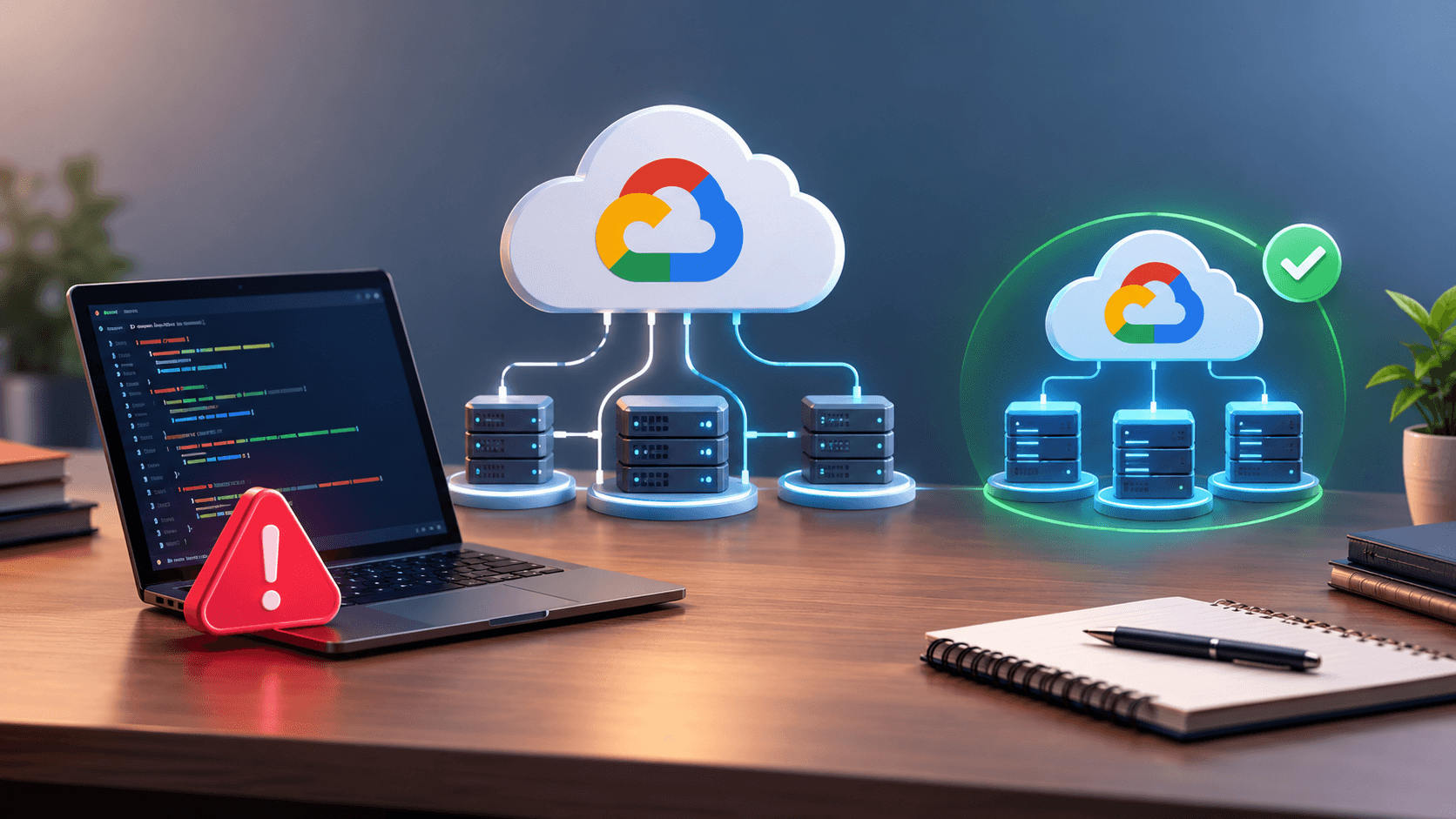
Many beginners start learning Google Cloud Platform by launching virtual machines and exploring services without understanding the costs, permissions, and configurations involved. Learn the most common GCP mistake, why it matters, and how to build safer cloud habits from day one.
Learning Google Cloud Platform (GCP), now commonly referred to through Google Cloud branding, can be exciting when you're exploring virtual machines, cloud storage, databases, and deployment tools for the first time. You can build real projects without managing physical servers, which makes cloud computing easier to experiment with than ever.
However, there's one mistake that can turn an otherwise useful learning experience into an expensive or frustrating one: starting to use cloud services without understanding how billing, permissions, and resource configuration work.
Beginners often focus on getting a project running as quickly as possible. They create a virtual machine, upload files, experiment with a database, or deploy an application, but forget to check what those resources cost or who can access them.
The good news is that these problems are avoidable. With a few practical habits, you can learn GCP more confidently while keeping your projects organised, secure, and within budget.
The Biggest GCP Mistake: Treating Cloud Resources Like Free Local Software
When you practise Python on your laptop, running a script generally doesn't create a separate hourly infrastructure charge. Cloud computing works differently. Depending on the services and configurations you choose, resources may generate charges while they run, store data, process requests, or transfer information.
A beginner might create a Compute Engine virtual machine to practise Linux commands. After finishing the exercise, they close the browser tab and assume the machine has stopped.
It hasn't.
If the virtual machine remains running, applicable compute charges may continue. Storage disks, reserved IP addresses, network traffic, and other resources can also have separate pricing rules.
This is why understanding the difference between using a service and stopping or deleting it matters so much.
Cloud projects are excellent learning environments, but they aren't automatically free just because you're using them for practice.
Why Beginners Make This Mistake
There are several reasons new cloud learners overlook these details.
First, most tutorials concentrate on completing a task. They show you how to create a virtual machine, deploy an application, or configure a storage bucket. Billing and security settings may receive only a brief mention.
Second, cloud platforms offer many configuration choices. A beginner may select a machine type, storage option, or network setting without understanding how that decision affects cost or exposure.
Finally, successful deployment creates a false sense of completion. When an application works, it's tempting to move straight to the next lesson instead of checking whether the resources are still needed.
None of these mistakes means you're bad at cloud computing. They simply show why learning cloud management alongside technical implementation is essential.
1. Ignoring Billing and Budget Controls
One of the first things you should learn in GCP is how billing works.
Different services use different pricing models. Some charge according to usage duration, while others depend on storage volume, requests, processing activity, or data transfer. The exact cost depends on the service, configuration, location, and applicable pricing terms.
For example, imagine you're practising deployment by creating a virtual machine, attaching a disk, and testing an application. You finish the tutorial but leave the machine running over the weekend. You may continue to incur charges even though you're not actively using the application.
To avoid this problem, develop a simple routine:
Review the pricing information before enabling an unfamiliar service.
Check the billing account and project associated with your experiment.
Create a budget and configure budget alerts where supported.
Review actual usage and charges in the Google Cloud billing reports.
Stop or delete resources when you no longer need them, according to the service's behaviour.
One important detail: a Cloud Billing budget alert is not automatically a spending cap. It can notify you when spending reaches a specified threshold, but it doesn't necessarily stop services or prevent additional charges.
Free-tier offers and trial credits also have eligibility conditions and usage limits. Always check the current terms rather than assuming every service is free for beginners.
2. Leaving Cloud Resources Running
The second part of the problem is poor resource cleanup.
Cloud consoles make it easy to create resources, but learners don't always maintain an inventory of what they've created. After completing several tutorials, you might have unused virtual machines, disks, storage buckets, static IP addresses, or other resources scattered across different projects.
Some may continue generating charges. Others might retain data or remain accessible when you no longer need them.
A practical solution is to organise your learning environment from the beginning.
Use separate projects for different experiments when appropriate, and give projects and resources descriptive names. For example, a project named gcp-linux-practice is easier to recognise than one named test-project-3.
Before ending a session, check the resources you created. Stop machines when you only need to pause them, and delete resources when they're no longer required. Remember that stopping a service and deleting it aren't always equivalent: disks or other associated resources may remain.
If a project contains important work, back it up before removing anything.
3. Giving Resources Too Much Access
Cost isn't the only risk. Beginners can also make their cloud projects unnecessarily accessible.
For example, you might configure a Cloud Storage bucket so that anyone with the link can access its contents because it makes testing easier. If that bucket contains private files, credentials, or other sensitive information, the configuration can expose data unintentionally.
Another common problem is granting broad permissions to a user or service account simply because a tutorial recommends an easy setup.
Google Cloud uses Identity and Access Management (IAM) to control who can access resources and which actions they can perform.
A safer approach is to follow the principle of least privilege: give each user or service account only the permissions required for its task.
When practising, remember to:
Avoid storing passwords, API keys, or service account credentials in public repositories.
Review IAM roles before granting access.
Check whether storage buckets or applications are publicly accessible.
Use dedicated service accounts for workloads when appropriate.
Enable additional security controls when the project requires them.
You don't need to master every security feature immediately. Start by understanding what access you're granting and why.
4. Copying Tutorials Without Understanding the Configuration
Following a tutorial is a useful way to learn GCP. The mistake is copying commands without understanding their effects.
A command that works in someone else's project may behave differently in yours. It could create billable resources, change access permissions, deploy a service in an unexpected region, or delete data.
Before running a command, identify three things: what it creates or changes, which project it affects, and whether the action can be reversed.
If you're using the Google Cloud CLI, check your active configuration and project before executing commands. Pay particular attention to commands that modify IAM policies, remove resources, or deploy services.
Try to explain each important command in your own words. If you can't explain what it does, pause and investigate it before proceeding.
This habit develops a deeper understanding than simply reproducing the final result shown in a video.
A Simple GCP Learning Workflow That Prevents These Problems
You don't need a complicated checklist to get started. Use the same process for every new practical exercise.
Before starting: Identify the service you need, review its pricing, confirm the correct project, and understand the permissions required.
While working: Create only the resources necessary for the task. Use sensible names, avoid unnecessary access, and keep credentials private.
After finishing: Verify that the application or exercise works, then inspect the resources you created. Stop or delete what you no longer need and check for associated disks, IP addresses, storage, or other remaining resources.
At the end of the week: Review your billing reports, resource inventory, IAM permissions, and any unfinished experiments.
This routine is useful whether you're learning Compute Engine, Cloud Storage, Google Kubernetes Engine, Cloud Run, or other Google Cloud services. The specific configuration differs, but the underlying habits remain relevant.
How Beginners Can Practise GCP Without Unnecessary Risk
Start with small, clearly defined projects instead of deploying a large application immediately.
For example, you could begin by exploring Cloud Storage with non-sensitive sample files, learning basic virtual machine administration, or deploying a simple application using an appropriate managed service.
Set a limit on the time and resources you intend to use. Read the relevant documentation, and confirm whether the selected service is covered by any applicable free usage allowance.
As your knowledge grows, gradually introduce networking, IAM, monitoring, deployment automation, and infrastructure management.
If you're following a structured cloud computing course, look for practical exercises that explain not just how to deploy something, but also how to secure it, monitor it, estimate its cost, and clean it up afterward.
That combination helps you understand how cloud services behave beyond the tutorial environment.
Frequently Asked Questions
What is the most common GCP mistake beginners make?
A frequent mistake is creating cloud resources without understanding their billing, security settings, and lifecycle. Leaving unused resources running or granting unnecessary access can lead to avoidable costs and security problems.
Is Google Cloud free for beginners?
Google Cloud may offer free usage allowances and trial credits, subject to eligibility and current terms. Not every service or configuration is free, so check the applicable pricing before starting an experiment.
How can I avoid unexpected GCP charges?
Review service pricing, configure budget alerts, monitor billing reports, and clean up unused resources. Remember that budget alerts generally notify you about spending rather than automatically stopping services.
Should beginners learn GCP before AWS or Azure?
The choice depends on your goals, existing knowledge, and the projects you want to build. The fundamental cloud concepts—compute, storage, networking, identity management, and billing—are useful across major cloud platforms. Start with one platform and build practical understanding before trying to learn everything at once.
Which GCP services should beginners learn first?
Consider starting with Google Cloud projects and billing basics, IAM, Cloud Storage, Compute Engine, and basic networking. You can then explore services such as Cloud Run, BigQuery, or Google Kubernetes Engine according to your interests and project requirements.
Build Good Cloud Habits From Your First Project
Learning Google Cloud Platform isn't just about getting applications to run. It's also about understanding the resources behind them, controlling access, managing costs, and knowing when to stop or remove what you've created.
The biggest lesson for beginners is simple: don't treat cloud infrastructure as something you can launch and forget. Check your configuration before deployment, monitor resources while experimenting, and clean up when you're finished.
These habits make every future project easier to manage. As you continue learning through documentation, guided practice, or structured training, focus on understanding why each configuration matters—not just which buttons to click.
That approach will help you build a more reliable foundation in GCP and prepare you for more complex cloud projects.