Flagship project
Multi-Screen UI App
A polished multi-screen app built from a Figma design with navigation and responsive layouts.
- Firebase
- Android Studio
- VS Code

45 days – 6 months
Duration
6
Structured blocks
4
Live projects
Included
Internship letter
Flutter App Development runs as a focused 45-day programme or as industrial training at whatever length your syllabus mandates. Same trainers, same live brief — the difference is depth and paperwork.
45 days · 6 weeks
Six weeks to build and install one complete Flutter app with Firebase login.
6 weeks – 6 months
The full Flutter track at your mandated length, including state management, APIs and a department-format report.
techcadd's Flutter App Development in Amritsar is aimed at students, graduates and working professionals — whatever they have or have not done before. The early modules cover Dart Fundamentals, Flutter Widgets & Layouts and Navigation & Forms, so nothing later assumes knowledge you were never given. From there you take on State Management and APIs & Firebase. The second half is where it turns practical: you work in Flutter, Dart, Firebase, Android Studio, VS Code and Figma the way a team actually does, against briefs that carry a real deadline. Each module ends in something you have built and a trainer has reviewed, so you finish with a portfolio, a CV built around it and interview practice for Junior Flutter Developer, Mobile App Developer Trainee and Android Developer roles.
Mobile development is learned by shipping, not by reading widget catalogues. This training takes you from Dart basics to a complete Flutter app with authentication, a live backend and state management, built to a real requirement and installed on a real device.
You start with Dart and Flutter's widget model, then layouts, navigation, forms and state management. From there you connect to REST APIs and Firebase for authentication, storage and push notifications.
The live brief is an app from our delivery pipeline, taken from wireframe to an installable build. You leave with the source on GitHub, a release APK and a letter that names the app you built.
Reviewed by mentors · built for interviews
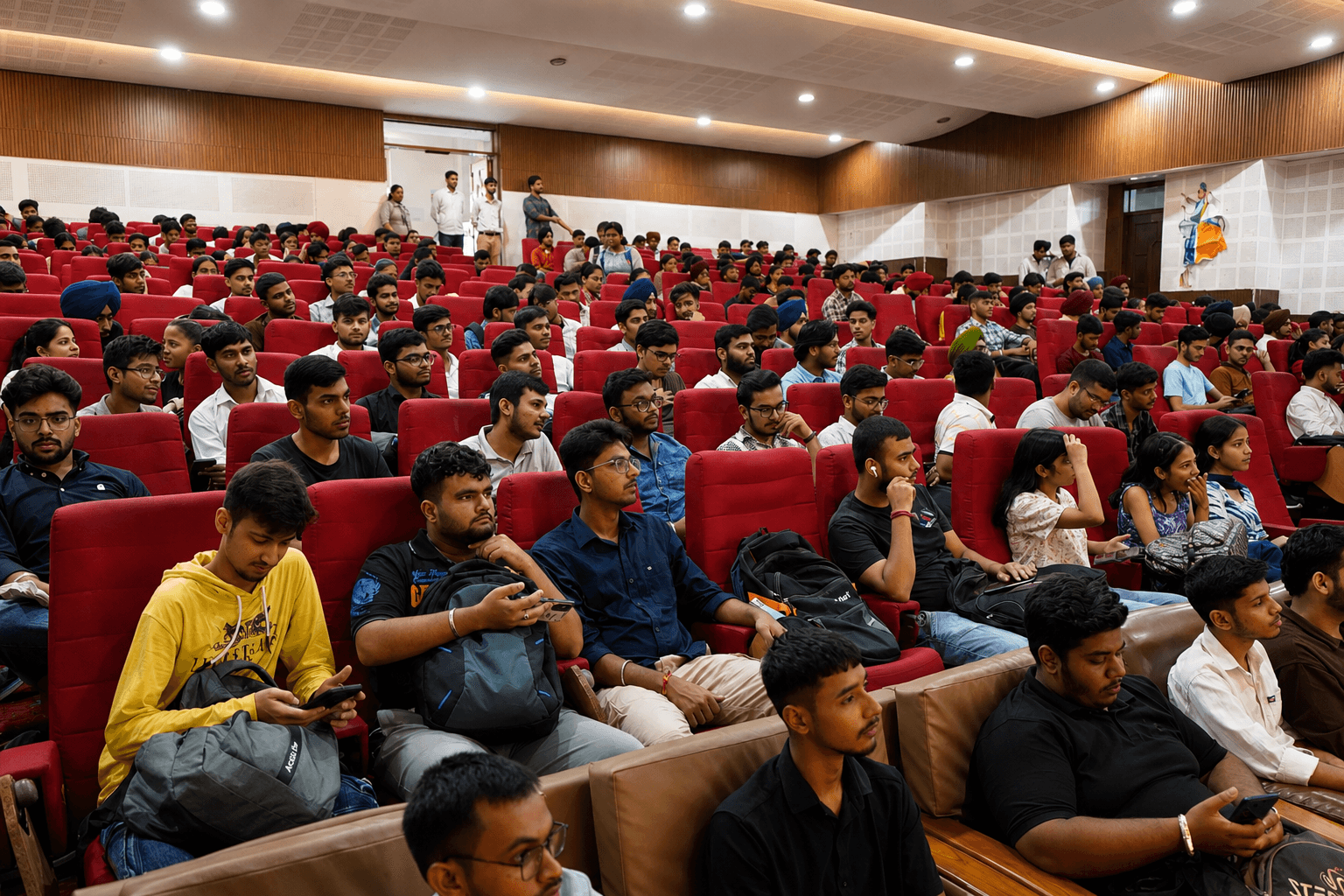
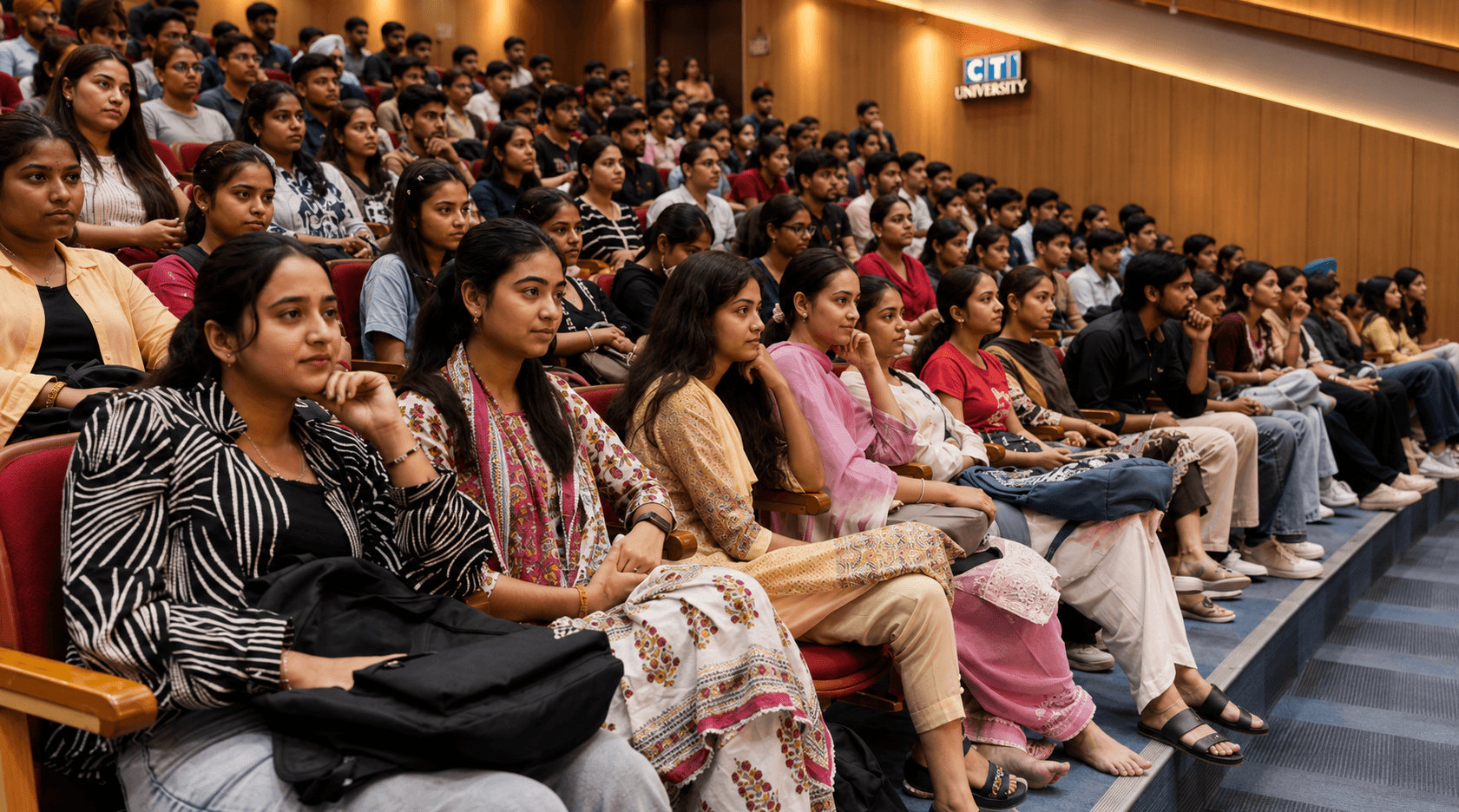
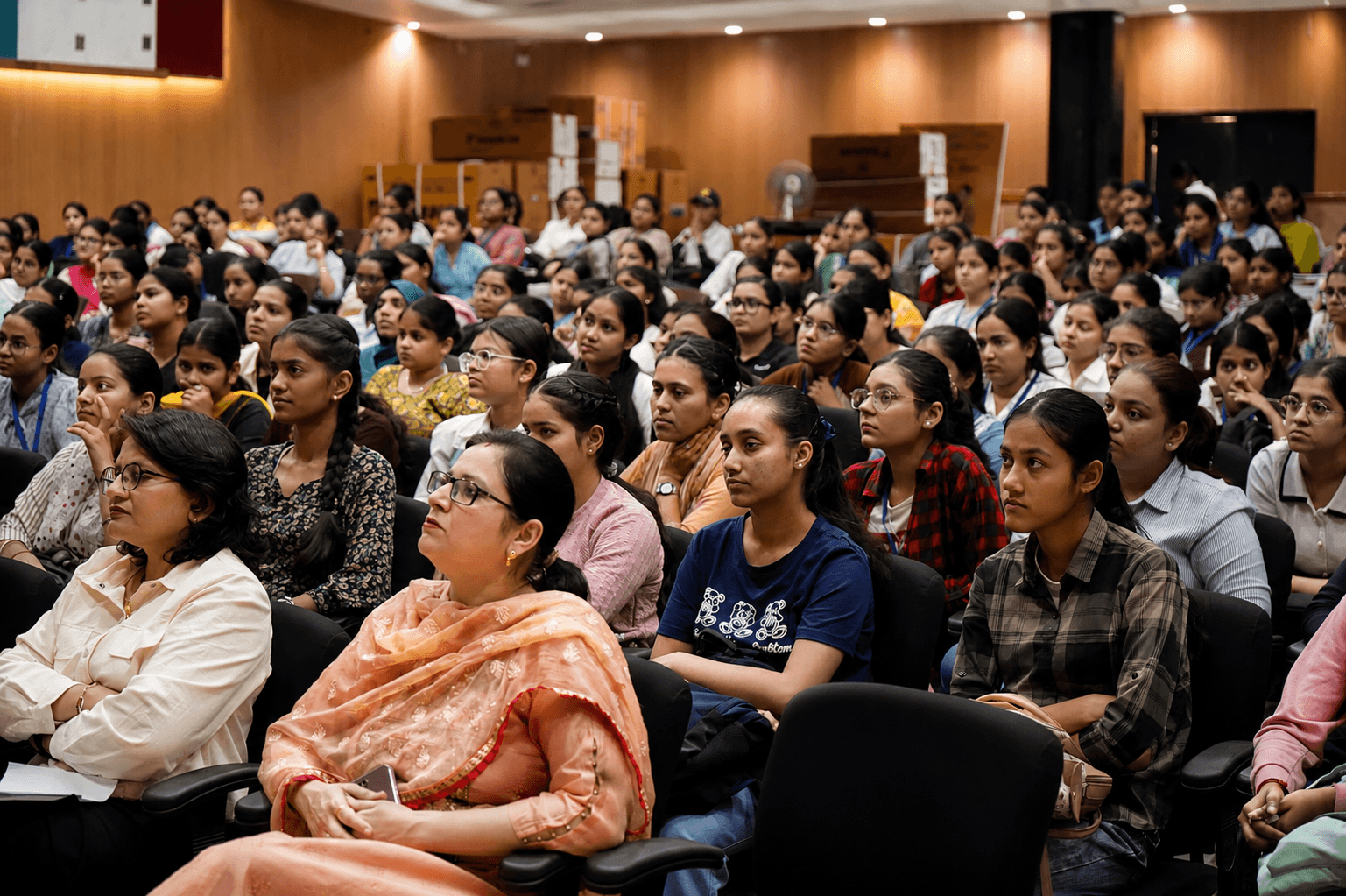
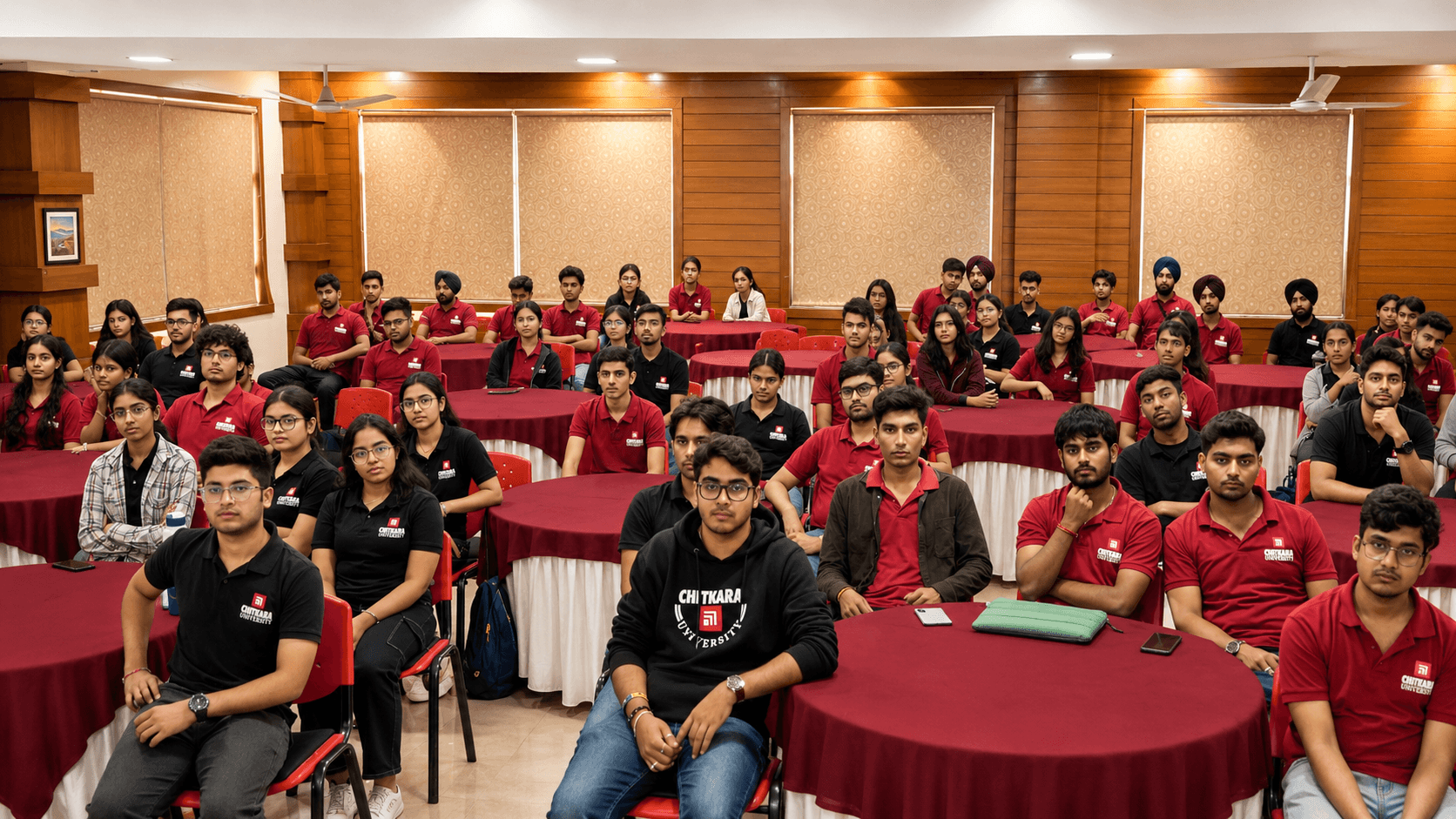
Live client work from week one, at the Amritsar lab.
Most flutter app development training in this region stops at the tutorial: you follow along, the notebook runs, nothing is retained. This programme is built the other way round — every module hands you an unfinished problem and a deadline, and a mentor reviews what you did with it.
That is slower and harder than watching lectures. It is also the only version that survives an interview, because the questions there are about the decisions you made, not the code you copied.
Project review week at the Amritsar campus
Mentors mark up work line by line
Hiring drive & mock interview day
Practitioners run the panel, not HR
No block is padding and none of it is a lecture series. Each span below ends in something a trainer has signed off on.
Dart fundamentals, Flutter setup and the widget tree — layouts and navigation built daily with a trainer reviewing every screen.
A real app brief from the delivery pipeline: screens from a Figma design, state management, API calls and Firebase authentication, reviewed in daily increments.
Testing on real devices, a release build, a portfolio write-up and the certificate and letter, followed by a mock interview.
Dart Fundamentals is where the Flutter App Development track gets its footing. You work the concepts in the lab first, then carry them straight into the running project rather than leaving them as isolated exercises.
A reviewed piece of work demonstrating variables and types and functions and classes.
There is no entrance test and no prerequisite degree. What the programme does assume is that you will show up for the full 45 days – 6 months and do the project work.
Nothing is assumed beyond a 12th pass and comfort with a computer. Flutter App Development is often the first thing on an otherwise empty CV, which is exactly why it ends in a reviewed project rather than a certificate alone.
If your syllabus mandates training, this satisfies it — and unlike a signature on a form, you leave with work you can show. Most of each intake is in their final year or just out of it.
Two-hour classes either side of a working day, or a weekend batch across 45 days – 6 months. You are not asked to resign to retrain, and the project work is scheduled around the batch you pick.
You are here for the specific thing you keep paying someone else to do. The live brief can usually be your own requirement rather than ours, so the training pays for itself once.
A gap on a CV is only a problem if there is nothing to put in it. 4 reviewed projects and a documented letter turn 45 days – 6 months into an answer rather than a question.
You can already build something; what is missing is the review, the conventions and the evidence. You skip the early blocks fast and spend the time saved on the live brief.
Job titles vary by company, but the underlying expectations do not. Each destination below maps to work you will have already done during the programme.
Complete the programme with a portfolio of live projects and receive an industry-recognised certificate, plus a documented training letter accepted by Punjab universities.
Industry Certificate
Recognised by employers across Punjab and beyond
Industrial Training Letter
Based on real client work, not a simulation
Portfolio of Projects
Live work you can show in any interview
Placement Support
CV review, mock interviews and hiring drives — support, not a guarantee
Two documents on completion — the course certificate, and a separate industrial training letter describing the live work you did.
A certificate answers what you can do today. This is the honest answer to what flutter app development looks like three to five years out, and why the fundamentals this course spends real time on are what carry you there.
The 45 days – 6 months programme is built around the part that is genuinely in your hands — and you leave holding all of it.
A reviewed portfolio, an industry-recognised certificate and a fundamentals-first foundation you can keep building on. Markets move, as they always have; that foundation is exactly what lets you move with them as internship and training work around you keeps shifting.
A polished multi-screen app built from a Figma design with navigation and responsive layouts.
An app that fetches, caches and displays live data from a REST API.
A real client app from the techcadd pipeline with Firebase login and a live backend.
Your own app idea, built, tested and exported as a release APK.
Every project moves through the same loop: understand the brief, build it with guidance, then explain the decisions behind your work. The certificate is the receipt — the portfolio is the point.
Break a real requirement into a plan, the constraints it has to live inside, and the right tool for each part of it.
Multi-Screen UI App
Work hands-on with trainer feedback arriving while the decisions are still cheap to change.
API-Driven News App
Turn the finished work into a portfolio story you can defend line by line in an interview.
Live App Brief
There are many places to learn this in Amritsar, and the brochure syllabus looks similar at all of them. What differs is who teaches, whether you ever touch real work, and whether anyone picks up the phone after you have paid. techcadd has trained students across Punjab since 2007 on the same model: small batches, working practitioners as trainers, client projects as coursework — and Flutter App Development runs on exactly that model.
Your trainer is not a full-time lecturer. They deliver client projects for the techcadd services arm, so the examples in class are current rather than a case study from five years ago.
You work on genuine client requirements under supervision. That is where a portfolio comes from, and it is the first thing an interviewer asks to see.
Batches stay small enough that a trainer sees your screen daily. Lab time runs outside class hours, and doubt sessions continue until the concept lands.
Every student finishes with an industry-recognised certificate and a documented internship on real work, accepted for university industrial training requirements.
Mock interviews, CV reviews and drives with hiring partners across Amritsar and Punjab — repeated after a rejection, not abandoned.
Nearly two decades of hiring relationships in Punjab is why a call from our placement cell gets answered, and why local employers know what a techcadd certificate means.
Collected from students who completed the flutter app development programme at the Amritsar campus, across morning, evening and weekend batches. Hover a card to slow the row right down and read it.
4.7
out of 5
152 verified reviews from Amritsar students
I joined the Flutter App Development batch with almost no background, and what made the difference was that dart fundamentals was taught by building rather than by slides. By the third week I was debugging my own code instead of copying someone else's.
The project reviews are the real value. My api-driven news app was picked apart line by line, and those notes are exactly what I ended up talking through in the interview that got me a mobile app developer trainee offer.
Weekend batches meant I kept my job through the whole 45 days – 6 months. Anything I missed got re-explained without fuss, and lab access outside batch hours was never a problem.
Android Studio and the rest of the stack were set up on day one, so no week went into environment issues. Batches are small enough that a doubt gets answered the same day instead of piling up.
I had tried learning flutter app development on my own twice and stalled both times. A fixed batch in Amritsar, a mentor who checks your work and a deadline on every module is the only reason I finished.
Placement support was not just a line on the brochure — resume and portfolio review, two mock interviews with people who do the job, and a referral into one of the hiring drives.
The syllabus is current. We worked in Firebase rather than the older tooling most flutter app development syllabi around here still teach, and that came up directly in my first interview.
The balance of theory to lab time is about right: enough to understand why something works, then straight into building. I left with 4 projects I can demo, not just a certificate.
If something here is not covered, the Amritsar desk will answer it directly — no call-back queue.
The programme runs through Dart Fundamentals, Flutter Widgets & Layouts, Navigation & Forms, State Management, APIs & Firebase and finally Testing & Release. Every block ends in something you build and a trainer reviews, rather than a test on what you remember.
One call with a counsellor is usually enough to find out. Book a free demo class and see the Amritsar lab before you decide.
Forty-five days that turn a degree into a job-ready skillset — live projects, mentors who still do the work, and a portfolio recruiters actually stop on.
45 days · 6 weeksThe six-week slot most Punjab colleges mandate, run as a real project cycle rather than a certificate you collect at the end.
6 weeksIndustry-driven, hands-on training for engineering and IT students who want real skill — two live briefs, a capstone, and the toolchain habits that survive a real job.
4 monthsSend your question and a counsellor will call you back about batch timings, fees, EMI options, placement record, or whether this course fits your background.
Book a free demo class and see the lab before you decide.