




Flagship project
Hardened Web Server
A provisioned server running a real site with TLS, firewall rules and a backup job.
- Vim
- Nano
- Git

4.7/5
Student rating
14
Structured modules
3+
Portfolio projects
Yes
Placement support
Admissions open
Linux Administration · 2 – 3 months
Batch timings
techcadd offers career-focused Linux Training in Amritsar for students, graduates, IT learners, job seekers, and working professionals who want to develop practical Linux skills. The training is designed to help beginners understand Linux fundamentals while gradually building the technical knowledge required for system administration and IT infrastructure roles.
Through practical learning, students can explore essential Linux concepts such as command-line operations, file and directory management, user and group administration, permissions, package management, process management, networking basics, shell commands, and system configuration. The course can help learners gain confidence in working with Linux-based environments used across servers, cloud platforms, cybersecurity, DevOps, and enterprise IT.
For students searching for a Linux course in Amritsar, Linux classes in Amritsar, or job-oriented Linux training, techcadd focuses on skills that can be applied beyond classroom theory. Learners can strengthen their technical foundation through hands-on practice and structured guidance.
The program is suitable for beginners as well as IT professionals looking to upgrade their Linux knowledge and build a stronger foundation for careers in Linux administration, system administration, DevOps, cloud computing, and related technology domains.
Learners begin with the basics of Linux, including its purpose, features, distributions, filesystem structure, terminal, shell, and common Linux environments. Understanding these fundamentals gives beginners a clear starting point before moving into administration.
A clear mental model of how a Linux system is laid out before you start changing it.
The command line is one of the most important skills in Linux. Students learn how to navigate the filesystem, create and manage files and directories, copy and move data, search for information, view files, and perform everyday administrative operations. Commands such as ls, cd, pwd, cp, mv, rm, mkdir, cat, grep, find, and other essential utilities can become part of regular practice.
Fluent movement around a system from the terminal, without reaching for a GUI.
Students learn how Linux organizes data and how to manage files and directories efficiently. Topics can include absolute and relative paths, permissions, ownership, links, file types, compression, archiving, and storage-related concepts.
Data organised, archived and permissioned the way a server expects it to be.
User and group management is an important part of Linux administration. Learners can understand how to create and manage users, configure groups, modify account settings, and control access to system resources.
A working account and group structure with access granted deliberately.
Students learn how Linux permissions work and how access can be controlled for users and groups. Topics may include read, write, and execute permissions, ownership, chmod, chown, umask, and permission-related troubleshooting. Understanding permissions is essential because incorrect access settings can create both operational and security problems.
A permissions problem diagnosed and fixed — the everyday task that trips beginners up.
Linux systems use package managers to install, update, remove, and maintain software. Learners can explore package-management concepts and become familiar with the package tools relevant to commonly used Linux distributions.
Software installed, updated and removed cleanly on more than one distribution.
Students can learn how Linux handles running processes and how administrators monitor and manage them. Training may cover process identification, foreground and background jobs, process priorities, terminating processes, and system resource monitoring.
A misbehaving process found, understood and dealt with rather than rebooted around.
Learners can understand how Linux services operate and how administrators start, stop, restart, enable, disable, and inspect system services. This provides useful preparation for server and infrastructure environments.
Services managed the way they are on a real server, including across a reboot.
Shell scripting can help automate repetitive Linux tasks. Students can be introduced to variables, conditions, loops, command execution, input/output, and basic scripting logic. Even introductory scripting knowledge can help learners become more efficient when managing systems.
A script that does a job you would otherwise repeat by hand every week.
Networking is an important component of system administration. Students can learn Linux networking fundamentals, including IP addressing, interfaces, connectivity testing, DNS concepts, routing basics, ports, and network troubleshooting. Tools such as ping, ip, ss, curl, traceroute, and related utilities can be introduced through practical exercises.
A connectivity problem traced from interface to port with the standard tools.
Remote server management is a major use case for Linux. Learners can understand Secure Shell (SSH), remote connections, authentication concepts, key-based access, and basic remote administration practices. This knowledge can be particularly valuable for students interested in server administration and cloud technologies.
Key-based access configured and a server administered entirely over SSH.
The course can introduce learners to Linux storage concepts, filesystems, mounting, partitions, disk usage, and storage monitoring. Understanding storage helps administrators identify capacity issues and manage server resources.
Storage mounted, measured and monitored before it becomes an outage.
Students can learn how to investigate common Linux issues by checking processes, services, logs, disk space, memory, CPU usage, and network connectivity. Troubleshooting practice is particularly important because system administrators often need to identify the cause of problems rather than simply restart a service.
A broken system diagnosed from evidence, with the cause written down.
Basic security concepts can include user permissions, secure authentication, access control, system updates, firewall concepts, and responsible administration practices. These fundamentals can also provide useful preparation for learners who later want to specialize in cybersecurity.
A system hardened on the basics — accounts, access, updates and firewall.
A provisioned server running a real site with TLS, firewall rules and a backup job.
A set of scheduled scripts covering log rotation, health checks and reporting.
A deliberately broken system diagnosed and restored with a written incident log.
Every project moves through the same loop: understand the brief, build it with guidance, then explain the decisions behind your work. The certificate is the receipt — the portfolio is the point.
Break a real requirement into a plan, the constraints it has to live inside, and the right tool for each part of it.
Hardened Web Server
Work hands-on with trainer feedback arriving while the decisions are still cheap to change.
Automation Script Suite
Turn the finished work into a portfolio story you can defend line by line in an interview.
Recovery Exercise
Most linux administration training in this region stops at the tutorial: you follow along, the notebook runs, nothing is retained. This programme is built the other way round — every module hands you an unfinished problem and a deadline, and a mentor reviews what you did with it.
That is slower and harder than watching lectures. It is also the only version that survives an interview, because the questions there are about the decisions you made, not the code you copied.
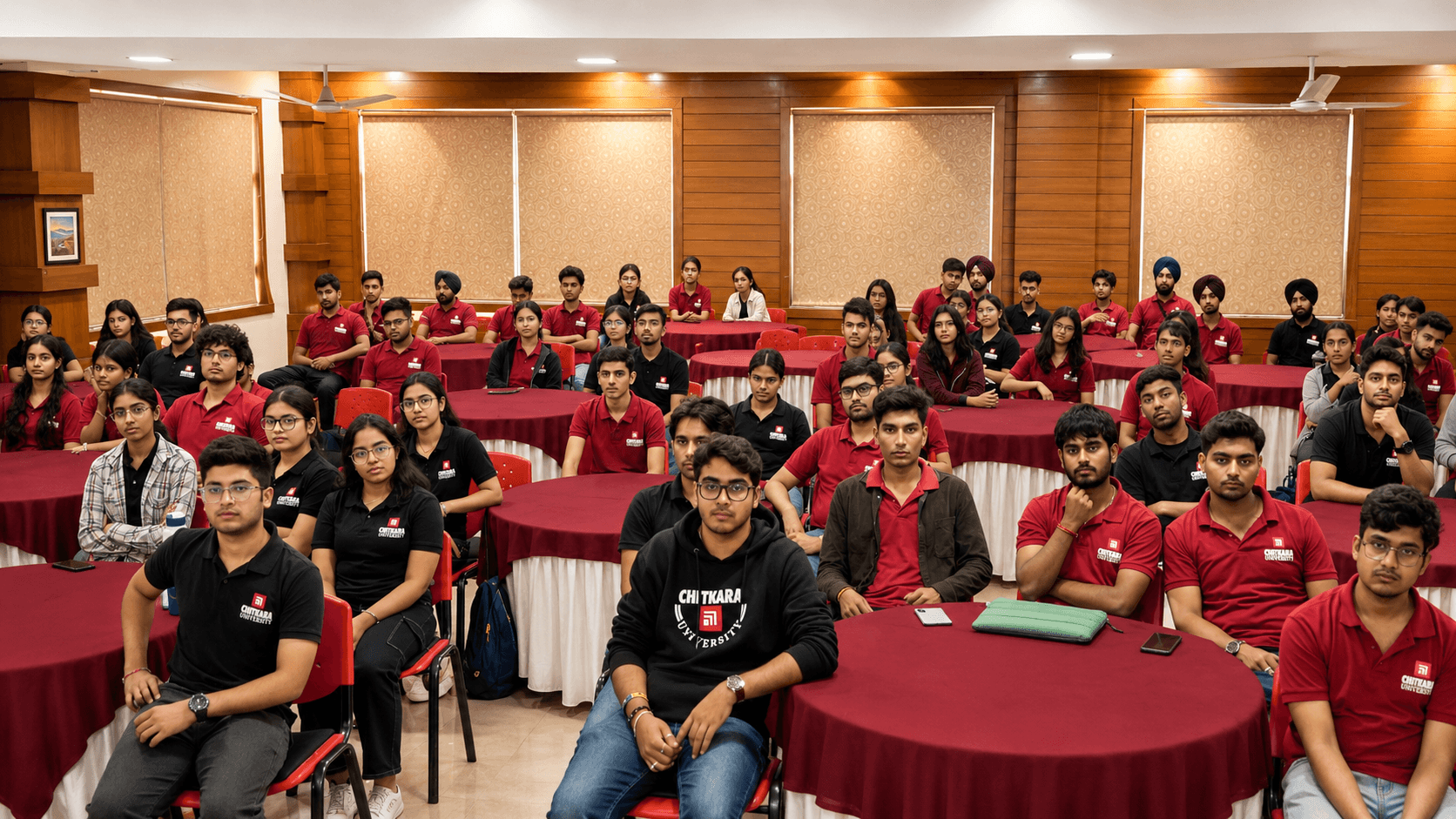
Project review week at the Amritsar campus
Mentors mark up work line by line
Hiring drive & mock interview day
Practitioners run the panel, not HR
Linux is not simply another operating system to study from a textbook. It is an important technology used across servers, cloud infrastructure, DevOps, networking, cybersecurity, software development, and enterprise environments. For this reason, students should look for training that combines fundamental concepts with practical exposure. techcadd's Linux Training in Amritsar is designed for learners who want to understand Linux from the ground up and progressively develop system-management skills.
One of the biggest advantages of a practical Linux program is the opportunity to work with commands and system environments instead of simply reading about them. Learners can practise common Linux operations, navigate the command line, manage files and directories, work with users and groups, understand permissions, monitor processes, and explore system-management concepts. Practical learning helps students understand how Linux is actually used. Instead of memorizing commands without context, learners can understand where and why different commands and administrative tasks are required.
A good Linux course should begin with the basics before moving toward advanced administration. techcadd's program can help learners establish a foundation in Linux architecture, command-line usage, filesystem concepts, permissions, users, groups, processes, services, packages, and networking fundamentals. Strong fundamentals are particularly important for beginners because they make advanced topics easier to understand later.
Students do not necessarily need professional Linux experience before joining a structured training program. Beginners can start with basic commands and gradually become familiar with the Linux environment. For students searching for a Linux course in Amritsar, a structured learning path can be useful because it provides direction instead of requiring learners to discover everything independently.
Linux knowledge can support several technology career paths. After developing Linux fundamentals, learners can explore areas such as Linux administration, system administration, cloud computing, DevOps, networking, cybersecurity, technical support, and IT infrastructure. The Linux course itself should not be viewed as an automatic job guarantee. Instead, it can provide a technical foundation that learners can combine with certifications, projects, communication skills, interview preparation, and additional technologies.
The Linux command line is an essential part of working with Linux systems. Learning how to navigate directories, create and modify files, search for information, manage processes, inspect system resources, and perform administrative tasks can significantly improve technical confidence. Regular practice can help students become comfortable working without relying entirely on graphical interfaces.
Linux can also act as a stepping stone toward advanced IT technologies. Students interested in DevOps, cloud computing, cybersecurity, or server administration can benefit from understanding Linux before moving into more specialized tools. For example, many learners eventually encounter technologies involving containers, automation, cloud servers, deployment pipelines, and infrastructure management. A strong Linux foundation can make these concepts easier to approach.
For learners who prefer classroom-based guidance, choosing a Linux training institute in Amritsar can provide a more structured learning environment. Local students can benefit from direct interaction with instructors, guided practice, doubt-solving, and a consistent learning schedule. techcadd is positioned to serve learners in Amritsar who want to develop Linux skills without depending entirely on self-learning.
Linux can appear complicated when a beginner first encounters the command line. With regular practice, however, many tasks become easier and more intuitive. A structured course can help learners progress from simple commands to system-management concepts in a logical sequence. This gradual approach can reduce confusion and encourage students to practise independently.
Linux remains relevant across multiple areas of modern IT infrastructure. Learning it can therefore provide students with a transferable technical skill rather than limiting them to one narrow technology. Whether a learner eventually chooses system administration, DevOps, cloud, networking, cybersecurity, or another technical specialization, Linux fundamentals can remain useful throughout that learning journey.
When comparing Linux training institutes in Amritsar, students should consider practical lab exposure, syllabus depth, instructor guidance, doubt-solving support, hands-on assignments, and opportunities to practise real administration scenarios. A strong Linux learning experience should help students understand not only what a command does, but also why and when it is used. This approach can make learning more meaningful and help learners build skills that they can continue developing after completing their training.
Linux is one of the most widely used operating systems in servers, cloud infrastructure, cybersecurity, DevOps, software development, networking, and enterprise IT environments. Because of this, learning Linux can be a valuable step for students and professionals who want to build a career in the IT industry. techcadd's Linux Training in Amritsar is designed for learners from different educational and professional backgrounds.
Job titles vary by company, but the underlying expectations do not. Each destination below maps to work you will have already done during the programme.
Every tool below is installed, configured and used by you during the course — not demonstrated on a slide. You leave able to set up your own environment from scratch.
12tools covered
Issued on completion against the modules you finished and the projects you submitted — plus an internship letter where the industrial training track applies. Shareable to LinkedIn, and verifiable by an employer who calls the Amritsar desk.
A certificate answers what you can do today. This is the honest answer to what linux administration looks like three to five years out, and why the fundamentals this course spends real time on are what carry you there.
The 2 – 3 months programme is built around the part that is genuinely in your hands — and you leave holding all of it.
A reviewed portfolio, an industry-recognised certificate and a fundamentals-first foundation you can keep building on. Markets move, as they always have; that foundation is exactly what lets you move with them as cyber and cloud work around you keeps shifting.
An honest side-by-side against the typical linux administration institute in the region. Ask any centre you are considering these same seven questions.
| What you should ask | techcadd Amritsar | Typical institute |
|---|---|---|
| Who teaches the batch | Working practitioners | Full-time trainers only |
| Project work | 3+ reviewed builds | One demo project, unmarked |
| Feedback on submissions | Line-by-line written review | Pass / fail mark |
| Syllabus refresh | Reviewed every intake | Static for years |
| Lab access | Outside batch hours too | Batch hours only |
| Placement support | Continues after completion | Ends with the course |
| Certificate basis | Assessed modules & projects | Attendance |
“Typical institute” describes the common pattern we hear about from students who transfer in — not any single named centre.
Collected from students who completed the linux administration programme at the Amritsar campus, across morning, evening and weekend batches. Hover a card to stop the row and read it.
5.0
out of 5
10 verified reviews from Amritsar students
I was completely new to Linux when I started. The training helped me understand basic commands, file management and permissions step by step. The practical approach made Linux much easier to understand.
As a computer science student in Amritsar, I wanted practical Linux knowledge apart from my college syllabus. The course gave me a better understanding of command-line operations and system administration concepts.
The command line looked difficult initially, but regular practice made me more comfortable. Learning commands through practical tasks was more useful for me than studying only theory.
I joined the Linux course because I wanted to strengthen my IT fundamentals. Topics such as users, groups, permissions, processes and networking helped me understand how Linux systems are managed.
I was exploring different IT career options and started with Linux. The training helped me understand the basics of system administration and gave me direction for learning cloud and DevOps technologies next.
I had very little Linux experience before joining. The concepts were introduced gradually, which helped me learn without feeling overwhelmed. I especially liked practising commands instead of just making notes.
The practical exercises were the most useful part for me. Working with files, permissions, users and processes helped me connect the concepts with real IT environments.
I am interested in DevOps, so I wanted to first build a strong Linux foundation. The training helped me understand why Linux is important for servers and modern IT infrastructure.
Before the course, I was uncomfortable using the Linux terminal. After practising regularly, I became much more confident with basic commands and troubleshooting tasks.
I was looking for Linux classes in Amritsar so I could learn with proper guidance instead of depending completely on random online tutorials. A structured learning approach helped me stay consistent.
If something here is not covered, the Amritsar desk will answer it directly — no call-back queue.
Linux Training in Amritsar is a structured learning program that teaches students how to work with Linux operating systems. Depending on the syllabus, training can cover Linux commands, file management, users and groups, permissions, processes, networking, services, security, troubleshooting, and basic administration.
Book a free demo class and see the lab before you decide.