




Agentic AI Training Course in Amritsar
Agentic AI course in Amritsar
4.7/5
Student rating
20
Structured modules
4+
Portfolio projects
Yes
Placement support
Admissions open
Agentic AI · 3 months
Batch timings
- Morning
- Evening
- Weekend
- Live online
Agentic AI Training in Amritsar
Agentic AI Training in AmritsarLooking for a practical and career-focused Agentic AI Training Course in Amritsar? techcadd offers job-oriented Agentic AI training for students, graduates, developers, working professionals, freelancers, entrepreneurs, and AI enthusiasts who want to learn how modern AI agents work and how they can be used to build intelligent, automated workflows.
The Agentic AI Course in Amritsar is designed to take learners beyond basic chatbot usage. You will learn how AI systems can understand goals, plan tasks, use external tools, access information, interact with APIs, maintain context, make decisions within defined workflows, and complete multi-step tasks.
The training covers Generative AI, Large Language Models (LLMs), Prompt Engineering, AI Agents, Tool Calling, Function Calling, APIs, RAG, AI Automation, Agent Workflows, Multi-Agent Systems, Agent Evaluation, and practical AI application development.
At techcadd, the focus is on practical learning. Students work on hands-on exercises, AI workflows, real-world use cases, technical assignments, and projects that help them understand how Agentic AI can be applied to software development, business automation, research, content, customer support, productivity, and other professional applications.
Whether you are completely new to Artificial Intelligence or already have experience with Python, software development, or Generative AI, techcadd's Agentic AI Training in Amritsar provides a structured path to develop practical AI skills.
- Duration
- 3 months
- Level
- Beginner to advanced
- Mode
- Classroom & live online
- Batches
- Morning, evening & weekend
What you will actually build
What you will actually build20 modules, each closing in something reviewable that goes straight into your portfolio.
- Module 01 of 20
Introduction to Artificial Intelligence
Learn the fundamentals of Artificial Intelligence and understand how AI has evolved from traditional rule-based systems to modern Generative AI and agent-based applications.
Topics covered
- AI fundamentals
- From rule-based systems to Generative AI
- Where agent-based applications fit
Tools in this module
LangGraphLangChainOpenAI APIClaude APIYou finish withA clear account of how agents differ from everything that came before them.
- Module 02 of 20
Generative AI Fundamentals
Understand Generative AI and how it can produce text, code, summaries, ideas, images, and other types of content. Learn the difference between traditional automation and generative AI-based workflows.
Topics covered
- Text, code, summaries and ideas
- Traditional automation vs generative workflows
- What generative systems can produce
Tools in this module
OpenAI APIClaude APIPythonFastAPIYou finish withThe line between deterministic automation and generative output, drawn correctly.
- Module 03 of 20
Large Language Models
Understand the role of Large Language Models in modern AI applications. You will learn concepts related to LLM capabilities, context, instructions, tokens, model limitations, model outputs, and AI application workflows.
Topics covered
- Capabilities, context and tokens
- Instructions and outputs
- Model limitations
Tools in this module
PythonFastAPIRedisPostgresYou finish withAn understanding of what a model can hold, and what it will get wrong.
- Module 04 of 20
Prompt Engineering
Learn how to create better instructions for AI models. Topics can include role prompting, context, constraints, examples, structured prompts, few-shot prompting, prompt refinement, output formatting and prompt testing.
Topics covered
- Role prompting, context and constraints
- Few-shot and structured prompts
- Refinement, formatting and testing
Tools in this module
RedisPostgresLangSmithDockerYou finish withPrompts written as specifications, then tested rather than trusted.
- Module 05 of 20
What Is Agentic AI?
Understand what makes an AI system "agentic." Learn the difference between chatbots, AI assistants, AI workflows, AI agents, autonomous workflows and multi-agent systems.
Topics covered
- Chatbots vs AI assistants
- AI workflows vs AI agents
- Autonomous and multi-agent systems
Tools in this module
LangSmithDockerLangGraphLangChainYou finish withThe vocabulary to say precisely what kind of system you are building.
- Module 06 of 20
AI Agent Architecture
Understand the components that can make up an AI agent. These can include the AI model, instructions, tools, memory, context, planning, execution, evaluation and external data.
Topics covered
- Model, instructions and tools
- Memory, context and planning
- Execution, evaluation and external data
Tools in this module
LangGraphLangChainOpenAI APIClaude APIYou finish withAn agent design sketched component by component before any code is written.
- Module 07 of 20
Tool Calling
Learn how AI systems can use external tools to perform actions beyond generating text. For example, an AI system could potentially interact with a calculator, database, API, search service, or business application through defined tools.
Topics covered
- Using external tools
- Calculators, databases and search
- Actions beyond generating text
Tools in this module
OpenAI APIClaude APIPythonFastAPIYou finish withAn agent that calls a real tool and uses what comes back.
- Module 08 of 20
Function Calling
Understand how AI models can select and use predefined functions as part of an application workflow. This is an important concept for developers building AI-powered applications.
Topics covered
- Selecting predefined functions
- Schemas and structured calls
- Building AI-powered applications
Tools in this module
PythonFastAPIRedisPostgresYou finish withFunctions defined and called reliably from within an AI workflow.
- Module 09 of 20
API Integration
Learn the fundamentals of connecting AI systems with external services through APIs. This can allow AI applications to retrieve information or trigger defined actions.
Topics covered
- Connecting AI to external services
- Retrieving information
- Triggering defined actions
Tools in this module
RedisPostgresLangSmithDockerYou finish withA live API wired into an agent, with failures handled rather than ignored.
- Module 10 of 20
Agent Planning
Learn how complex goals can be divided into smaller tasks. The course introduces concepts around task decomposition, planning, execution, and workflow management.
Topics covered
- Task decomposition
- Planning and execution
- Workflow management
Tools in this module
LangSmithDockerLangGraphLangChainYou finish withA complex goal broken into steps an agent can actually complete.
- Module 11 of 20
Memory & Context Management
Understand how AI applications can maintain relevant information during multi-step interactions. You will learn why context management is important for building useful AI assistants and agents.
Topics covered
- Maintaining relevant information
- Multi-step interactions
- Why context management matters
Tools in this module
LangGraphLangChainOpenAI APIClaude APIYou finish withAn agent that remembers what matters and forgets what does not.
- Module 12 of 20
Retrieval-Augmented Generation
Learn the fundamentals of RAG, a technique that allows AI applications to retrieve relevant information from external knowledge sources before generating a response. Possible applications include company knowledge assistants, document Q&A, internal knowledge systems, research assistants and customer support systems.
Topics covered
- Retrieving from external knowledge
- Document Q&A and knowledge assistants
- Research and support systems
Tools in this module
OpenAI APIClaude APIPythonFastAPIYou finish withA grounded answer that cites the document it came from.
- Module 13 of 20
Vector Databases
Understand the basic role of vector databases and embeddings in AI applications that need semantic search and retrieval. Technical depth can depend on the learner's background and selected training level.
Topics covered
- Embeddings and semantic search
- Storage and retrieval
- Depth according to your background
Tools in this module
PythonFastAPIRedisPostgresYou finish withSemantic search working over your own documents.
- Module 14 of 20
AI Workflow Automation
Learn how AI can be incorporated into structured workflows. Examples may include input, AI processing, tool use, data, decision and output stages chained into one repeatable flow.
Topics covered
- Input, processing and tools
- Data and decisions
- Structured, repeatable outputs
Tools in this module
RedisPostgresLangSmithDockerYou finish withA workflow that runs end to end without a human pasting between steps.
- Module 15 of 20
Multi-Agent Systems
Explore the concept of multiple specialized AI agents collaborating on a larger task. For example, one agent may handle research while another handles analysis and another prepares a final output.
Topics covered
- Specialized agents
- Dividing responsibilities
- Collaboration on a larger task
Tools in this module
LangSmithDockerLangGraphLangChainYou finish withA task split across agents, with the handoffs defined.
- Module 16 of 20
Agent Evaluation
AI systems don't always produce perfect results. Learn how to test workflows, identify errors, evaluate responses, improve prompts, and monitor agent performance.
Topics covered
- Testing workflows
- Identifying errors and evaluating responses
- Improving prompts and monitoring performance
Tools in this module
LangGraphLangChainOpenAI APIClaude APIYou finish withAn evaluation harness that tells you when the agent has regressed.
- Module 17 of 20
Human-in-the-Loop AI
Understand why human review can be important when AI agents are performing actions. Learn concepts such as approval, validation, permissions, monitoring, escalation and human review.
Topics covered
- Approval and validation
- Permissions and monitoring
- Escalation and human review
Tools in this module
OpenAI APIClaude APIPythonFastAPIYou finish withAn approval checkpoint placed where an autonomous action would otherwise be risky.
- Module 18 of 20
Responsible AI
Understand important considerations around reliability, privacy, security, permissions, hallucinations, and responsible deployment.
Topics covered
- Reliability and privacy
- Security and permissions
- Hallucinations and responsible deployment
Tools in this module
PythonFastAPIRedisPostgresYou finish withA deployment checklist covering what the agent is allowed to do.
- Module 19 of 20
AI Automation Projects
Build practical projects that demonstrate how Agentic AI can be used for real-world tasks.
Topics covered
- Practical agent builds
- Real-world tasks
- Demonstrable outcomes
Tools in this module
RedisPostgresLangSmithDockerYou finish withWorking agents applied to tasks someone actually needs done.
- Module 20 of 20
Capstone Agentic AI Project
Apply multiple concepts together to create a larger project involving an AI model, instructions, tools, workflows, data, and evaluation.
Topics covered
- Model, instructions and tools
- Workflows and data
- Evaluation of the finished system
Tools in this module
LangSmithDockerLangGraphLangChainYou finish withOne substantial agent, built and evaluated, that you can demo end to end.
Hands-on projects you will ship
Hands-on projects you will shipEvery one of these is built by you, reviewed line by line, and documented so a hiring manager can read it without you in the room.
- Foundation build01
AI Research Agent
A workflow that assists with research tasks, organises information and produces structured outputs.
- OpenAI API
- Claude API
- Python
- Core build02
Document Q&A Assistant
A RAG application that retrieves information from provided documents and answers questions from the relevant content.
- Python
- FastAPI
- Redis
- Core build03
Customer Support Agent
A workflow that understands customer queries and provides structured responses from available information.
- Redis
- Postgres
- LangSmith
- Core build04
Business Automation Agent
An agent that assists with repetitive business tasks using defined tools and actions, with a human approval step.
- LangSmith
- Docker
- LangGraph
- Applied build05
Responsible AI Build
A working artefact from the responsible ai block — deployment checklist covering what the agent is allowed to do, reviewed against the same checklist we use on the capstone.
- Python
- FastAPI
- Redis
- Applied build06
AI Automation Projects Build
A working artefact from the ai automation projects block — Working agents applied to tasks someone actually needs done, reviewed against the same checklist we use on the capstone.
- Redis
- Postgres
- LangSmith
Why this programme is worth your year
Why this programme is worth your yearMost agentic ai training in this region stops at the tutorial: you follow along, the notebook runs, nothing is retained. This programme is built the other way round — every module hands you an unfinished problem and a deadline, and a mentor reviews what you did with it.
That is slower and harder than watching lectures. It is also the only version that survives an interview, because the questions there are about the decisions you made, not the code you copied.
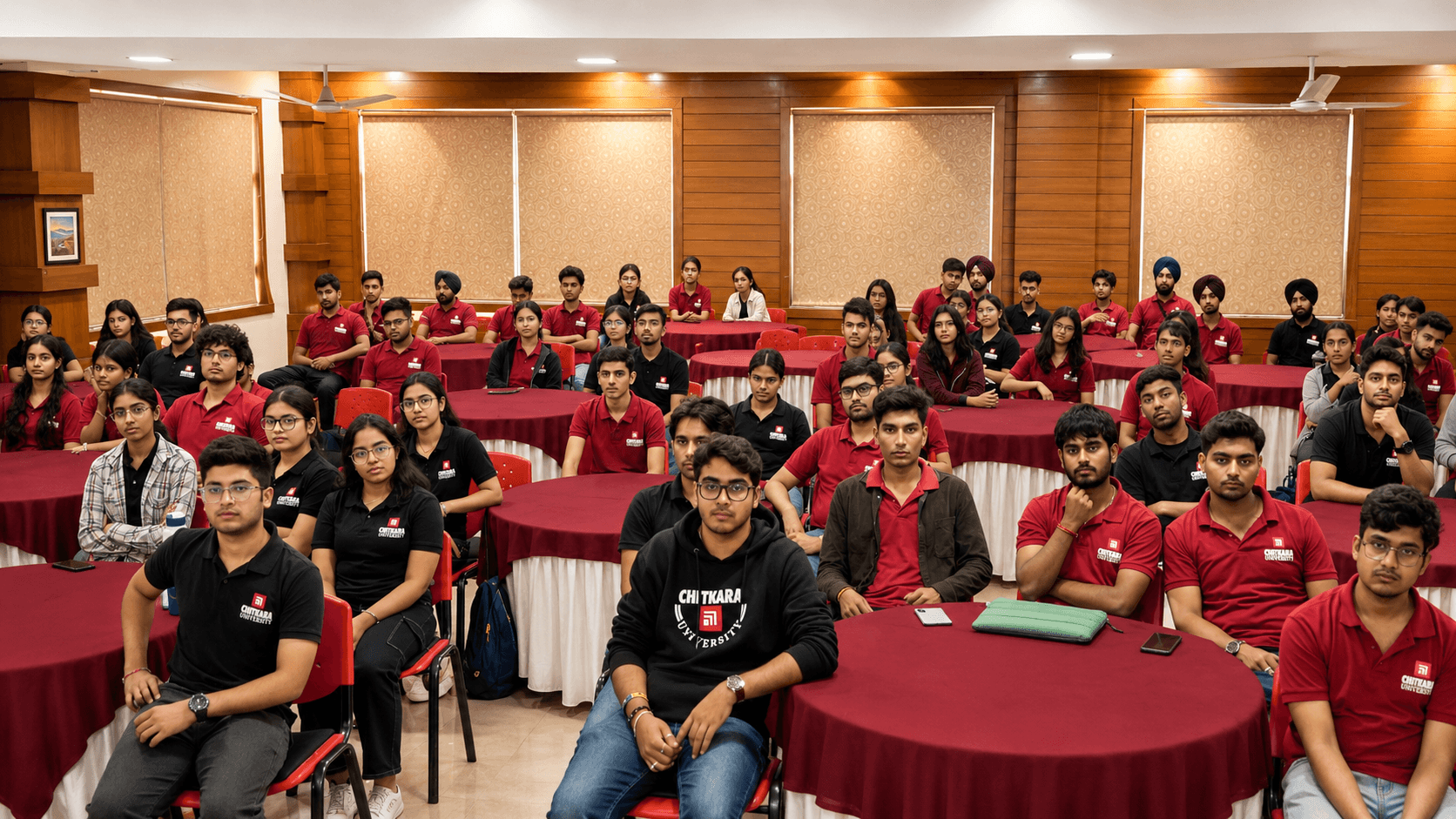
Project review week at the Amritsar campus
Mentors mark up work line by line
Hiring drive & mock interview day
Practitioners run the panel, not HR
Build AI skills employers can verify
Build AI skills employers can verifyAnyone can list LangGraph on a résumé. What gets you hired is a repository a reviewer can open, a decision you can defend, and a certificate issued against work that was actually assessed.
- 4+ portfolio projects with written review notes
- A public repository per project, documented for a reader
- Mock interviews with people who do the job daily
- techcadd industry certificate issued against assessed work
Learn it. Build it. Make it yours.
The certificate is the receipt. What you actually leave with is a portfolio you built, notes from people who reviewed it, and the habit of finishing what you start.
Book a free demo classWhy Choose This Agentic AI Training Program?
Why Choose This Agentic AI Training Program?With the rapid growth of Generative AI, simply knowing how to use a chatbot is no longer the only useful AI skill. Organizations are increasingly exploring AI systems that can work with tools, data, applications, and automated workflows. techcadd's Agentic AI training focuses on practical understanding.
- 01
Practical, Project-Based Learning
Agentic AI is best understood by building and testing actual workflows. Instead of learning only definitions, students can practice creating AI-powered solutions, testing prompts, connecting tools, working with APIs, and improving agent behavior. Projects help learners understand how individual concepts fit together.
- 02
Learn Beyond Basic Chatbots
Traditional chatbot interaction generally follows a simple pattern: user asks, AI responds. Agentic workflows can involve goal, planning, tool selection, action, result, evaluation and the next action. The course introduces learners to this broader way of thinking about AI applications.
- 03
Industry-Relevant AI Skills
The curriculum focuses on concepts relevant to modern AI application development, including LLMs, prompt engineering, tool calling, function calling, APIs, RAG, AI workflows, automation, agent architecture, multi-agent systems and evaluation.
- 04
Hands-On AI Tools
Students get practical exposure to AI platforms and development technologies relevant to Agentic AI. Because the AI ecosystem changes quickly, the exact platforms and frameworks covered should be confirmed with techcadd for the current batch.
- 05
Mentor & Doubt-Clearing Support
Agentic AI combines multiple technical concepts. Learners may encounter challenges involving prompts, APIs, context, tool calls, workflows, integrations, or debugging. Trainer guidance helps students understand these concepts step by step.
- 06
Flexible Batch Timings
techcadd offers learning options designed to accommodate students, job seekers, developers, and working professionals. Learners can enquire about available weekday, weekend, and evening batches.
- 07
Career-Focused Learning
The objective is not simply to finish a course. Students are encouraged to develop projects that demonstrate practical AI skills and can potentially be discussed during interviews. Career support can include resume guidance, project presentation, interview preparation, and placement assistance, subject to the applicable program.
- 08
Practical AI Training
techcadd focuses on applying AI concepts to practical tasks rather than limiting learning to theory.
- 09
Structured Learning Path
Agentic AI involves several interconnected technologies. The course follows a progressive learning path so students can understand the fundamentals before moving into advanced workflows.
- 10
Beginner-Friendly Approach
Learners who are new to Generative AI can begin with basic concepts and gradually move toward more technical topics.
- 11
Developer-Friendly Training
Students with Python or software development experience can explore technical areas such as APIs, tools, integrations, RAG, agent workflows, and AI application development.
- 12
Project-Based Learning
Practical assignments and projects provide learners with opportunities to apply what they have learned.
- 13
Mentor Support
Students can receive guidance while working through technical challenges, project development, and AI workflows.
- 14
Career-Oriented Approach
techcadd focuses on helping learners understand how their AI skills can be positioned for jobs, internships, projects, freelancing, or professional upskilling. Potential career directions include Agentic AI Developer, Generative AI Developer, AI Application Developer, LLM Application Developer, AI Automation Developer, AI Engineer, AI Solutions Developer, AI Integration Developer and AI Workflow Developer — strongest when Agentic AI skills are combined with another technical or domain skill.
- 15
Local Training in Amritsar
Students don't necessarily need to relocate to another city to access AI training. techcadd's Amritsar training is accessible to learners from the city and nearby areas such as Tarn Taran, Batala, and Ajnala.
Industry-ready training in Agentic AI
Industry-ready training in Agentic AIA syllabus reviewed every intake against what employers are actually hiring for — not a curriculum frozen three years ago.
- 1Full arc from fundamentals to deployment: Introduction to Artificial Intelligence, Generative AI Fundamentals, Large Language Models and beyond
- 2Every concept implemented in the lab before it is examined
- 3Mentors who ship this work professionally, not career trainers
- 4Project reviews line by line, with written notes you keep
- 5Doubt sessions and lab access outside your batch hours
Who can do this course
Who can do this courseNo entrance test and no prior coding requirement — the track opens at fundamentals. What it does need is consistency across the full programme.
- Who can join01
12th Pass Students
Students from Science, Commerce, or Arts backgrounds who are interested in Artificial Intelligence can start building their understanding of Generative AI and intelligent systems. The training can help students explore AI before or alongside college and understand how modern AI technologies are being used in technology and business. Students who eventually want to move toward AI development can later add Python, programming, databases, APIs, and other technical skills to their learning path.
- Who can join02
College Students
Students pursuing BCA, B.Tech, BSc-IT, MCA, MBA, BBA, and other programs can learn Agentic AI to complement their academic education. Students from GNDU, Khalsa College, BBK DAV College, and other institutes in Amritsar can use practical AI skills for college projects, internships, research, presentations, automation, AI-powered applications, career preparation and freelancing opportunities.
- Who can join03
Python Developers
Python developers are particularly well positioned to explore Agentic AI because Python is widely used for AI application development. Developers can learn how to connect LLMs with APIs, tools, databases, external services, automation workflows, and applications. The training can help Python developers move from traditional scripting and application development toward AI-powered systems.
- Who can join04
Software Developers
Software developers can learn how to integrate AI into existing applications and build new AI-powered products. Topics such as APIs, tool calling, structured outputs, agent workflows, RAG, memory, evaluation, and automation can help developers understand how modern AI applications are constructed.
- Who can join05
AI & Machine Learning Students
Students who already understand Artificial Intelligence or Machine Learning can expand their knowledge into LLM-based applications and Agentic AI. Instead of focusing only on model training, learners can explore how existing AI models can be connected to tools, knowledge sources, applications, and workflows.
- Who can join06
Working Professionals
Working professionals from IT, marketing, HR, sales, administration, education, customer support, operations, finance, and other fields can learn how AI agents may support repetitive tasks. Potential applications include research, reporting, document processing, customer support, data organization, content workflows, internal knowledge assistance, productivity automation and business process automation.
- Who can join07
Freelancers
Freelancers can learn Agentic AI to expand the services they offer to clients. Depending on their existing skills, freelancers can explore AI-powered content workflows, research systems, automation, business assistants, customer support solutions, and AI application development.
- Who can join08
Entrepreneurs & Business Owners
Business owners can explore how AI agents may support repetitive business processes. Possible use cases include lead qualification, customer communication, research, internal documentation, reporting, marketing workflows, and operational automation.
- Who can join09
AI Enthusiasts
If you are already experimenting with ChatGPT, Generative AI, AI automation, or other AI tools and want to understand what comes next, Agentic AI training can help you move toward more structured AI workflows.
- Who can join10
No Prior Agentic AI Experience Required
You don't need previous Agentic AI experience to begin learning. techcadd's Agentic AI Training Course in Amritsar can start with the fundamentals of Generative AI and Large Language Models before progressing into more advanced concepts. Learners with programming experience can go deeper into technical implementation, while beginners can first understand how agentic systems work and how they are applied.
One course. A mesh of real tools.
One course. A mesh of real tools.All 10 are installed, configured and used by you during the programme — none of them are demonstrated on a slide. You leave able to set the environment up from scratch on your own machine.
- LALangGraph
- LALangChain
- OAOpenAI API
- CAClaude API
- PYPython
- FAFastAPI
- RERedis
- POPostgres
- LALangSmith
- DODocker
- Core
LangGraph · LangChain · OpenAI API · Claude API
- Working set
Python · FastAPI · Redis · Postgres
- Shipping
LangSmith · Docker
Get certified in Agentic AI
Get certified in Agentic AIIssued on completion against the modules you finished and the projects you submitted — plus an internship letter where the industrial training track applies. Shareable to LinkedIn, and verifiable by an employer who calls the Amritsar desk.
- Module-wise assessment, not attendance-based
- Project submissions logged against your certificate
- Internship letter on the industrial training track
- Verifiable directly with the campus office
Where this course takes you
Where this course takes youSalary bands below are indicative of what our placement desk sees quoted for candidates who arrive with a reviewed portfolio. They are an observation, not a promise.
Agentic AI Developer
- Entry level
- ₹5 – 7.2 LPA
- 3 – 5 years in
- ₹14 – 19 LPA
6,527+ open roles in India
Agentic AI Developer
₹5 – 7.2 LPA
The most direct destination from this track — the projects you build map onto the day-one expectations of the role.
Generative AI Developer
₹3.6 – 5.4 LPA
A realistic adjacent path once the core agentic ai skill set is in place and evidenced by your portfolio.
AI Application Developer
₹4.2 – 6 LPA
A realistic adjacent path once the core agentic ai skill set is in place and evidenced by your portfolio.
LLM Application Developer
₹4.5 – 6.5 LPA
A realistic adjacent path once the core agentic ai skill set is in place and evidenced by your portfolio.
AI Automation Developer
₹5 – 7.2 LPA
A realistic adjacent path once the core agentic ai skill set is in place and evidenced by your portfolio.
How techcadd compares
How techcadd comparesAn honest side-by-side against the typical agentic ai institute in the region. Ask any centre you are considering these same seven questions.
| What you should ask | techcadd Amritsar | Typical institute |
|---|---|---|
| Who teaches the batch | Working practitioners | Full-time trainers only |
| Project work | 4+ reviewed builds | One demo project, unmarked |
| Feedback on submissions | Line-by-line written review | Pass / fail mark |
| Syllabus refresh | Reviewed every intake | Static for years |
| Lab access | Outside batch hours too | Batch hours only |
| Placement support | Continues after completion | Ends with the course |
| Certificate basis | Assessed modules & projects | Attendance |
“Typical institute” describes the common pattern we hear about from students who transfer in — not any single named centre.
What our students in Amritsar say
What our students in Amritsar say189 verified reviews from the agentic ai batches, averaging 4.7 out of 5.
4.7/5
189 verified reviews
- 5 star85%
- 4 star7%
- 3 star5%
- 2 star2%
- 1 star1%
I joined the Agentic AI batch with almost no background, and what made the difference was that introduction to artificial intelligence was taught by building rather than by slides. By the third week I was debugging my own code instead of copying someone else's.
Tanvir DhillonAgentic AI Developer, Noida · Weekend batch · 2026The project reviews are the real value. My document q&a assistant was picked apart line by line, and those notes are exactly what I ended up talking through in the interview that got me a generative ai developer offer.
Ritika ChopraGenerative AI Developer, Amritsar · Morning batch · 2025Weekend batches meant I kept my job through the whole 3 months. Anything I missed got re-explained without fuss, and lab access outside batch hours was never a problem.
Mohit KhannaAI Application Developer, Batala · Evening batch · 2026OpenAI API and the rest of the stack were set up on day one, so no week went into environment issues. Batches are small enough that a doubt gets answered the same day instead of piling up.
Aditya VermaLLM Application Developer, Chandigarh · Weekend batch · 2025I had tried learning agentic ai on my own twice and stalled both times. A fixed batch in Amritsar, a mentor who checks your work and a deadline on every module is the only reason I finished.
Rajiv MalhotraAI Automation Developer, Gurugram · Morning batch · 2026Placement support was not just a line on the brochure — resume and portfolio review, two mock interviews with people who do the job, and a referral into one of the hiring drives.
Ishita SharmaAgentic AI Developer, Pune · Evening batch · 2025The syllabus is current. We worked in Docker rather than the older tooling most agentic ai syllabi around here still teach, and that came up directly in my first interview.
Sahil AroraGenerative AI Developer, Delhi · Weekend batch · 2026The balance of theory to lab time is about right: enough to understand why something works, then straight into building. I left with 4 projects I can demo, not just a certificate.
Simranjeet KaurAI Application Developer, Amritsar · Morning batch · 2025
Questions we get asked at the admissions desk
Frequently asked questionsIf something here is not covered, the Amritsar desk will answer it directly — no call-back queue.
Agentic AI Training teaches learners how to understand and build AI systems that can perform multi-step tasks using LLMs, tools, APIs, external information, memory, workflows, and defined actions. techcadd's Agentic AI course in Amritsar focuses on practical concepts, projects, automation, and AI application development.
AI Is Moving Beyond Simple Question-and-Answer Interactions
Enquire about the Agentic AI courseModern AI applications can combine LLMs, tools, APIs, external data, memory, planning, automation, and workflows to perform increasingly complex tasks. Build your understanding of this emerging technology with techcadd's Agentic AI Training Course in Amritsar.
- Course: Agentic AI Training Course
- Location: Amritsar, Punjab
- Mode: Classroom & Online
- Level: Beginner to Advanced
- Suitable For: Students, Graduates, Developers, Professionals, Freelancers & AI Enthusiasts
- Training Style: Practical & Project-Based
- Batches: Regular / Flexible options
- No spam calls
- Speak with a real counsellor
- Course and batch guidance
- Classroom & online learning options
Enquire Now
About the Agentic AI course · 3 months
Keep exploring
Browse all courses- AI & Data
Artificial Intelligence
AI fundamentals, machine learning concepts, generative AI, intelligent automation and data-driven decision-making — taught through practical activities and projects.
3 – 6 months - AI & Data
Machine Learning
Learn the algorithms, then learn what they get wrong — modelling, evaluation and deployment on real, messy data.
4 – 6 months - AI & Data
Deep Learning
Neural networks, computer vision, NLP and Transformers — built, trained and deployed on real datasets with TensorFlow, PyTorch and Keras.
4 – 6 months
Start building your career today.
Talk to a counsellor today. One call is usually enough to know which track fits your degree, your schedule and the job you want.
Call now+91 99152 22509- Free career counselling
- No registration fee
- Placement support included