

Flagship project
Linux & Bash Automation Lab
Configure a Linux environment with users, permissions, and Bash automation scripts.
- Linux
- Bash

3 / 6 / 9 Months
Duration
Weekday/Weekend
Mode
12th Pass/Any Grad
Eligibility
10-12 Students
Batch Size
Admissions open
GCP Professional Certification Course · Flexible batches
Batch timings
techcadd's GCP Professional Certification Course in Amritsar is a lab-based, professional-level programme for learners who want to work as cloud engineers, DevOps engineers, or cloud architects on Google Cloud.
It opens with cloud computing fundamentals, Linux, networking, and GCP core services, then moves into compute, storage, databases, serverless, security, Infrastructure as Code, CI/CD, containers, Kubernetes, monitoring, and AI-powered cloud solutions.
You finish with a professional portfolio of deployed GCP architectures, a capstone project, CV preparation and interview coaching.
Cloud computing is the practice of delivering computing resources — servers, storage, databases, networking, security, and software — over the internet. At the professional level, the job changes from clicking buttons in a console to owning cloud environments — architecting them, automating them, securing them, optimizing costs, and defending them to a business. That is the layer this programme trains you for. Startups, IT firms, banks, and healthcare providers across Punjab are all migrating to the cloud, and each of them needs engineers who can design, deploy, secure and explain a Google Cloud environment before it becomes a costly mistake.
Techcadd's GCP Professional Certification Course is built around the tools that appear in actual job descriptions — Compute Engine, Cloud Storage, VPC, IAM, Cloud Functions, BigQuery, GKE, and Terraform — not academic substitutes. You work in a hands-on cloud lab from the first week and finish with a professional portfolio of deployed architectures, a capstone project, and interview-ready documentation. The programme is available in 3, 6, and 9-month tracks, and each longer track includes everything from the shorter one without repeating a module. Batch sizes are capped at 10–12 students, and every deliverable is reviewed weekly by mentors who still work on live cloud engagements.
Linux fundamentals — file systems, users and permissions, shell scripting, process management, package management, and system monitoring.
A configured Linux environment with documented permissions and automation scripts
GCP fundamentals — global infrastructure, regions and zones, IAM users, roles, policies, VPC, subnets, routes, and firewall rules.
A configured GCP project with IAM users, roles, and a VPC architecture
GCP compute, storage, and databases — Compute Engine, instance groups, load balancing, Cloud Storage, persistent disk, Cloud SQL, Firestore, and Memorystore.
A deployed Compute Engine instance with autoscaling, Cloud Storage, and Cloud SQL
GCP networking, security, and architecture — VPC peering, Cloud NAT, Cloud Load Balancing, Cloud DNS, Cloud CDN, security best practices, Cloud Armor, and the Google Cloud Architecture Framework.
A documented network architecture with security best practices
Git branching and GitHub workflows so scripts, templates and documentation are version-controlled like a professional project.
A GitHub portfolio repository with your GCP scripts and templates
Using AI assistants and prompt engineering to speed up scripting, debugging and cloud research — a practical tool skill, not a theory module.
A documented workflow for using AI tools in cloud engineering
Advanced GCP services — Infrastructure as Code with Cloud Deployment Manager, serverless with Cloud Functions, DNS with Cloud DNS, logging with Cloud Logging, event-driven architecture with Eventarc, messaging with Pub/Sub, and monitoring.
A deployed serverless application with Cloud Deployment Manager and monitoring
AI and Generative AI on GCP — AI fundamentals, machine learning, LLMs, prompt engineering, and building AI applications with Vertex AI, Gemini, Vision AI and Document AI.
A deployed AI-powered application using Vertex AI or Gemini
Containerization with Docker — containers, images, Dockerfile, Docker Compose, networks, volumes, registries, and multi-stage builds.
A containerized application with Docker Compose published to Artifact Registry
CI/CD with Jenkins — pipelines, Git integration, build, test, artifact management, SonarQube, Trivy, and Blue/Green & Canary deployments.
A Jenkins CI/CD pipeline with security scanning and deployment strategies
Infrastructure as Code with Terraform — providers, modules, state management, workspaces, GCP resources, and infrastructure automation.
A Terraform template published to GitHub that deploys GCP infrastructure
Monitoring and MLOps — Prometheus, Grafana, ELK Stack, MLflow, model deployment, CI/CD for ML, and AI model serving.
A monitoring dashboard and deployed ML model with CI/CD
Cloud architecture and resilience — Google Cloud Architecture Framework, multi-project strategy, high availability, disaster recovery, and cost optimization.
An Architecture Framework review and disaster recovery plan
GCP security engineering — IAM best practices, Security Command Center, Cloud Armor, Cloud KMS, Secret Manager, backup, recovery, and incident response.
A security assessment report with encryption, Security Command Center and incident response plan
Cloud AI services engineering — Vertex AI, Gemini Advanced, Natural Language AI, Forecast, Document AI, Recommendations AI, and custom AI solutions.
Cloud AI services engineering — Vertex AI, Gemini Advanced, Natural Language AI, Forecast, Document AI, Recommendations AI, and custom AI solutions.
Production Kubernetes on GCP — GKE, Helm, Kubernetes Operators, autoscaling, service mesh, GitOps, and cluster hardening.
A production-grade GKE cluster with Helm and GitOps
Infrastructure automation and delivery engineering — GitOps, ArgoCD, Terraform Enterprise, Policy as Code, automated deployments, and release engineering.
A GitOps-driven deployment pipeline with ArgoCD and Policy as Code
Observability, MLOps and the expert capstone — observability stack, AIOps, model monitoring, experiment tracking, and an end-to-end capstone project.
A complete end-to-end capstone project with observability and MLOps
GCP capstone and career readiness — real-world cloud project, monitoring with Cloud Monitoring, CI/CD, Infrastructure as Code with Terraform, backup and disaster recovery, and resume and interview preparation.
A complete end-to-end capstone project and career readiness portfolio
Career readiness — portfolio review, resume refinement and interview preparation for cloud roles.
An interview-ready cloud portfolio and resume
GCP career paths — roles, specializations, and the tooling employers expect you to know.
A GCP career map with portfolio alignment
Building a resume, LinkedIn profile and GitHub portfolio that reflects your lab work and capstone project.
A published resume, LinkedIn profile and GitHub portfolio
Aptitude and HR interview preparation for cloud hiring processes.
Aptitude and HR interview readiness
Technical mock interviews covering labs, tools, architecture and defensive reasoning.
Technical interview readiness with documented feedback
A hands-on practical assessment and certification covering the full programme.
A practical assessment result and certification
Freelancing and career launch — finding clients, pricing and delivering cloud work.
A freelance-ready service page and outreach plan
Final industry readiness review and certification ahead of placement.
Industry-ready certification and placement dossier
Configure a Linux environment with users, permissions, and Bash automation scripts.
Configure a GCP project with IAM users, groups, roles, policies and MFA.
Build a VPC with public and private subnets, routes, Cloud NAT, firewall rules and Cloud Armor.
Deploy a Compute Engine instance with autoscaling and load balancing.
Configure a Cloud Storage bucket with lifecycle policies and versioning.
Deploy a Cloud SQL database with automated backups and recovery.
Build a Cloud Monitoring dashboard with alarms and log analysis.
Deploy a serverless application with Cloud Functions, Pub/Sub and Firestore.
Write and publish a Cloud Deployment Manager or Terraform template to GitHub.
Build a CI/CD pipeline with Jenkins, Cloud Build and Cloud Deploy.
Deploy a containerized application on GKE with Helm.
Analyze GCP costs with Cloud Billing and produce an optimization report.
Complete an end-to-end capstone combining architecture, deployment, security and monitoring.
Every project moves through the same loop: understand the brief, build it with guidance, then explain the decisions behind your work. The certificate is the receipt — the portfolio is the point.
You learn it the way it is used on real cloud engagements, with the workflow and standards a cloud team expects.
Linux & Bash Automation Lab
Every module runs in a hands-on cloud lab against real GCP projects — not screenshots.
GCP Project & IAM Setup
Each module ends with a documented architecture, reviewed weekly by a mentor who still works on live cloud engagements.
VPC Architecture Build
Every exercise ends with a written report, and the programme closes with a practical assessment and certification.
Compute Engine Auto Scaling & Load Balancing
A course is worth the time you give it only if you finish with work you can show and skills you can defend.
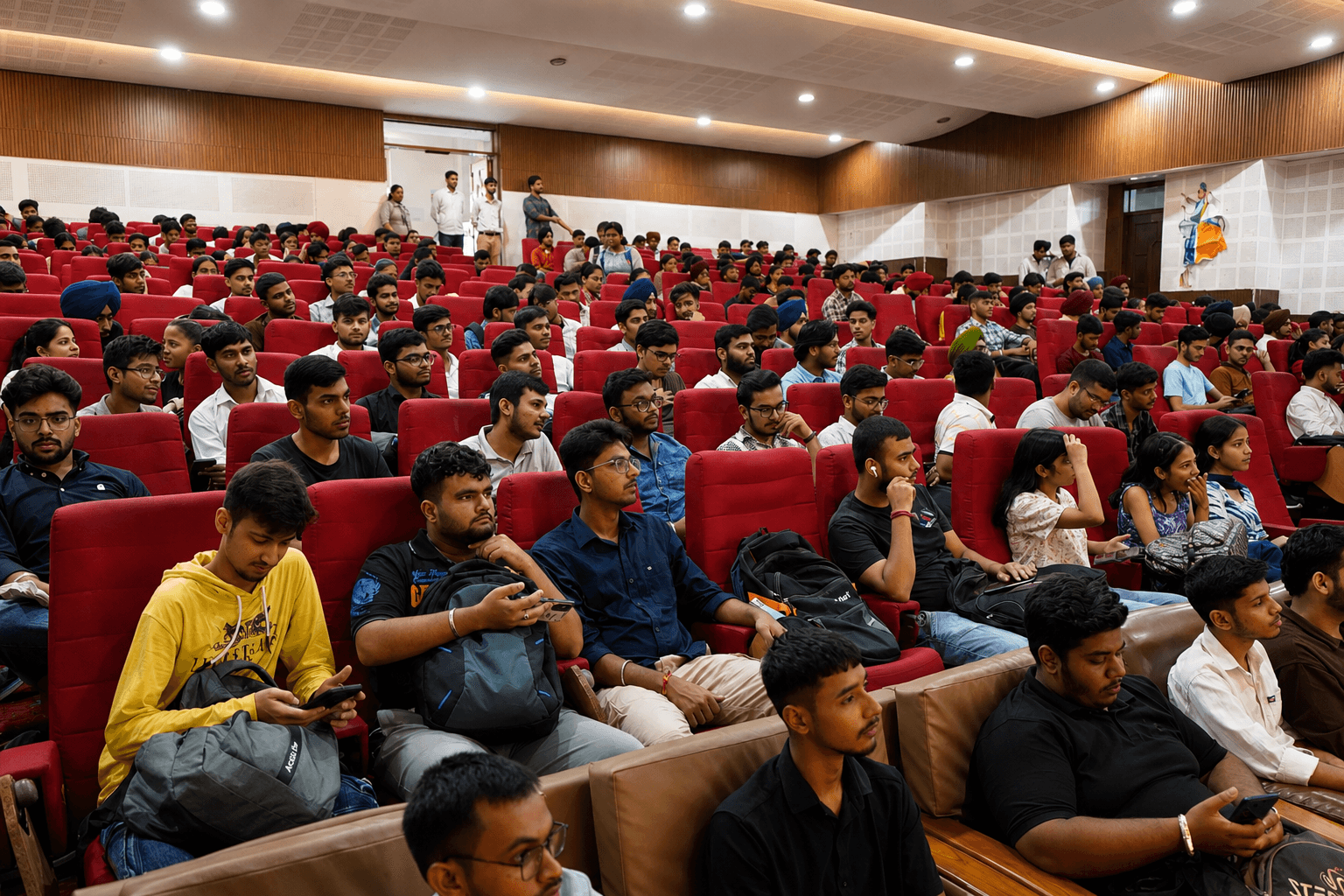
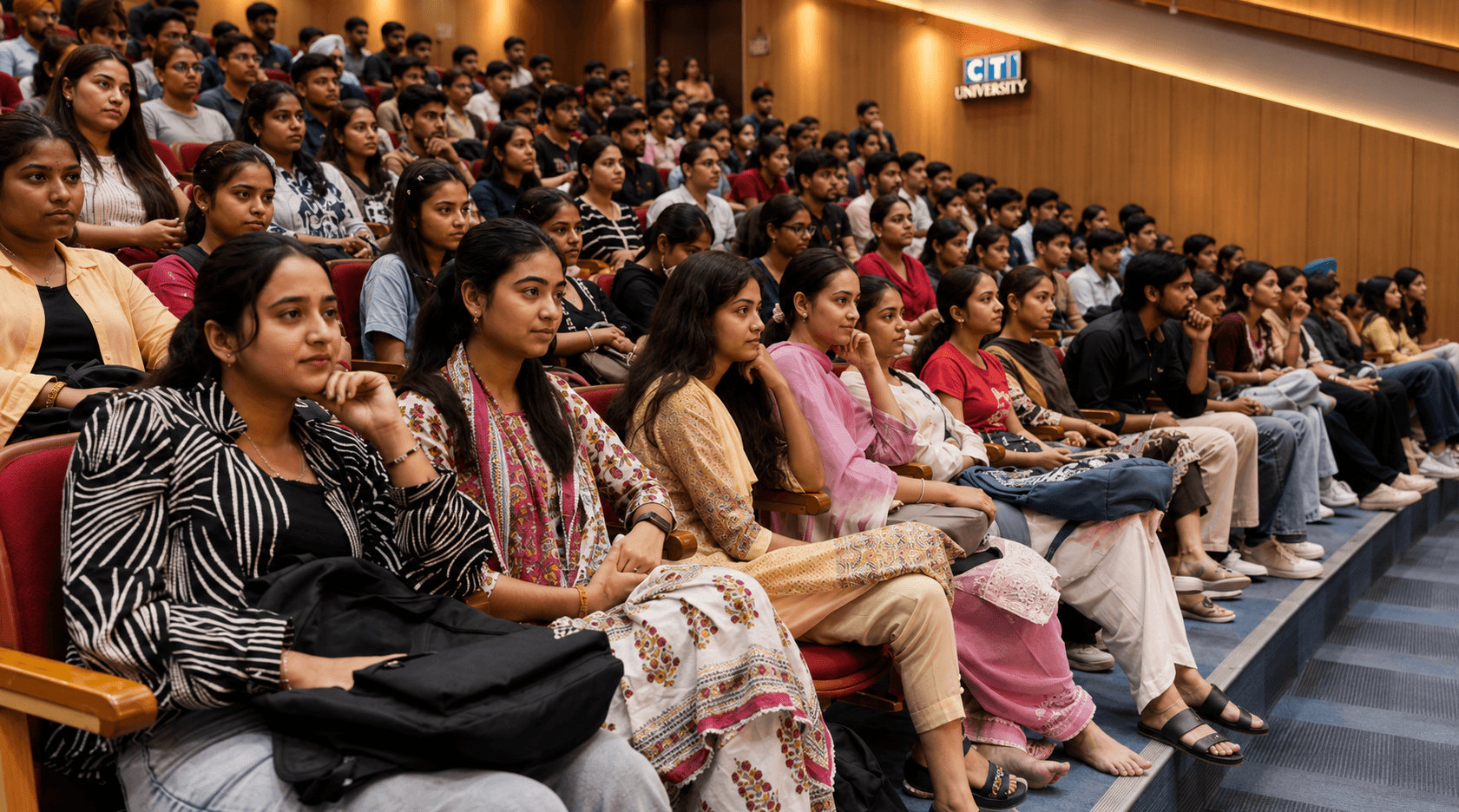
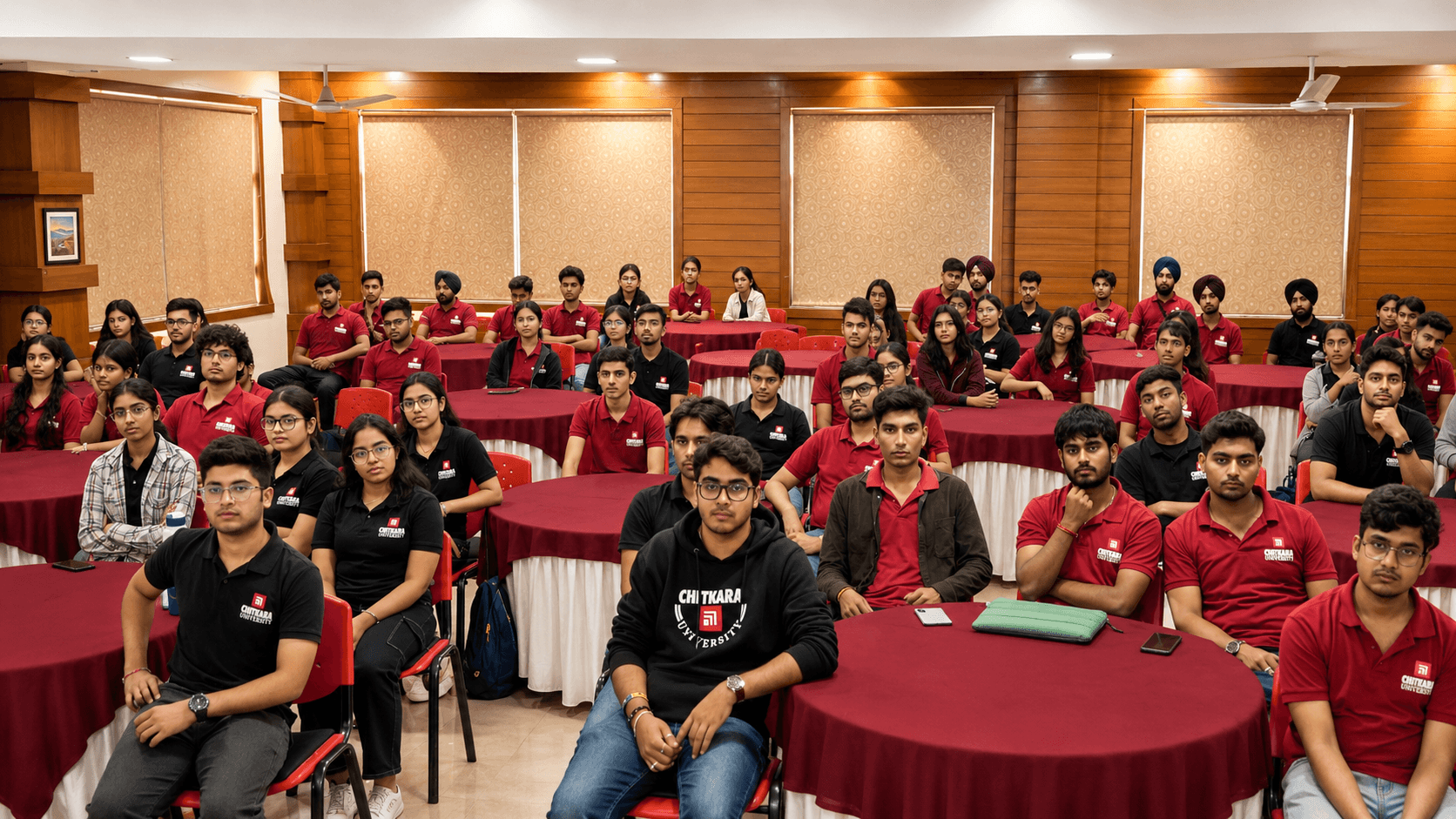
Project review week at the Amritsar campus
Mentors mark up work line by line
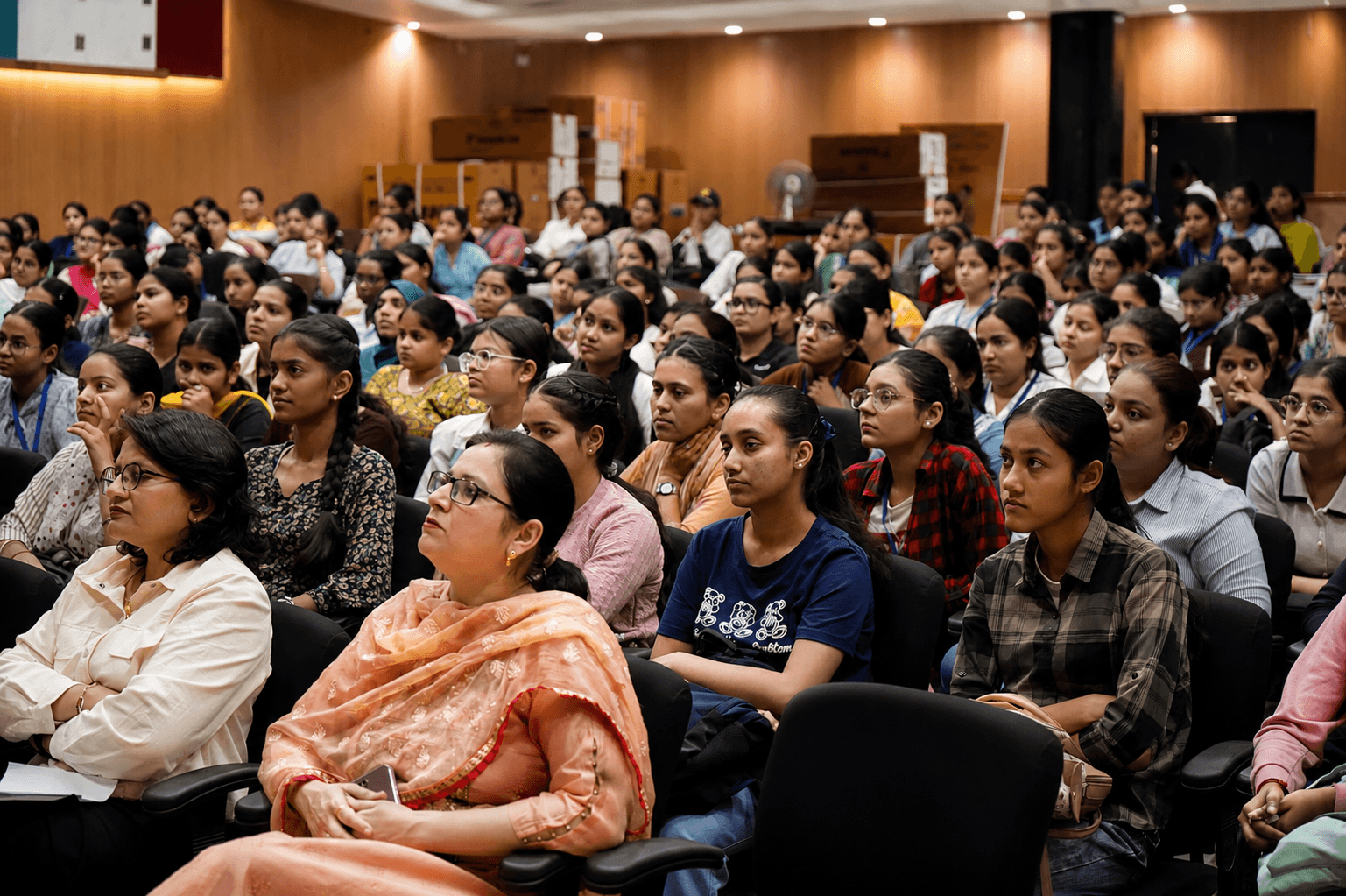
Hiring drive & mock interview day
Practitioners run the panel, not HR
What makes this course at techcadd different from a typical alternative.
Not full-time lecturers — trainers who are still doing the job they teach.
Every module runs in a hands-on cloud lab against real GCP projects — not screenshots.
Compute Engine, Cloud Storage, VPC, IAM, Cloud Functions, Terraform, GKE — not outdated or academic substitutes.
Each longer track includes every module from the shorter one without repeating a module.
You learn to use AI assistants and prompt engineering as practical tools in cloud engineering.
This course works for a specific starting point — here's who gets the most out of it.
Job titles vary by company, but the underlying expectations do not. Each destination below maps to work you will have already done during the programme.
Every tool below is installed, configured and used by you during the course — not demonstrated on a slide. You leave able to set up your own environment from scratch.
20tools covered
Issued on completion against the modules you finished and the projects you submitted — plus an internship letter where the industrial training track applies. Shareable to LinkedIn, and verifiable by an employer who calls the Amritsar desk.
The skill does not stand still, and neither does what it is worth.
The objective is practical knowledge rather than memorised concepts.
What actually differs between this course at techcadd and a typical alternative.
| What you should ask | techcadd Amritsar | Other institutes |
|---|---|---|
| Live cloud project work | Every course, from week one | Varies, often only at the end |
| Small batches (10–12) | Capped for mentor attention | Often 30+ students per batch |
| Tools used in job descriptions | Compute Engine, Cloud Storage, VPC, IAM, Cloud Functions, Terraform, GKE | Outdated or academic substitutes |
| Mentor-reviewed deliverables | Weekly review by working professionals | Often no review or feedback |
| AI-assisted learning | Built into the curriculum | Rarely included |
Every comparison here is about substance, not marketing language.
If something here is not covered, the Amritsar desk will answer it directly — no call-back queue.
No. The programme opens at beginner level and assumes no background beyond comfort with a computer. Students who already have some exposure move through the early modules faster and spend the saved time on project work.
Book a free demo class and see the lab before you decide.