




Flagship project
Virtual Lab Setup & Network Scan
You build a virtualised lab with Kali Linux and Windows, configure networking, and run your first Nmap and Wireshark scans.
- VirtualBox
- Kali Linux
- Nmap
- Wireshark
3 / 6 / 9 Months
Duration
Weekday / Weekend / Online
Mode
12th pass or equivalent
Eligibility
ISO 9001:2015 certified institute
Certification
Admissions open
AI-Powered Cybersecurity Course · 3 / 6 / 9 Months
Batch timings
This is a 3-to-9 month AI-Powered Cybersecurity Course in Amritsar that takes you from networking fundamentals to SOC analysis, ethical hacking, and AI-assisted threat detection, with a certificate and placement support at the end.
The learning arc is progressive: you start with foundations (networking, Linux, Python, Git), move into applied security work (vulnerability assessment, web security, ethical hacking), and finish with a capstone that ties everything together — either a SOC incident response simulation or a full penetration test report.
You finish with a documented portfolio: a GitHub repository of scripts and reports, a capstone project, and a resume built around the deliverables you actually produced. The programme is designed so that what you show an employer is the same work you did in the lab.
What Cybersecurity Actually Is (And Why It's Changing)
Cybersecurity is no longer just about firewalls and antivirus software. It's the practice of protecting networks, systems, and data from digital attacks — and in 2025, it's a field being reshaped by AI on both sides. Attackers use AI to automate phishing and find vulnerabilities faster; defenders use AI to detect anomalies, triage alerts, and respond to incidents in seconds rather than hours. This programme teaches you both sides: the offensive techniques (ethical hacking, penetration testing) and the defensive AI workflows (SOC automation, AI-driven threat detection) that employers now expect.
Why This Matters in Amritsar Right Now
Amritsar's IT sector is growing, and with it comes demand for security professionals. Banks, hospitals, logistics companies, and government contractors in Punjab all handle sensitive data — and they need people who can secure it. The catch: most entry-level candidates have theoretical knowledge from a generic course but zero hands-on experience with the actual tools. techcadd's programme is built to close that gap. Every module ends with a deliverable — a lab report, a working script, a penetration test — that you can show an employer. You're not just learning what a SIEM is; you're building one.
How techcadd's Approach Is Different
Most courses teach you the syllabus and send you home. This one is structured as a ladder with three exit points:
Cybersecurity Practitioner (3 months): Foundations. Networking, Linux, Python, ethical hacking basics, and an introduction to AI for cybersecurity. You finish with a working home lab and a vulnerability assessment report.
Cybersecurity Professional (6 months): Everything in Practitioner, plus advanced ethical hacking, cloud security, digital forensics, malware analysis, and SOC operations. You build a full incident response playbook and a DFIR investigation report.
Cybersecurity Expert (9 months): Everything in Professional, plus two capstone projects, interview preparation, resume building, and a GitHub portfolio review. You graduate with a portfolio of 10+ hands-on deliverables.
The teaching method is consistent across all modules: understand the concept → build it in a guided lab → apply it to a live project or real-world scenario → get it reviewed by a mentor → ship it as a portfolio piece. Small batches mean your mentor actually reviews your work, not just your attendance.
What You Finish With
By the end of the Expert track, you have a GitHub portfolio with scripts, lab reports, and capstone projects; a documented internship certificate; a resume tailored to SOC and security analyst roles; and interview readiness through mock technical interviews. You also leave with something most courses don't give you: proof of work. A hiring manager can open your GitHub and see exactly what you've built.
The core principles of security and how attacks progress from reconnaissance to impact.
A reviewed piece of work demonstrating cia triad and cyber attack lifecycle.
How operating systems manage users, permissions, and processes — the foundation for all security work.
A reviewed piece of work demonstrating windows and linux.
How data moves across networks, and where security controls fit.
A reviewed piece of work demonstrating osi/tcp-ip and ip addressing.
How to build and run a virtual lab for safe security testing.
A reviewed piece of work demonstrating vmware and virtualbox.
How to manage and share code and reports using Git.
A reviewed piece of work demonstrating git branching and github workflow.
How to use AI tools for threat research, log analysis, and report drafting.
A reviewed piece of work demonstrating chatgpt and gemini.
How to gather information about a target using open sources.
A reviewed piece of work demonstrating osint and google dorking.
How to scan systems and networks for known weaknesses.
A reviewed piece of work demonstrating nmap and wireshark.
The most common web vulnerabilities and how to test for them.
A reviewed piece of work demonstrating owasp top 10 and sql injection.
How a Security Operations Centre monitors, detects, and responds to threats.
A reviewed piece of work demonstrating siem and wazuh.
How to use exploitation frameworks and password attacks in a controlled lab.
A reviewed piece of work demonstrating metasploit and hydra.
How to secure cloud infrastructure, identities, and containers.
A reviewed piece of work demonstrating aws and azure.
How to automate repetitive security tasks with Python.
A reviewed piece of work demonstrating python and scripting.
How to integrate AI APIs into security workflows.
A reviewed piece of work demonstrating openai api and gemini api.
How to apply everything you have learned to a realistic security scenario.
A reviewed piece of work demonstrating scenario-based threat detection & response.
How to present your skills and experience to employers.
A reviewed piece of work demonstrating resume building and interview prep.
How to use AI and SIEM tools for proactive threat hunting.
A reviewed piece of work demonstrating wazuh and splunk.
How to integrate security into cloud and DevOps pipelines.
A reviewed piece of work demonstrating aws and azure.
How to collect, preserve, and analyse digital evidence.
A reviewed piece of work demonstrating evidence collection and chain of custody.
How to analyse malware and use threat intelligence feeds.
A reviewed piece of work demonstrating static & dynamic analysis and sandboxing.
How to respond to and recover from a security incident.
A reviewed piece of work demonstrating containment and eradication.
How to plan, build, and document a full security capstone project.
A reviewed piece of work demonstrating architecture and documentation.
How to plan a capstone project from scope to methodology.
A reviewed piece of work demonstrating scoping and planning.
How to build and document a secure lab environment for your capstone.
A reviewed piece of work demonstrating lab architecture and tool setup.
How to add advanced AI features to your capstone project.
A reviewed piece of work demonstrating ai model integration and automation.
How to execute and validate your capstone project.
A reviewed piece of work demonstrating testing and validation.
How to document and present your capstone professionally.
A reviewed piece of work demonstrating technical writing and reporting.
Deeper networking and Linux skills for senior roles.
A reviewed piece of work demonstrating advanced networking and linux administration.
How to run and tune a SOC using SIEM tools.
A reviewed piece of work demonstrating soc operations and siem tuning.
How to present your work to employers effectively.
A reviewed piece of work demonstrating portfolio building and github optimisation.
How to prepare for aptitude tests and HR interviews.
A reviewed piece of work demonstrating quantitative aptitude and logical reasoning.
How to handle technical interviews confidently.
A reviewed piece of work demonstrating technical interview questions and whiteboarding.
How to demonstrate industry readiness and earn your certification.
A reviewed piece of work demonstrating final assessment and certification.
You build a virtualised lab with Kali Linux and Windows, configure networking, and run your first Nmap and Wireshark scans.
You scan a target system with Nikto and Gobuster, identify weaknesses, and write a professional vulnerability report with remediation steps.
You test a deliberately vulnerable web app with Burp Suite, OWASP ZAP, and SQLmap, documenting each finding with evidence.
You use ChatGPT and Copilot to analyse log data, identify anomalies, and draft an incident response summary.
You work through a simulated attack scenario — detection, analysis, containment, and reporting — using Wazuh and MITRE ATT&CK.
You plan, execute, and document a full penetration test or digital forensic investigation, presented as a professional report.
Every project moves through the same loop: understand the brief, build it with guidance, then explain the decisions behind your work. The certificate is the receipt — the portfolio is the point.
You learn it the way it is used in production, with the workflow and standards a working team expects.
Virtual Lab Setup & Network Scan
You work in a virtualised environment with real tools like Kali Linux, Wireshark, and Splunk, not just watch someone else do it.
Vulnerability Assessment Report
Your trainers bring current field experience into the lab, so the feedback you get is practical, not theoretical.
Web Application Security Test
You use ChatGPT, Copilot, and AI security agents for threat research, log analysis, and reporting — the same way modern SOC teams do.
AI-Assisted Threat Detection
Resume building, mock interviews, and placement assistance continue until you are placed, not just until the course ends.
SOC Incident Response Simulation
A course is worth the time you give it only if you finish with work you can show and skills you can defend. In this AI-Powered Cybersecurity Course in Amritsar, every module ends with a deliverable — a vulnerability report, a Python script, a SOC dashboard, or a forensic analysis — so your portfolio proves what you can do, not just what you attended.
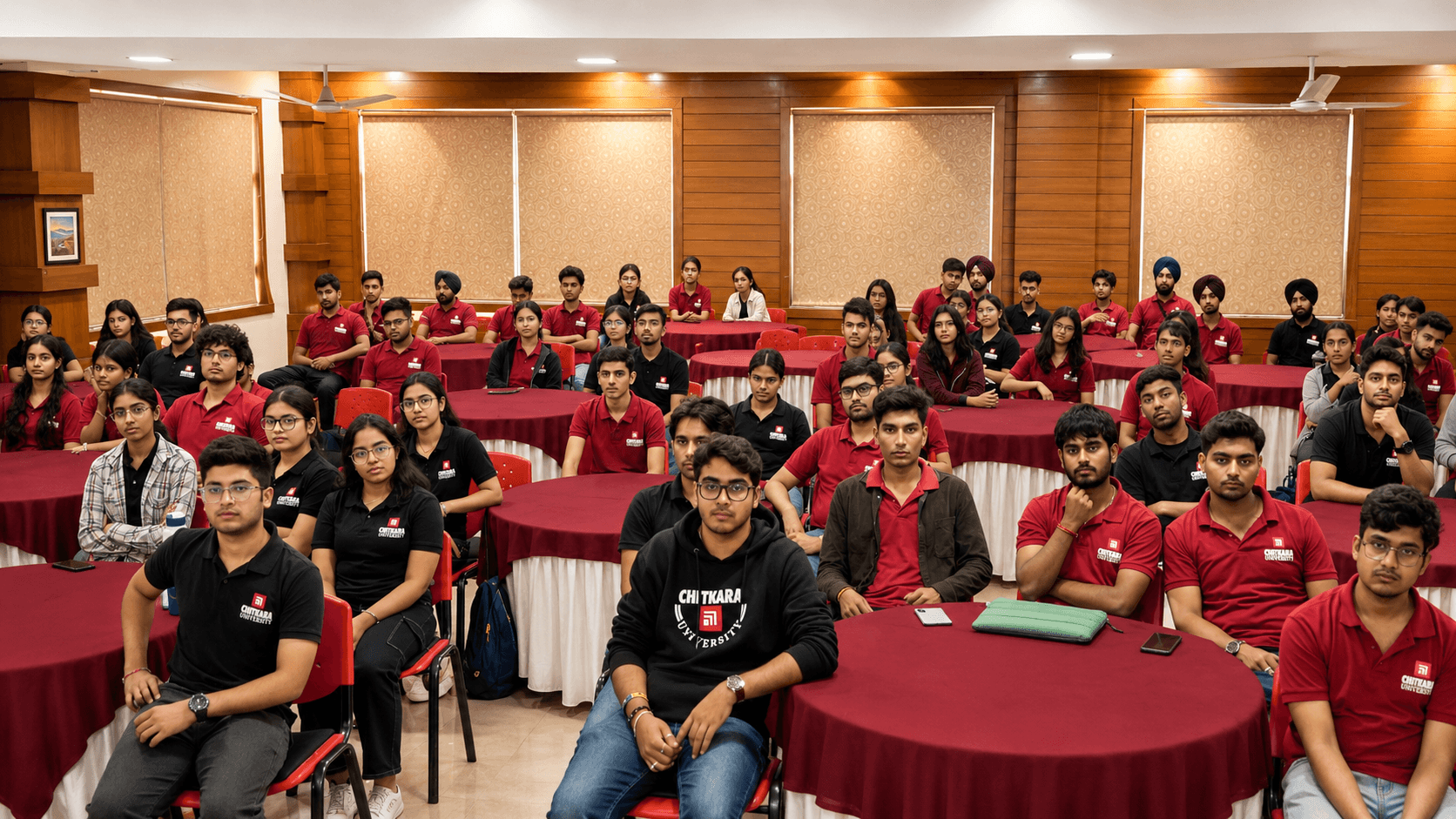
Project review week at the Amritsar campus
Mentors mark up work line by line
Hiring drive & mock interview day
Practitioners run the panel, not HR
What genuinely differs about this course at techcadd is that every module ends with a deliverable you built yourself, reviewed by a mentor who still works in the field.
Your trainers are not full-time teachers; they work on live security projects and bring that context into the lab.
You work in a virtualised environment with real tools — Kali Linux, Wireshark, Burp Suite, Splunk — not a slide-based demo.
Batches are kept small so you get individual feedback on your work, not just a mark.
You finish with a techcadd certification and a documented internship record, backed by ISO 9001:2015 certification.
The placement team works with you on resume, mock interviews, and applications until you are placed.
You learn how AI tools fit into security workflows from the first module, not as an afterthought.
This programme fits anyone who wants to enter cybersecurity from a non-specialist starting point — you do not need a computer science degree to begin.
Job titles vary by company, but the underlying expectations do not. Each destination below maps to work you will have already done during the programme.
Every tool below is installed, configured and used by you during the course — not demonstrated on a slide. You leave able to set up your own environment from scratch.
20tools covered
Issued on completion against the modules you finished and the projects you submitted — plus an internship letter where the industrial training track applies. Shareable to LinkedIn, and verifiable by an employer who calls the Amritsar desk.
The skill does not stand still, and neither does what it is worth. Cybersecurity in Amritsar is moving from basic IT support toward specialised SOC, cloud, and AI-driven threat detection roles — and the people who train on those tools now will be the ones hiring teams later.
The objective is practical knowledge rather than memorised concepts.
Every module ends with a deliverable — a script, a report, or a working lab — so you finish with a portfolio you can show, not just a certificate.
This comparison covers the practical differences between techcadd’s AI-Powered Cybersecurity programme and a typical cybersecurity course.
| What you should ask | techcadd Amritsar | Other institutes |
|---|---|---|
| Live project work | Every module, from week one | Often only at the end, if at all |
| AI integration | Built into every stage — threat detection, log analysis, reporting | Usually not covered, or a single optional module |
| Mentor background | Trainers who still do client security work | Full-time teachers with limited recent field experience |
| Batch size | Small, capped batches | Large lecture-style groups |
| Deliverable portfolio | GitHub repository of reports, scripts, and capstones | Certificate only, no portfolio |
| Placement support | Until you are hired, with mock interviews | Resume help only, no follow-through |
| Lab environment | Virtualised lab with real tools | Slide demonstrations or limited sandbox access |
| Certification | ISO 9001:2015 certified | Varies; often not independently certified |
Every comparison here is about substance, not marketing language.
If something here is not covered, the Amritsar desk will answer it directly — no call-back queue.
No. The programme opens at intermediate level and assumes no background beyond comfort with a computer. Students who already have some exposure move through the early modules faster and spend the saved time on project work.
Book a free demo class and see the lab before you decide.