

Flagship project
Dart Console Programs
Write a set of Dart console programs demonstrating variables, control flow, functions and OOP.
- Dart
- DartPad

3 / 6 / 9 Months
Duration
Weekday/Weekend
Mode
12th Pass/Any Grad
Eligibility
10-12 Students
Batch Size
Admissions open
Advanced Flutter Development Specialization Course · Flexible batches
Batch timings
techcadd's Advanced Flutter Development Specialization Course in Amritsar is a lab-based, professional-level programme for learners who want to work as Flutter developers or mobile engineers.
It opens with Dart, Flutter fundamentals, UI design, and state management, then moves into asynchronous programming, data persistence, Firebase, testing, advanced UI, platform integration, architecture, performance optimization, AI integration, and app store publishing.
You finish with a professional portfolio of published apps, a capstone project, CV preparation and interview coaching.
Flutter development is the practice of building cross-platform mobile applications for Android, iOS, and web from a single codebase. At the professional level, the job changes from writing simple screens to owning an app — architecting it, building features, integrating APIs, testing it, publishing it to app stores, and maintaining it for real users. That is the layer this programme trains you for. Startups, IT firms, banks, and healthcare providers across Punjab are all building mobile-first products, and each of them needs developers who can design, build, test and ship a production-ready Flutter app.
Techcadd's Advanced Flutter Development Specialization Course is built around the tools that appear in actual job descriptions — Dart, Flutter, Firebase, REST APIs, Provider, BLoC, and Git — not academic substitutes. You work in a hands-on lab from the first week and finish with a professional portfolio of published apps, a capstone project, and interview-ready documentation. The programme is available in 3, 6, and 9-month tracks, and each longer track includes everything from the shorter one without repeating a module. Batch sizes are capped at 10–12 students, and every deliverable is reviewed weekly by mentors who still work on live engagements.
Core Dart concepts — syntax, variables, data types, operators, and control flow.
A set of Dart programs demonstrating core concepts
Flutter fundamentals — setting up the SDK, using Android Studio and Xcode, and Flutter DevTools.
A running Flutter hello-world app on the emulator
Building user interfaces with Material and Cupertino widgets, animations, and routing with go_router.
A multi-screen Flutter app with polished UI
State management — Provider, flutter_bloc, Redux, and MobX.
An app with Provider or BLoC state management
Asynchronous programming — async/await, Isolates, and StreamController.
An app with asynchronous data loading and streams
Working with data — HTTP requests with http and dio, JSON parsing, WebSockets, and local storage with shared_preferences and sqflite.
An app that fetches and displays data from a public API
Integrating Firebase — authentication, Firestore database, push notifications, and analytics.
An app with Firebase authentication and Firestore data
Platform integration — accessing device features like camera, sensors, and background services.
An app using camera, sensors and background services
Advanced state management — Riverpod, GetX, and flutter_hooks.
An app with advanced state management and reactive UI
Advanced Dart — generics, mixins, and Isolate.spawn.
An app using advanced Dart features
Architecture and design patterns — dependency injection with get_it and injectable, and data classes with freezed.
A Clean Architecture-based app with dependency injection
Optimizing Flutter app performance — profiling, size analysis, and build optimization.
An optimized app with profiling reports
Integrating AI into Flutter apps — chat UIs, API calls, and text generation.
An AI-powered Flutter app with documentation
On-device AI using ML Kit — text recognition and face detection.
An app with on-device AI features
Publishing apps to the App Store and Play Store — signing, archiving, and deployment with fastlane.
Publishing apps to the App Store and Play Store — signing, archiving, and deployment with fastlane.
Team Git workflows — branching, code reviews, and GitHub Actions for CI/CD.
A team-ready GitHub repository with CI/CD
Integrating generative AI and LLMs into Flutter apps — prompt engineering, OpenAI API, Claude API, and Gemini API.
An LLM-powered Flutter app with documentation
Agentic and multimodal AI features — building apps that use multiple AI models and modalities.
An AI-powered Flutter app with agentic and multimodal features
Backend for Flutter — Supabase, Postgres, Cloud Functions, and Docker basics.
A Flutter app with Supabase backend
CI/CD and release engineering — GitHub Actions, Fastlane, and app store deployment.
A CI/CD pipeline with automated app store releases
App monetization and analytics — RevenueCat, AdMob, Firebase Analytics, and Mixpanel.
A monetized app with analytics dashboards
Taking a client app from brief to store — project management, design, development, and deployment.
A complete client app from brief to store with documentation
Write a set of Dart console programs demonstrating variables, control flow, functions and OOP.
Build a multi-screen app with Flutter, Material/Cupertino and go_router.
Build an app with Provider or BLoC state management.
Build an app that fetches and displays data from a public API with http or dio.
Build an app with Firebase authentication and Firestore data.
Build a tested app with unit and integration test coverage using flutter_test and integration_test.
Publish an app to the App Store and Play Store with signing, archiving and fastlane.
Build an app with AI-powered features using flutter_chat_ui, ML Kit or text-generation APIs.
Build a CI/CD pipeline with GitHub Actions and fastlane for automated app store releases.
Build a monetized app with RevenueCat, AdMob, Firebase Analytics and Mixpanel.
Take a client app from brief to store with Notion, Figma, GitHub Projects and Google Slides.
Complete an end-to-end capstone combining UI, data persistence, networking, Firebase and deployment.
Every project moves through the same loop: understand the brief, build it with guidance, then explain the decisions behind your work. The certificate is the receipt — the portfolio is the point.
You learn it the way it is used on real projects, with the workflow and standards a mobile team expects.
Dart Console Programs
Every module runs in a hands-on lab against real devices and emulators — not screenshots.
Multi-Screen Flutter App
Each module ends with a documented artefact reviewed weekly by a mentor who still works on live projects.
State Management App
Every exercise ends with a working app, and the programme closes with a practical assessment and certification.
API-Powered App
A course is worth the time you give it only if you finish with work you can show and skills you can defend.
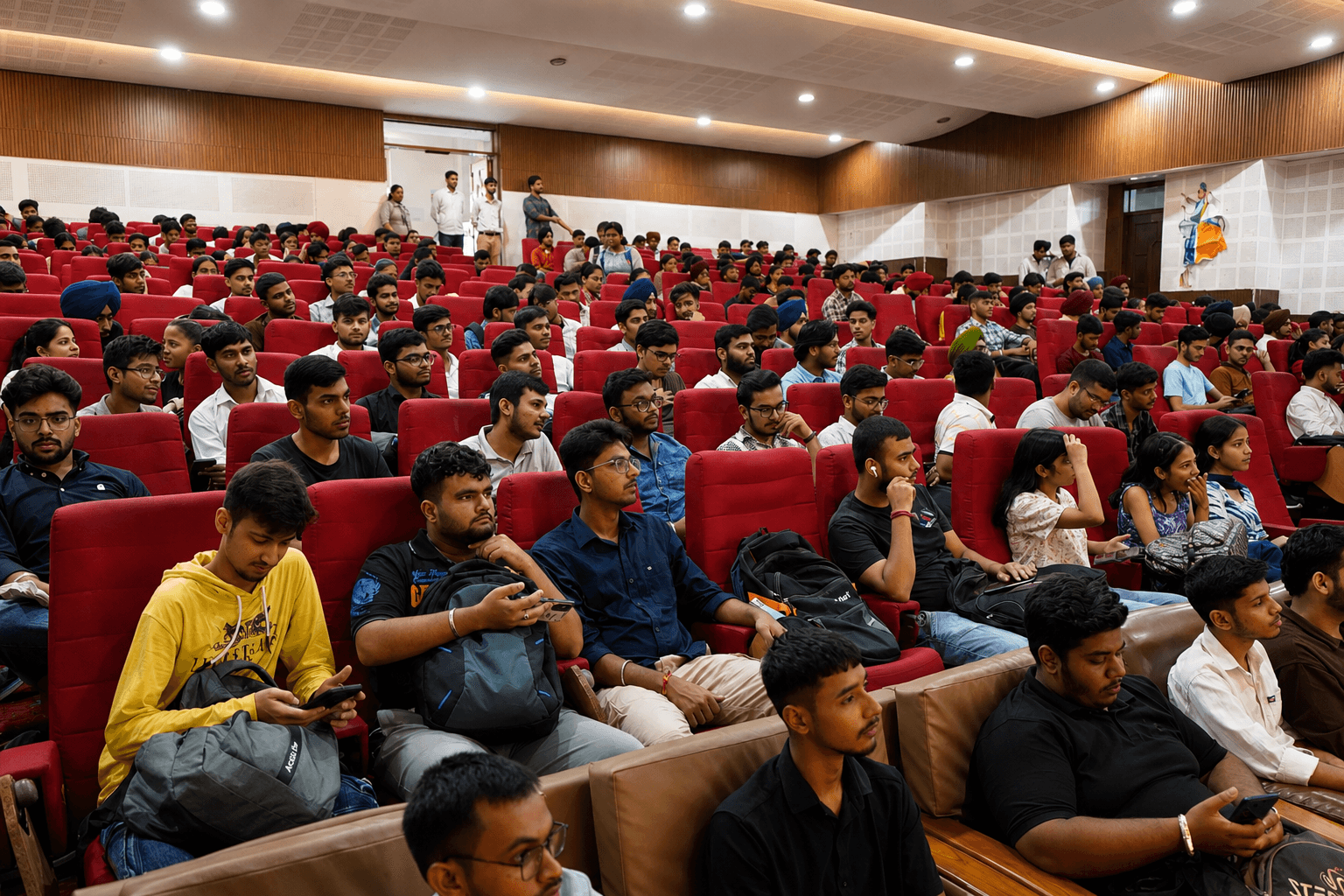
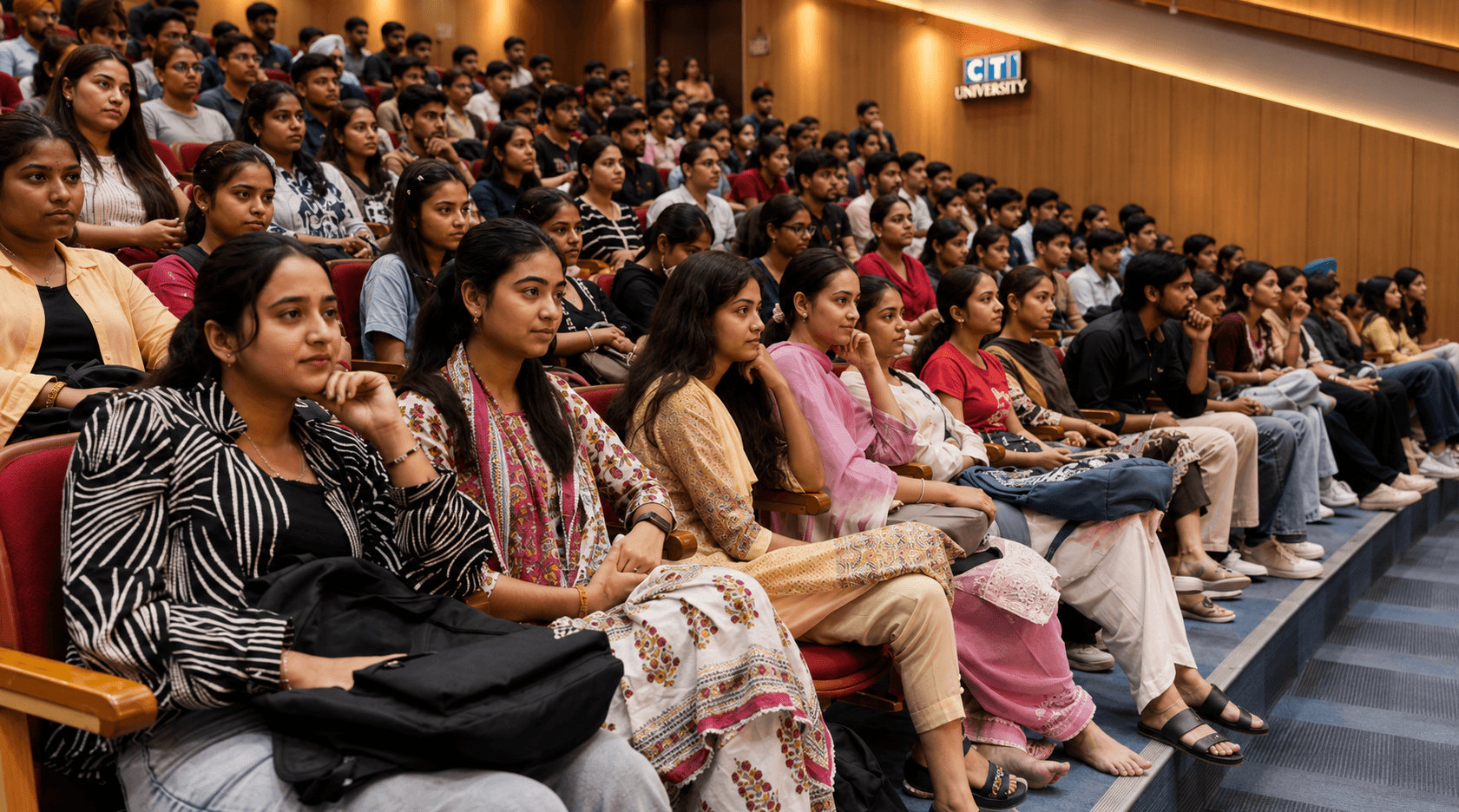
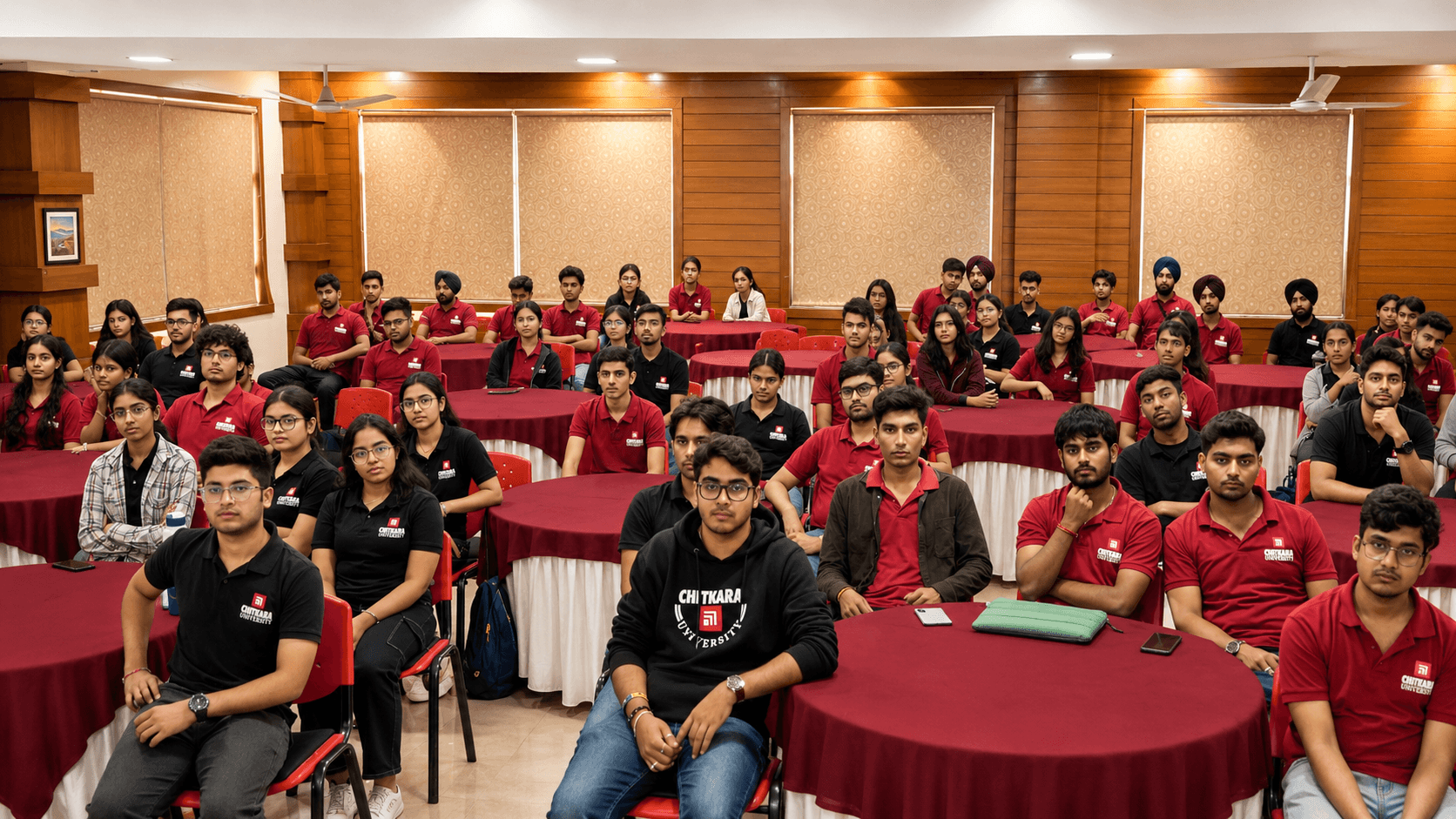
Project review week at the Amritsar campus
Mentors mark up work line by line
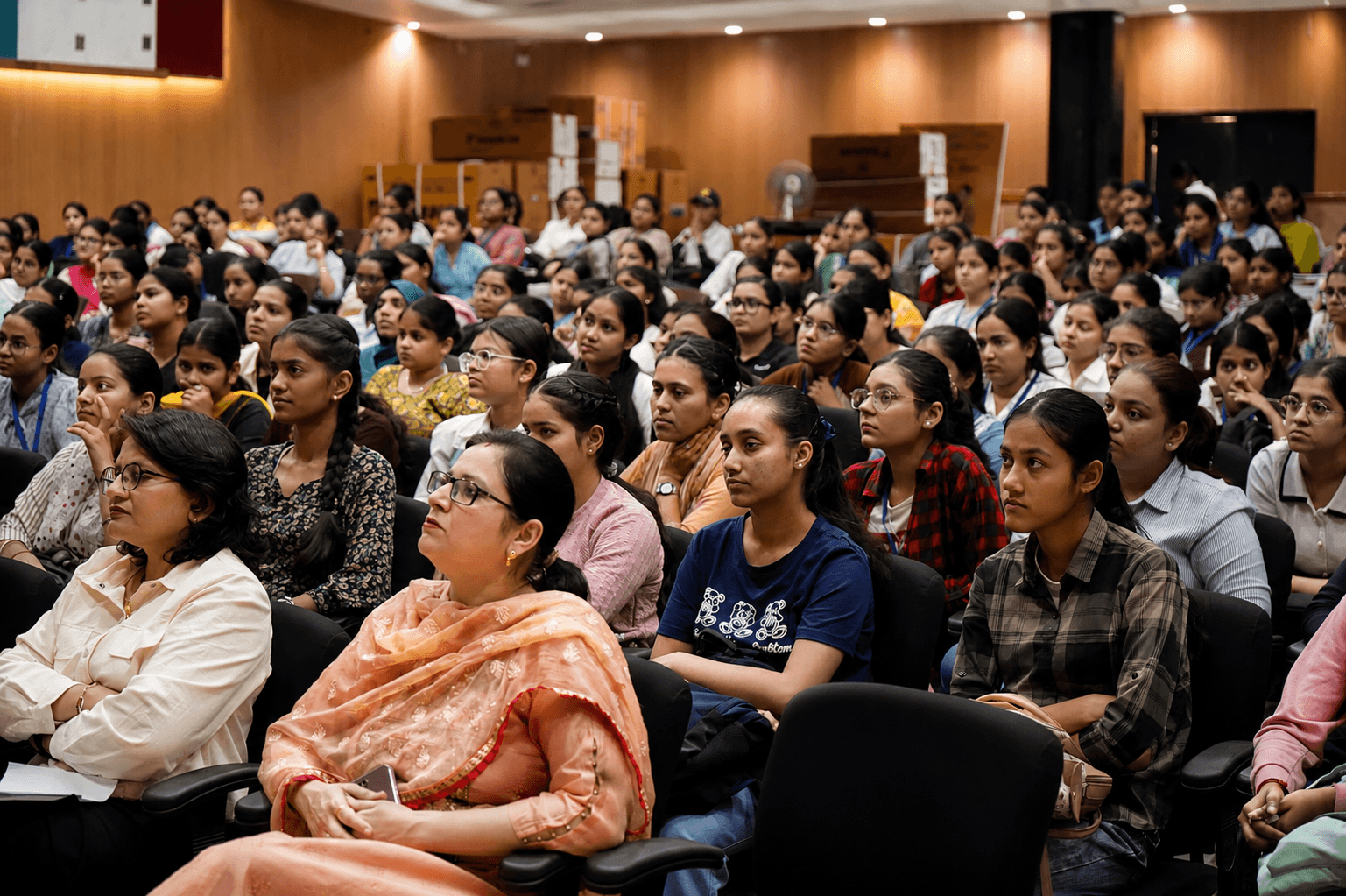
Hiring drive & mock interview day
Practitioners run the panel, not HR
What makes this course at techcadd different from a typical alternative.
Not full-time lecturers — trainers who are still doing the job they teach.
Every module runs in a hands-on lab against real devices and emulators — not screenshots.
Dart, Flutter, Firebase, Provider, BLoC, go_router — not outdated or academic substitutes.
Each longer track includes every module from the shorter one without repeating a module.
You learn to use AI assistants and prompt engineering as practical tools in Flutter development.
This course works for a specific starting point — here's who gets the most out of it.
Job titles vary by company, but the underlying expectations do not. Each destination below maps to work you will have already done during the programme.
Every tool below is installed, configured and used by you during the course — not demonstrated on a slide. You leave able to set up your own environment from scratch.
20tools covered
Issued on completion against the modules you finished and the projects you submitted — plus an internship letter where the industrial training track applies. Shareable to LinkedIn, and verifiable by an employer who calls the Amritsar desk.
The skill does not stand still, and neither does what it is worth.
The objective is practical knowledge rather than memorised concepts.
What actually differs between this course at techcadd and a typical alternative.
| What you should ask | techcadd Amritsar | Other institutes |
|---|---|---|
| Live Flutter project work | Every course, from week one | Varies, often only at the end |
| Small batches (10–12) | Capped for mentor attention | Often 30+ students per batch |
| Tools used in job descriptions | Dart, Flutter, Firebase, Provider, BLoC, go_router | Outdated or academic substitutes |
| Mentor-reviewed deliverables | Weekly review by working professionals | Often no review or feedback |
| AI-assisted learning | Built into the curriculum | Rarely included |
Every comparison here is about substance, not marketing language.
If something here is not covered, the Amritsar desk will answer it directly — no call-back queue.
No. The programme opens at beginner level and assumes no background beyond comfort with a computer. Students who already have some exposure move through the early modules faster and spend the saved time on project work.
Book a free demo class and see the lab before you decide.